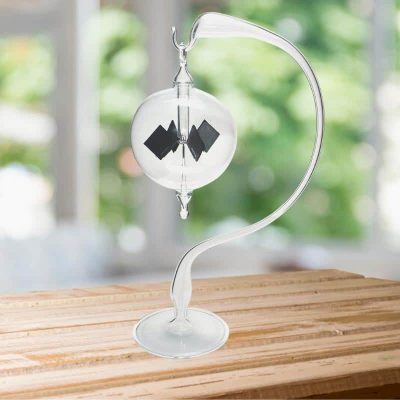
RADIOMETER
Discover the spectacle of the Crookes Radiometer, a scientific instrument that reacts to sunlight by turning on itself. A magnificent scientific object that will easily find a place in your interior decoration.
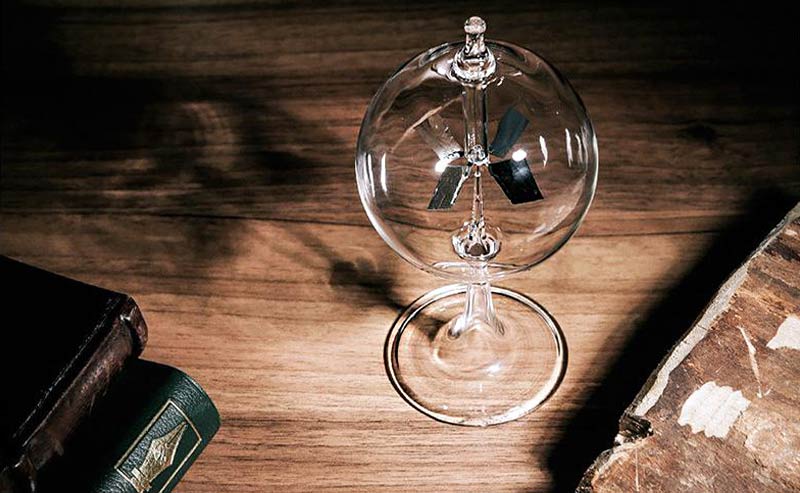
Discover the spectacle of the Crookes Radiometer, a scientific instrument that reacts to sunlight by turning on itself. A magnificent scientific object that will easily find a place in your interior decoration.
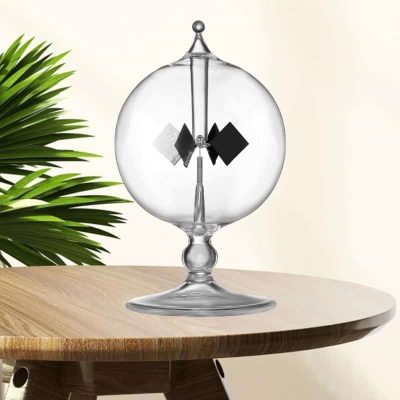
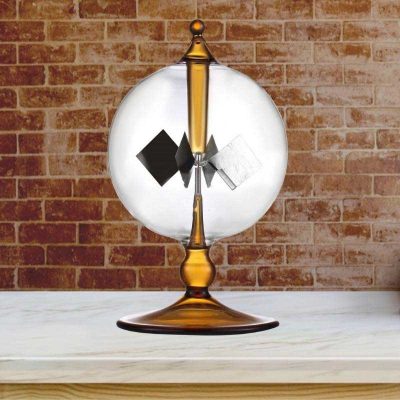
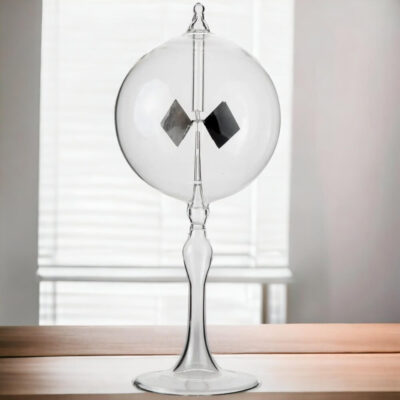
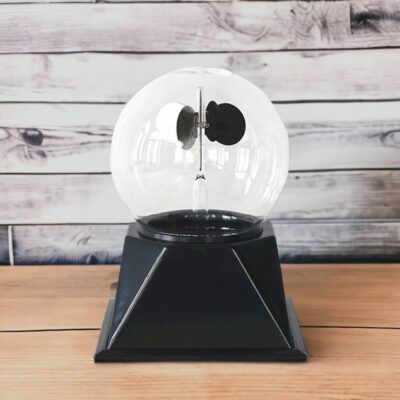
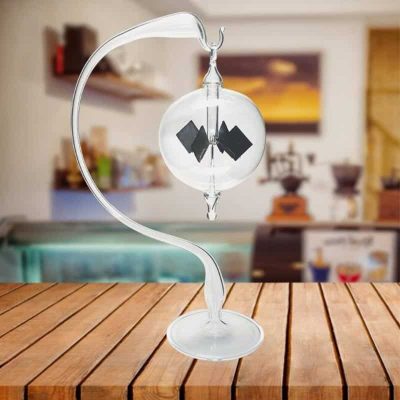
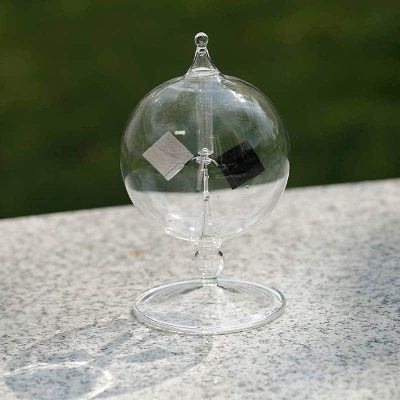
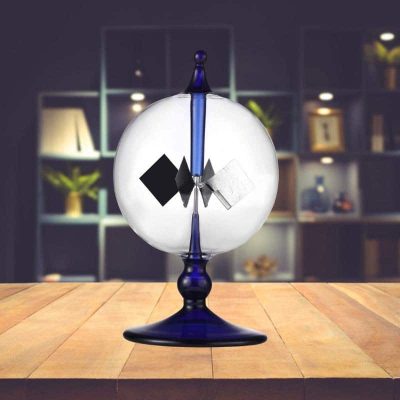
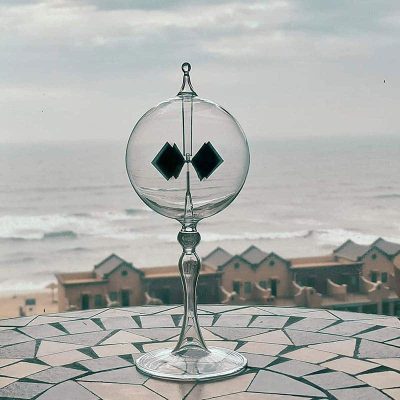
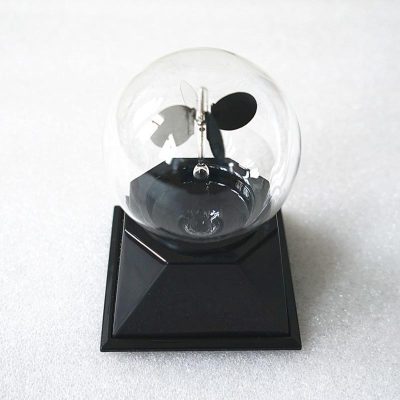
A Crookes radiometer is a glass bulb, partly evacuated, holding four vanes on a pin, each black on one side and silver on the other. Put it in sunlight or under a warm lamp and the vanes spin, faster in stronger light; in the dark they stop. William Crookes built it in 1873, and it is still the simplest visible proof that light carries energy. No batteries, no switch, no maintenance.
☀️
A Crookes radiometer spins in light and stops in the dark. No batteries, no switch, just the sun. The oldest solar toy there is.
🎁
Small, elegant, Victorian. The gift that comes with a physics puzzle: why does it spin the way it does?
🔬
Hand blown glass and a spinning vane in a partial vacuum. A desk object with 150 years of history.
There is little to choose except size and stand: a classic 15 cm glass radiometer for a windowsill, a larger one for a shelf, and models with a wooden or metal base for stability.
| Type | Best for | Height | Price |
|---|---|---|---|
| Classic Crookes radiometer | Windowsills, desks, first one | 15 to 18 cm | £44 to £50 |
| Solar radiometer with base | Shelves, gifts, stability | 18 to 22 cm | £50 to £60 |
| Large glass radiometer | Classrooms, display | 22 cm and over | £60 to £68 |
It is thin glass on a stem: treat it like a light bulb. If it stops spinning, the vane has usually slipped off its pin; a gentle tilt reseats it.
It is not light pressure, which would push the silver side. The black sides absorb light and warm up; the thin gas left in the bulb slides along the vane edges from cold side to warm side (thermal transpiration) and pushes the vanes with the black faces trailing. Reynolds and Maxwell worked this out in the 1870s.
Free UK delivery over £45 and 30 days to return it. For the same silent, battery-free physics, the Galileo thermometers and storm glasses.