
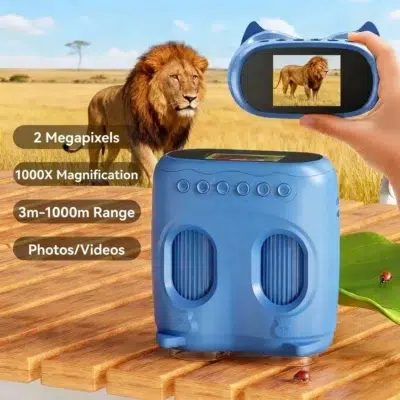
£86.99
What is a kids telescope?
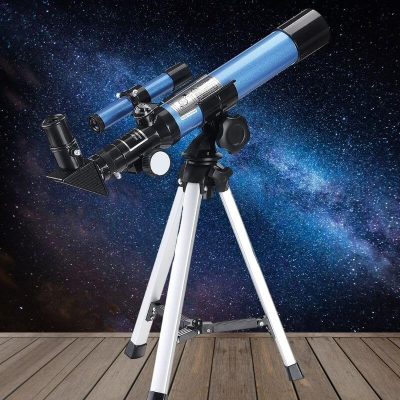
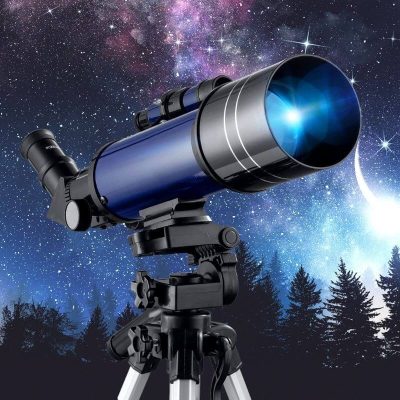
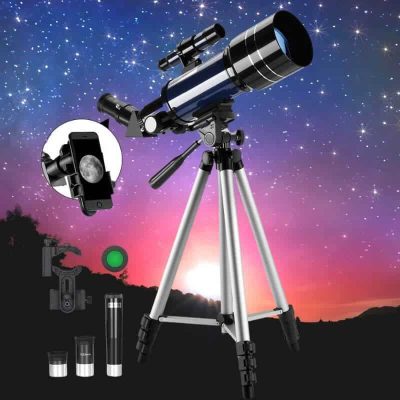
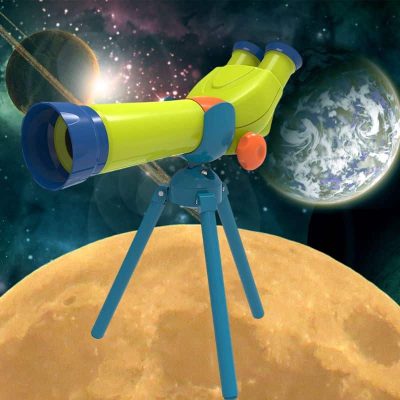
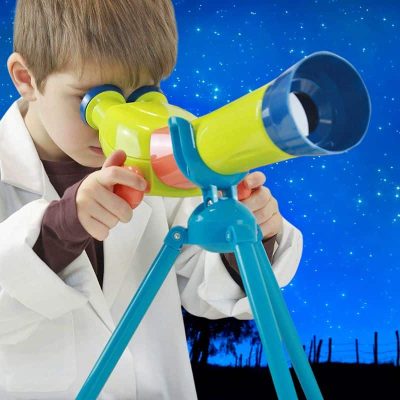
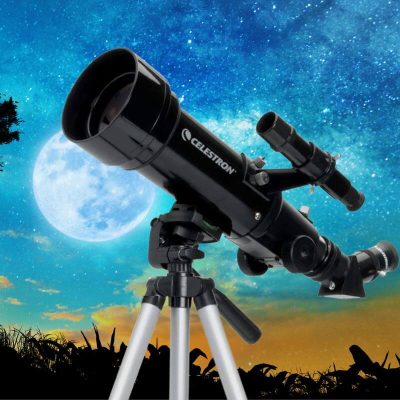
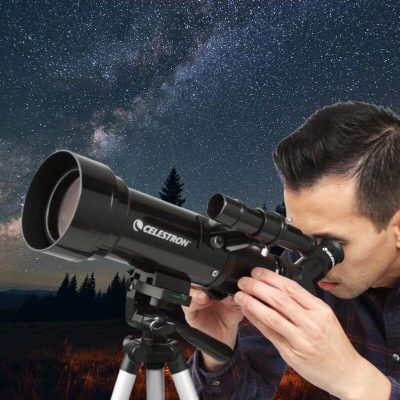
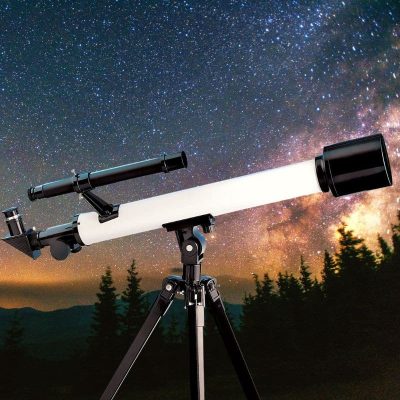
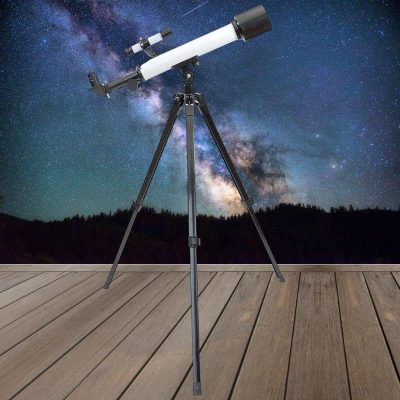
A kids telescope is a small refracting telescope, a lens at the front and an eyepiece at the back, on a light tripod, sized for a child from about 6. It shows the craters of the Moon, Jupiter's four largest moons, Saturn's rings as a small oval and the brighter star clusters. Magnification of 40x to 100x is the useful range; stability and a clear lens matter more than the number on the box.
5 modelsFrom £63.9940x to 100x useful rangeTripod and eyepieces includedFree UK delivery over £45
Who is this collection for?
🔭
For a child who looks up at night
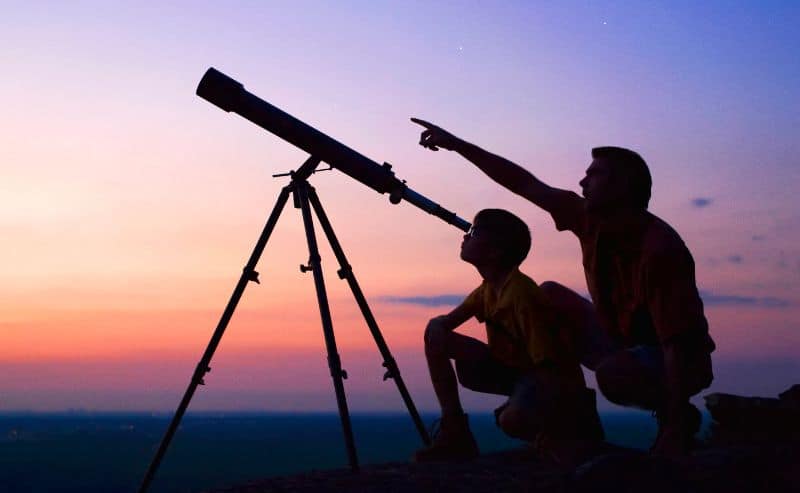
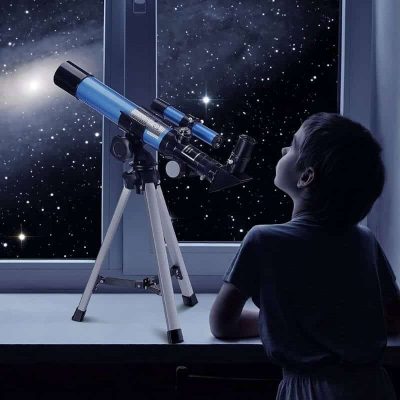
From 6 upwards. A first telescope shows the craters of the Moon on the first clear evening, which is usually all it takes.
🎁
For a Christmas gift with a bit of ceremony
Parents and grandparents who remember their own first look at Saturn's rings. A telescope is the gift that comes with a night out in the garden.
🌌
For beginners of any age
Adults who never owned one, families on a dark-sky holiday, anyone who wants to identify a planet without an app.
How to choose a telescope for a child
Age and patience decide. Under 8, a toy telescope that survives being carried around. From 8, a junior refractor on a tripod. For a teenager, a larger aperture that shows more detail on the planets.
| Type | Best for | Aperture | Price |
|---|---|---|---|
| Toy and travel telescopes | Ages 6 to 8, daytime and Moon | 30 to 50 mm | £64 to £70 |
| Junior refractor on tripod | Ages 8 to 12, Moon and planets | 50 to 70 mm | £80 to £100 |
| Children's telescope with finder scope | Ages 10+, first real observing | 70 mm | £90 to £120 |
| Larger beginner telescopes | Teenagers, families | 70 to 90 mm | £150 to £194 |
Start with the Moon: it is large, bright and easy to find, and it hooks every child on the first clear night. Never point any telescope at the Sun without a proper solar filter.
The science in two lines
The front lens gathers light and bends it to a focus; the eyepiece magnifies that image. Aperture (the lens diameter) decides how much light and detail you get; magnification is just the ratio of the two focal lengths, and too much of it only makes a dim, shaky view.
Our three bestsellers
Kids Telescope: your questions, answered
What can a child see with a beginner telescope?
The Moon in detail, Jupiter and its four largest moons, Saturn's rings as a small oval, bright star clusters. Not galaxies in colour: those are camera images, not eyepiece views.
What magnification do I need?
Less than you think. 50x to 100x is where most beginner viewing happens. Stability and a clear lens matter more than a big number on the box.
Is it easy to set up?
Yes. Beginner telescopes come with a tripod and two eyepieces and take ten minutes to assemble. Start with the Moon: it is large, bright and easy to find.
Can it be used in the daytime?
Yes, for birds, landscapes and boats. Never point it at the Sun without a proper solar filter; without one it will damage eyes instantly.
What age is a kids telescope for?
From about 6 with an adult, from 9 or 10 alone. Younger children enjoy the projector lamps in our Space Lamp collection more.
Free UK delivery over £45 and 30 days to return it. For the very small instead of the very far, our kids microscopes; for the sky indoors, the galaxy projectors.