














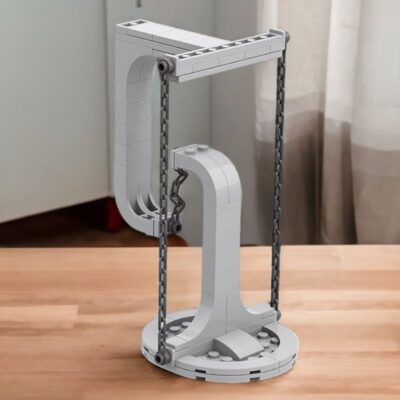



Pyramid Brain Teaser
4.4 (5 reviews)
Original price was: £25.99.£22.99Current price is: £22.99.
Add

Objects that really work, sorted by person, occasion and budget. Start with who it's for.
 For himAdult man
 For herAdult woman
 DadFather's Day, Christmas
 MumMother's Day, Christmas
 GrandadGrandfather
 GrandmaGrandmother
 Childaged 5 to 8
 Childaged 8 to 12
 Teenaged 12 to 16
Pick a profile: we ask for your budget, then suggest three ideas.
Pick a profile: we ask for your budget, then suggest three ideas.
Pick a profile to see the ideas that suit them.
Pick a profile to see the ideas that suit them.
Pick a profile to see the ideas that suit them.
Pick a profile to see the ideas that suit them.
Pick a profile: we ask for your budget, then suggest three ideas.
Pick a profile: we ask for your budget, then suggest three ideas.
Pick a profile: we ask for your budget, then suggest three ideas.
Not sure yet? Three questions, three ideas
The three most useful pages for your festive shopping.
Ideas for every recipient and every budget.
Cool science gifts are objects that show a real phenomenon at work: momentum passing from ball to ball in a Newton's cradle, crystals forming and dissolving in a storm glass, heat turning the wheel of a Stirling engine. You choose one first for the person who will receive it, then for the phenomenon it makes visible.
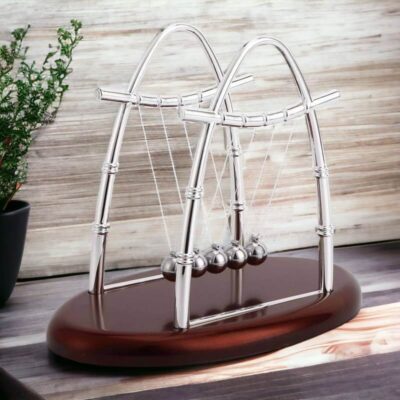
A science gift isn't just for researchers. It's an object you understand by watching it work, and one you want to show other people. A plasma ball shows a glowing gas that follows your fingertip. A Newton's cradle shows momentum travelling from one ball to the next. The person who receives it doesn't need to know the word: they see it happen.
Three questions are enough to choose: who it's for, what the occasion is and how much you want to spend. The selections on this page answer each one, and the gift finder asks who it's for, their profile and your budget, then suggests three ideas. What follows helps when you're still unsure.
For an adult, a good science gift belongs to one of three families, and the person's character tells you which.
If in doubt, decor is the safest choice: it also pleases people who wouldn't call themselves science fans. For a true enthusiast, our ideas for science lovers are sorted by subject.
A gift for a newly awarded PhD marks a milestone, so it has to last. Skip consumables and gimmicks. What works is a lasting desk object that recalls the new doctor's field. The Klein Bottle (from £33.49) or the Math Wall Clock (£37.99) for a mathematician, a Stirling engine or a Newton's cradle for a physicist, the Molecular Model Kit (£39.49) for a chemist, a globe or the Dinosaur Fossil Replica Plaque (from £38.49) for a geologist.
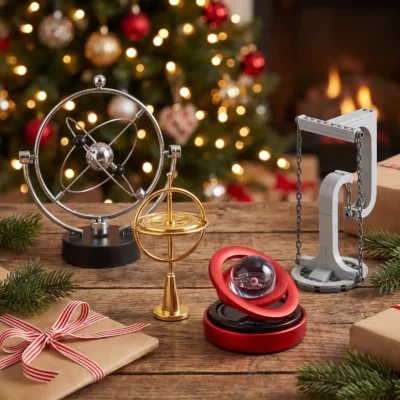
For an engineer, decor alone isn't enough: they want a mechanism they understand and can explain. The Super Precision Gyroscope with Electric Motor (from £163.99) spins at thousands of revolutions per minute, the V8 Engine Model Kit (£76.49) has 535 pieces and runs on a small electric motor once built, the Euler's Disk (£92.49) seems to speed up as it settles, and the Metal Spinning Top (£28.99) is small enough to carry around. The pleasure lies in watching it work. Our gifts for geeks have more ideas along these lines.
For a child, age matters more than the theme. A kit that is too advanced ends up in a cupboard, and one that is too simple is finished in a quarter of an hour. Always check the recommended age first: our three pages by age are built around it, ages 5 to 8 for handling and observing, ages 8 to 12 for first experiments done on their own, teenagers for building, adjusting and collecting.
For something to bring out on a rainy Sunday, our science toys gather experiment kits, puzzles and observation games.
For a colleague or a gift swap at work, start with an object that finds its place on a desk without cluttering it: see our desk toys for the office and our Secret Santa ideas. For a retirement present from a whole team, our retirement gifts bring together objects that stay as a reminder of the team. For the teacher who made a subject come alive, browse our gift ideas for science teachers. And for someone who has everything, our ideas for the person who has everything suggest objects nobody buys for themselves.
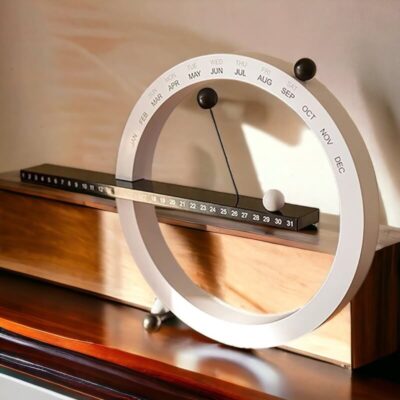
Start with what the person likes to look at or handle. For the living room, the Cube Weather Glass (from £33.49) holds snowflake-like crystals that slowly change their look. For someone who wants to understand, the DIY Stirling Engine Kit (£57.49) is screwed together part by part, then runs on the heat of its wick. For someone who always has something in their hands, the Magic Spinner (£21.49). Our pages for him and for her sort the ideas by profile.
The occasion matters more than the person. Under £20, you will find small desk objects and puzzles. From £20 to £50, most desk toys, storm glasses and gyroscopes. From £50 to £100, a model to build or a galaxy projector. Over £100, larger pieces: Nixie clocks, big projectors, a precision gyroscope with an electric motor. The four budget cards on this page each lead to their own selection.
Yes, as long as you choose science decor rather than an experiment kit. A plasma ball, a storm glass or a galaxy projector please people first because they look good and surprise them. The science comes later, if they get curious. The Infinity Cube Lamp (from £73.49) is a good example: an illusion of cubes of light stretching away forever, with nothing to explain before it works its charm.
From 3 for a few building and observation games, from 5 for most objects to handle, and from around 8 for the first experiment kits done on their own. The recommended age shown for each product is what counts, before the theme. Our pages for ages 5 to 8, ages 8 to 12 and teenagers are sorted on that basis.
A desk object that lasts and recalls their field: the Klein Bottle (from £33.49) for a mathematician, a Newton's cradle or a Stirling engine for a physicist, the Molecular Model Kit (£39.49) for a chemist, with 267 pieces to build molecules. Avoid consumables: the gift should stay on the desk long after the viva. For a new engineer, a mechanism works better, such as the Super Precision Gyroscope with Electric Motor (from £163.99).
Yes. You have 30 days to change your mind, which leaves time to give the present and see whether it earns its place on a desk or a shelf. If it doesn't suit them, you can send it back within that period. There is also free delivery on orders over £45.
