

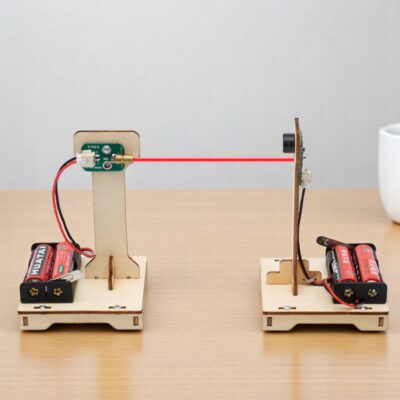
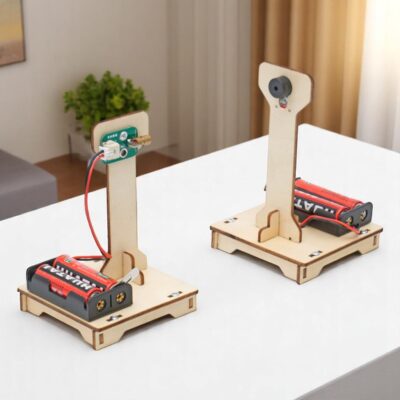
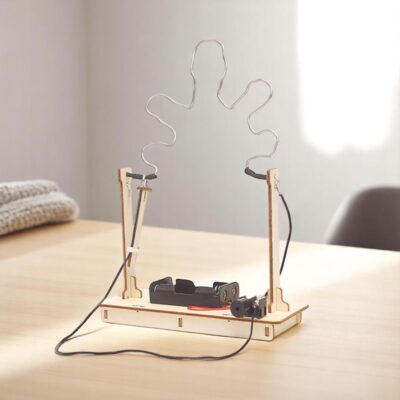

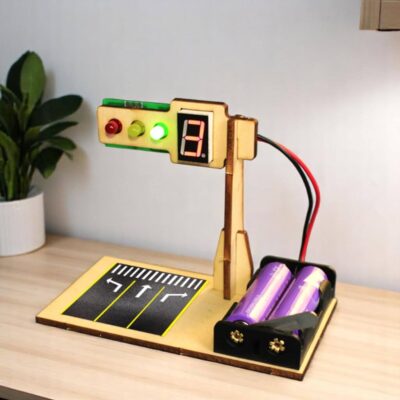



What is an electronics kit for kids?
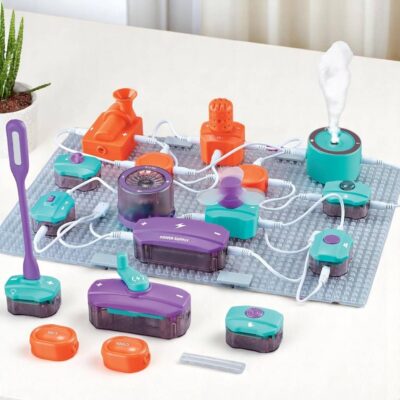
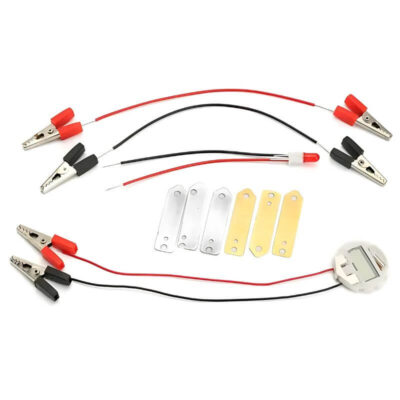
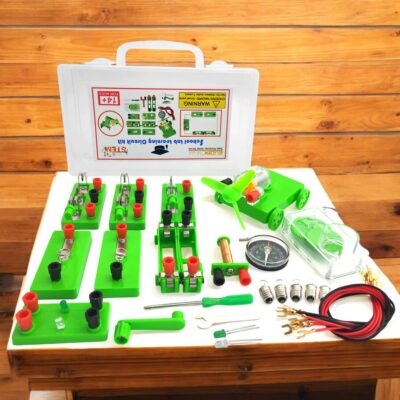
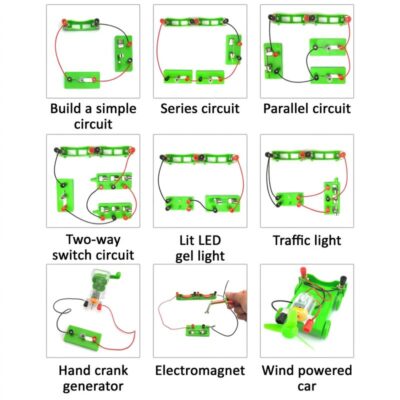
An electronics kit for kids is a set of safe, low voltage components, batteries, wires, switches, LEDs, motors, buzzers, coils, that clip or screw together so a child can build working circuits with no soldering. The best ones start with a single closed circuit and end with an electromagnet or a hand crank generator, so the idea of current becomes something the child made happen rather than something they were told about.
9 modelsFrom £17.99Complete kits and single buildsLow voltage, AA batteriesFree UK delivery over £45
Who is this collection for?
🔦
For a curious 8 to 14 year old
The one who takes the torch apart to see what is inside. A circuit kit gives them permission to build, break and rebuild, and turns the question "how does it work?" into an afternoon project.
🎁
For a gift that isn't another screen
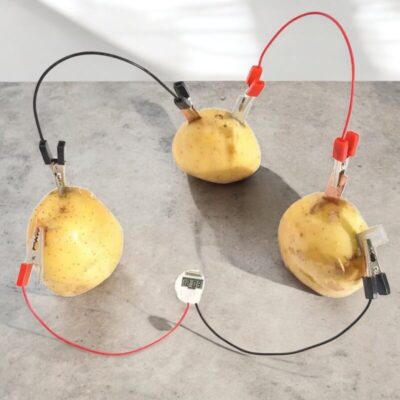
Parents and grandparents looking for something that keeps a child busy without a tablet. A potato clock or a steady hand game gets built at the kitchen table, together, and still works next Christmas.
💡
For anyone who wants to understand how it works
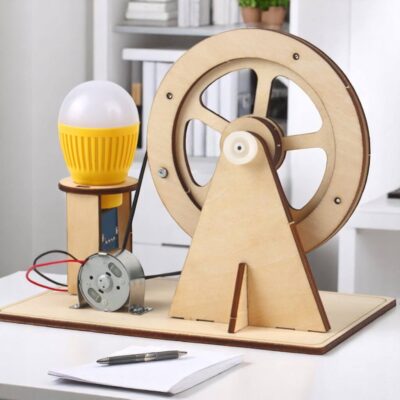
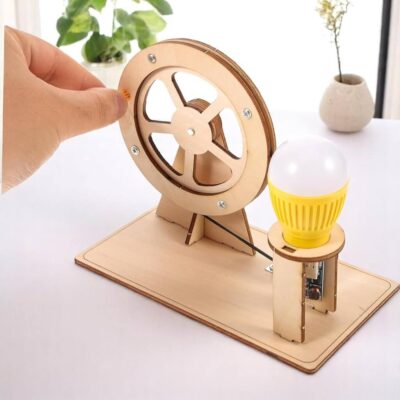
Teachers, home educators and adults who never quite got electricity at school. A hand crank generator lighting a bulb explains energy conversion better than any diagram.
How to choose an electricity kit
Choose between a complete box with many experiments and a single build with one satisfying result. Age 8 is the usual starting point; the laser tripwire and the circuit kit suit 10 and up.
| Type | Best for | Age | Price |
|---|---|---|---|
| Complete electronics kits | A dozen experiments in one box | 8 to 14 | £33 to £57 |
| Where electricity comes from | Potato clock, hand crank generator | 8+ | £18 to £20 |
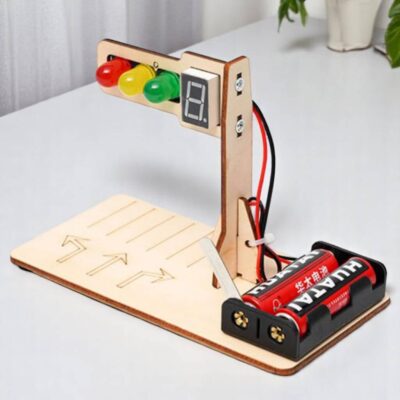
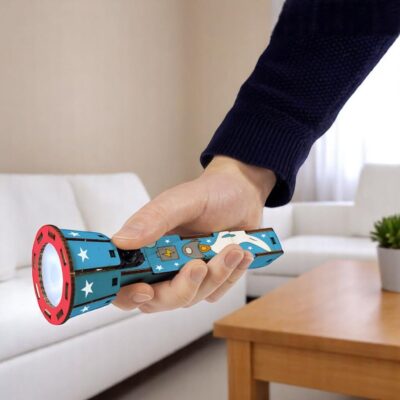
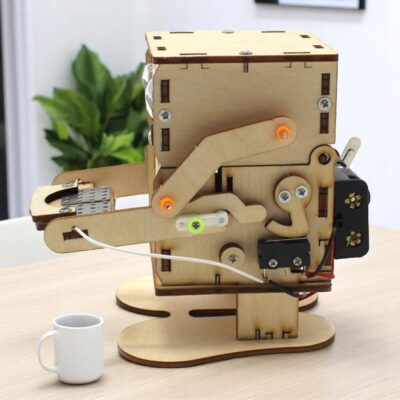
| Single builds with a result | Torch, traffic light, buzz wire game, robot bank | 8+ | £18 to £22 |
| Alarm and sensor kits | Laser tripwire, light sensors | 10+ | £19 to £25 |
Everything runs on AA batteries, not included, at a voltage that cannot give a shock. If a circuit stays dark, the fault is almost always a loose wire or a battery the wrong way round, and finding it is the lesson.
The science in two lines
A circuit is a loop: current only flows when the loop is closed, which is why a switch works and why a broken wire stops everything. A coil of wire around an iron nail becomes a magnet when current flows, and a magnet moved past a coil makes current: the electromagnet and the generator are the same idea run in both directions.
Our three bestsellers
Electricity & Circuits: your questions, answered
What age are electricity kits suitable for?
Most kits in this collection are designed for ages 8 to 14. The Potato Clock and the Torch Making Kit work from about 8 with a little help; the Laser Tripwire and the Electric Circuit Kit suit 10 and up. Each product page gives the recommended age.
Are electricity kits safe for children?
Yes. Every kit here runs on AA batteries at low voltage. There is no mains connection and no risk of shock. The main safety rule is the usual one for batteries: keep them away from very young children and do not short them out deliberately.
Do I need to know anything about electronics to help?
No. The instructions are written for a complete beginner, with pictures for each step. If a circuit does not work, the fix is almost always a loose wire or a battery the wrong way round, and finding it is part of the lesson.
Which kit should I start with?
For a first experience, the Potato Clock or the Steady Hand Game: short build, immediate result. For a child who already likes building, the Electronics Kit for Kids offers a dozen experiments in one box and will last several weekends.
Are batteries included?
Usually not. Most kits take 2 or 3 AA batteries, listed on the product page. The Hand Crank Generator needs none at all: turning the handle is the power source.
Free UK delivery over £45 and 30 days to return it. For circuits that never need a battery, the solar kits; for the chemistry of a battery, the chemistry sets.