
L’essentiel :
- A 3D projector sends two slightly offset images to each eye so your brain reconstructs depth, using polarisation, colour-splitting (anaglyph) or active shutter glasses synced at 120Hz.
- The four main projector technologies are DLP, LCD, LCoS and laser, each handling 3D sync differently.
- A true «hologram projector» for the desktop isn’t a hologram at all: it’s a 19th-century optical trick called Pepper’s Ghost, using angled glass or acrylic to reflect an image into mid-air.
- Budget 3D home cinema projectors in the UK typically start around £300-£500 for 1080p DLP models with active shutter support.
Ask ten people what a «3D projector» is and you’ll get ten different answers: a home cinema box that makes Avatar pop off the wall, a little pyramid that makes your phone float a hologram above the screen, or even a free 3D model downloaded from a site like Sketchfab. As someone who spent years explaining optics to bewildered museum visitors, I find this confusion rather delightful. It means the question «how does 3D actually work?» is still very much alive. Let’s untangle it properly, Dr. Sterling style: a bit of physics, a bit of history, and a clear-eyed buying guide for 2026.
📋 Table of contents
What Is a 3D Projector and How Does It Work?
A 3D projector is a device that displays two slightly different images, one for each eye, so the brain merges them into a single image with perceived depth. This mimics stereopsis, the natural process your visual cortex uses because your eyes sit roughly 6.3cm apart and each sees the world from a marginally different angle. Projectors recreate this gap artificially using one of three delivery methods.
- Anaglyph (red/cyan glasses): the oldest and cheapest method, splitting the image by colour channel. It works but washes out colour accuracy.
- Passive polarisation: used in most 3D cinemas, it filters light so each lens only receives one polarised image. Requires a special silver screen to preserve polarisation.
- Active shutter: glasses with liquid crystal lenses that alternately black out each eye in sync with the projector, typically refreshing at 120Hz (60Hz per eye), giving sharper, full-colour 3D at the cost of battery-powered glasses.
⭐ Key takeaway
The method matters more than the projector itself. If you already own a pair of active shutter glasses from an old 3D TV, check they use the same infrared or Bluetooth sync protocol as your new projector, since there’s no universal standard across brands.
What Are the Four Main Types of Projectors?
The four dominant projector technologies are DLP, LCD, LCoS and laser, and each one affects how cleanly 3D content is rendered.
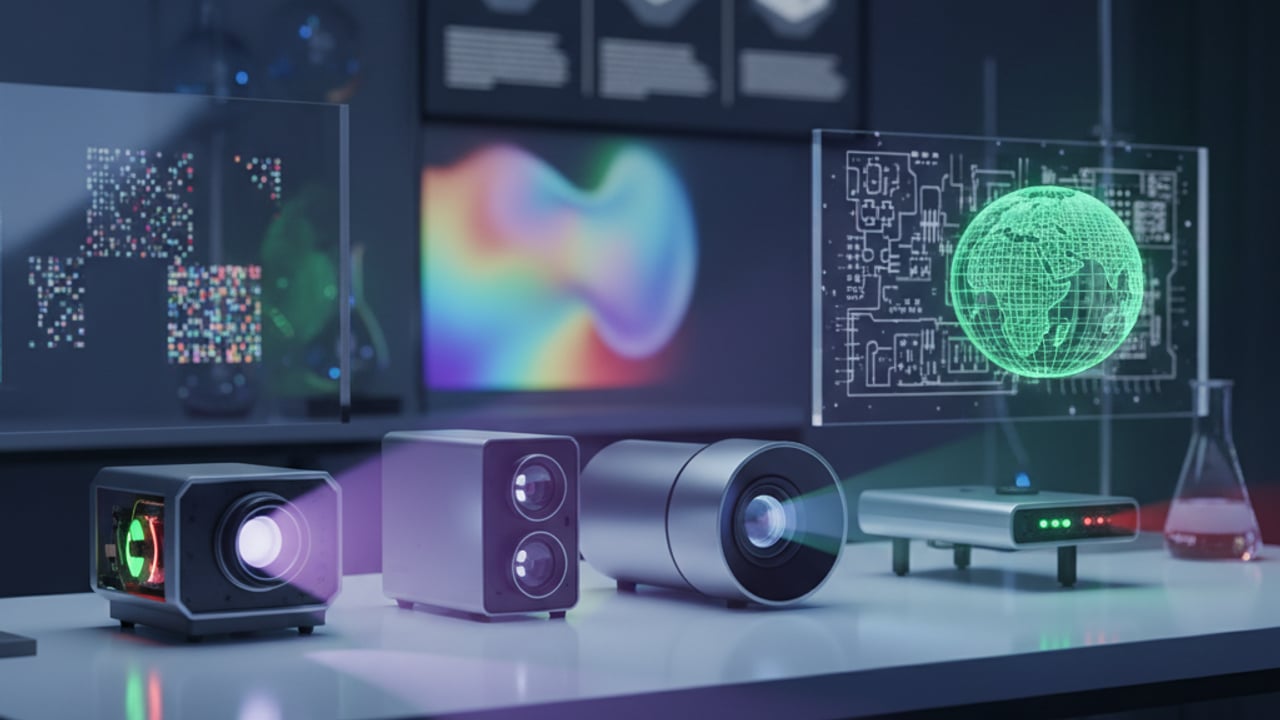
- DLP (Digital Light Processing): invented by Larry Hornbeck at Texas Instruments in 1987, DLP uses millions of microscopic mirrors flipping up to 5,000 times per second. Its fast refresh rate makes it the go-to choice for active shutter 3D, which is why most budget 3D home cinema projectors are DLP-based.
- LCD (Liquid Crystal Display): cheaper to produce and good for bright rooms, but slower pixel response can cause ghosting in fast 3D scenes.
- LCoS (Liquid Crystal on Silicon): found in premium projectors like Sony’s, offering excellent colour depth and contrast, though at a higher price point and with less common 3D support.
- Laser projectors: the newest category, using laser light sources instead of lamps for longer lifespan (often 20,000+ hours) and instant-on brightness, increasingly available with native 3D support in 2026 models.
DLP remains the safest bet if 3D is your priority, since its mirror-flipping speed naturally suits the rapid left-right image alternation that active shutter glasses need.
Is There a 3D Hologram Projector?
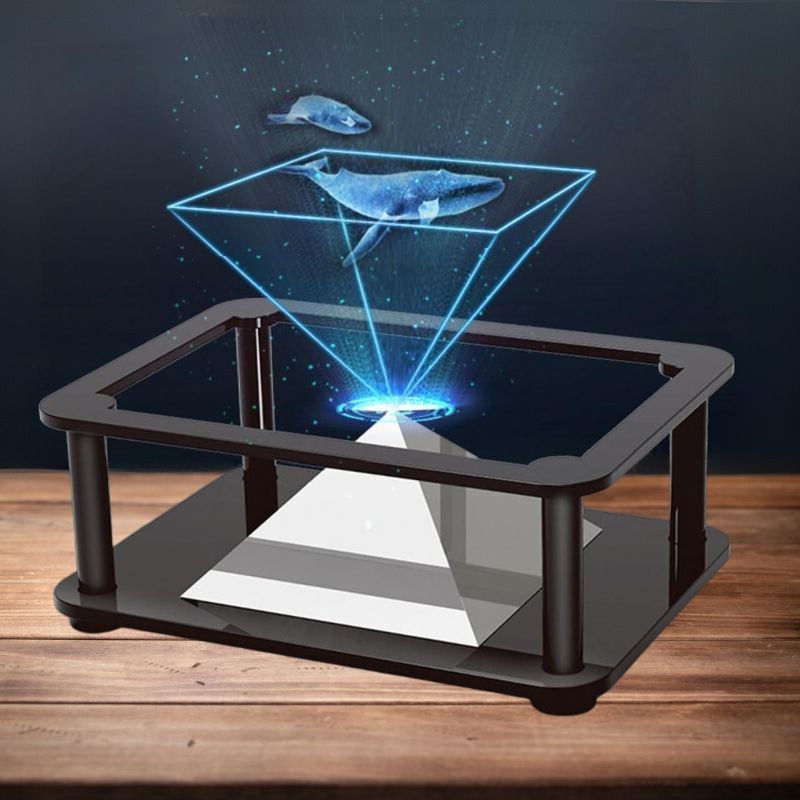
Strictly speaking, no consumer desktop device projects a true hologram, but small pyramid-shaped «hologram projectors» recreate a genuine 19th-century optical illusion called Pepper’s Ghost. Named after English scientist John Henry Pepper, who popularised the effect at London’s Royal Polytechnic Institution in 1862, the trick uses a sheet of angled glass or acrylic to reflect a bright image so it appears to float in mid-air, while the background stays dark and invisible. Your phone screen playing a looping video becomes the «ghost» floating inside the pyramid. It’s optical theatre, not laser holography like the kind used in security holograms on banknotes, but it’s genuinely rooted in physics rather than gimmickry.
🛍️ Our pick
Smartphone 3D Hologram Projector
Ce projecteur holographique pour smartphone transforme votre téléphone en source pour des images 3D flottantes, illustrant l’accessibilité des illusions holographiques domestiques.
14,99 £ · ★ 34 sold
💡 Did you know?
The savais-tu ? Pepper’s Ghost was originally staged using an entire sheet of glass tilted at 45 degrees on a theatre stage, reflecting an actor hidden in the orchestra pit. The same principle, shrunk down, is what powers every «3D hologram projector» pyramid sold today.
If this bends-light-to-trick-the-eye territory appeals to you more than a full cinema setup, the science behind it is the same family of phenomena at play in a Triangular Glass Prism, where refraction and dispersion split white light into a visible spectrum, exactly the kind of experiment Isaac Newton ran with a prism in his rooms at Trinity College, Cambridge, in 1666.
How to Connect 3D Glasses to a Projector?
Connecting 3D glasses to a projector means pairing them via the same sync method the projector uses, usually Bluetooth or infrared on active shutter models. The general steps are straightforward.
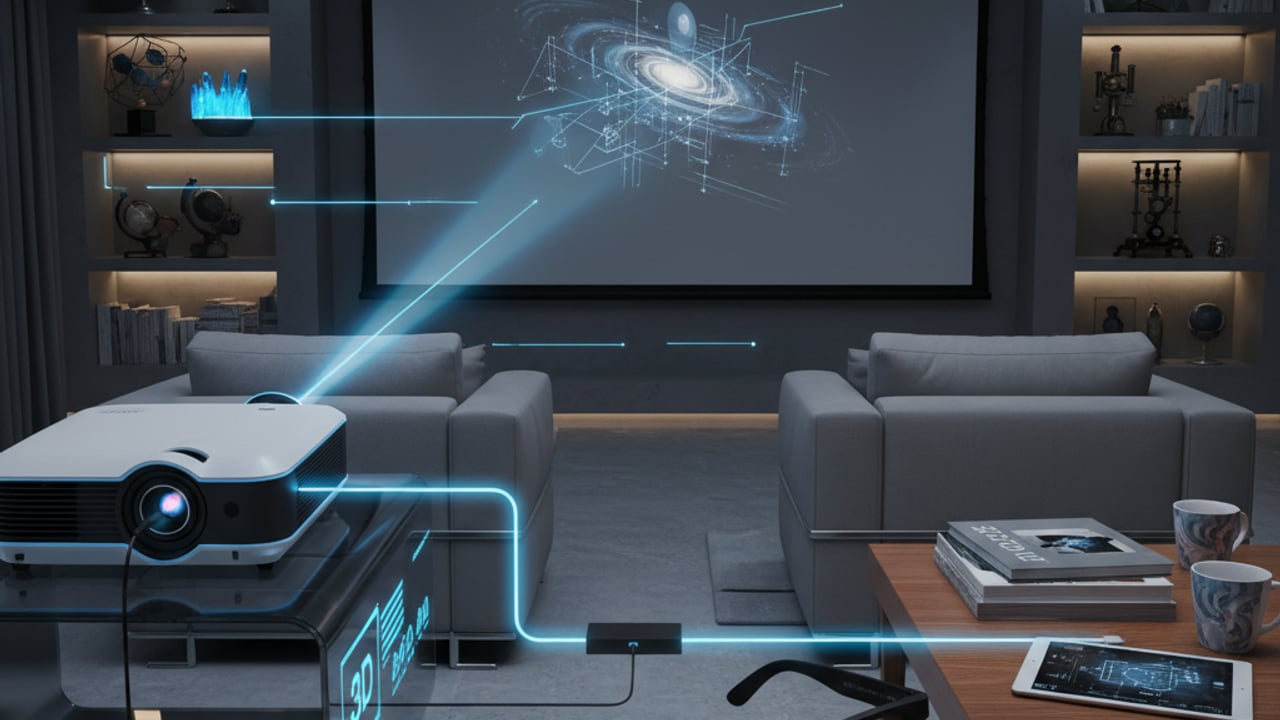
- Check your projector’s manual for its sync technology (DLP-Link, RF, or IR are the most common).
- Switch the projector into its dedicated 3D mode, often found in the picture or display settings menu.
- Turn on the glasses and hold them within line of sight of the projector’s emitter (for IR) or within Bluetooth range (for RF).
- Play genuinely 3D-encoded content; standard 2D footage will not create a depth effect no matter how good the glasses are.
⭐ Key takeaway
Compatibility is the single biggest source of frustration with 3D projectors. DLP-Link glasses, for instance, only work with DLP projectors that flash a synchronisation signal in the image itself, so an LCD projector will not trigger them at all.
What Is the Best Budget 3D Projector in 2026?
The best budget 3D projectors in 2026 sit in the £300 to £600 range and are almost universally DLP-based with 1080p resolution and DLP-Link active shutter support. At this price, expect brightness between 2,000 and 3,500 ANSI lumens, which is enough for a reasonably darkened living room but not a sunlit conservatory. Here’s a quick comparison of what to prioritise depending on your setup.
| Priority | Look for |
|---|---|
| Small, dark room | 1,500-2,500 lumens, short throw ratio |
| Larger living room | 3,000+ lumens, 1080p or 4K support |
| Occasional 3D movie nights | DLP-Link compatibility, included glasses |
| Longevity | Laser light source over lamp-based |
Don’t assume every «3D-ready» badge means the same thing, since some budget models only accept 3D via HDMI 1.4 frame-packing from a Blu-ray player and won’t decode 3D content streamed directly from apps.
Our Take
I’ll be candid: at Science Gifts we don’t stock home cinema projectors, our curiosity runs toward the physics on your shelf rather than the gear in your ceiling. But understanding how 3D projection tricks the brain, whether through polarised light, shutter glasses, or a Victorian ghost trick reborn as a desktop pyramid, is exactly the kind of «ooh, how does that work» moment we love sharing. If you’re drawn to that feeling more than to spec sheets and lumens counts, a cool gadget that demonstrates real optical or electrical phenomena, like the crackling discharge of a Tesla Coil Music device, might satisfy that same craving for visible science without the HDMI cables.
FAQ
Sources
- Texas Instruments, history of DLP technology development
- Science Museum Group (London), records on John Henry Pepper and the Pepper’s Ghost illusion
- VESA (Video Electronics Standards Association), 3D display and sync standards documentation