
L’essentiel :
- A storm glass is a sealed glass vessel containing a camphor-based liquid that forms crystals as temperature changes, popularised by Admiral Robert FitzRoy in the 19th century.
- No peer-reviewed study has confirmed that crystal patterns reliably forecast weather; the Met Office and modern meteorology treat it as a historical curiosity rather than a scientific instrument.
- It remains a genuinely striking piece of decor and a brilliant conversation-starting gift, best placed away from direct sunlight and radiators.
- Reading it is simple once you know the basic patterns: clear liquid means fair weather, feathery crystals suggest a change is coming, and dense clouding often precedes storms.
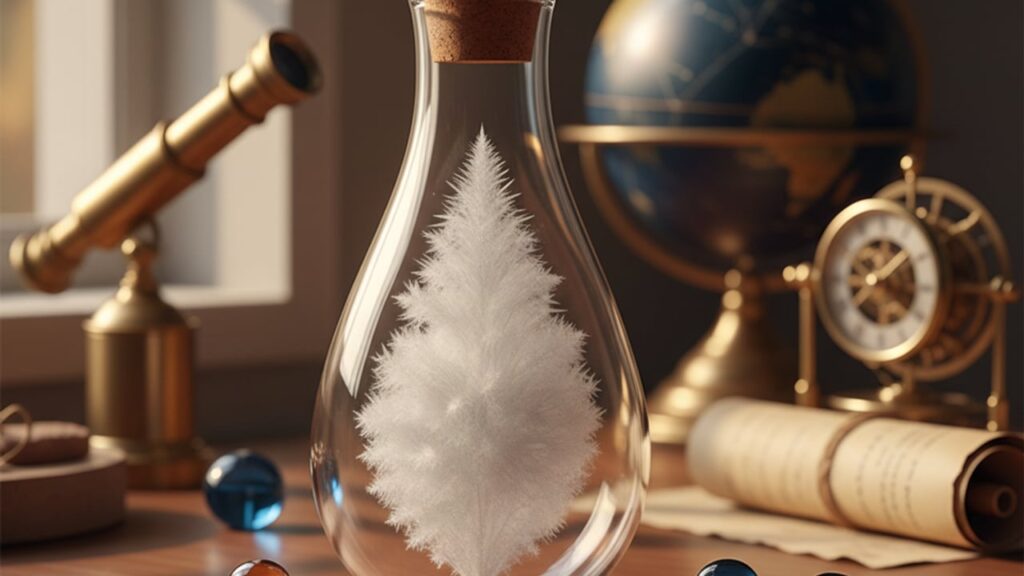
A storm glass is a sealed glass vessel, usually a slender tube or ornate flask, containing a solution of camphor, potassium nitrate, ammonium chloride, water and ethanol that crystallises into different shapes depending on ambient conditions. Despite its nickname, the storm glass does not measure atmospheric pressure and has never been scientifically validated as a weather forecasting tool, though it remains one of the most captivating objects a curious household can own. If you have landed here wondering whether to buy one, how it works, or how to read it, this guide covers everything from the science to the history to the practical care tips nobody else mentions.
📋 Table of contents
- What Is a Storm Glass, Exactly?
- Who Invented the Storm Glass? Admiral FitzRoy’s Legacy
- How Does a Storm Glass Work? The Chemistry Behind the Crystals
- Does a Storm Glass Really Work?
- How Do You Read Your Storm Glass?
- Where Should a Storm Glass Be Placed?
- How to Make a Storm Glass at Home?
- Choosing the Right Storm Glass: A Buying Guide
- Caring for Your Storm Glass
- Our Verdict
- Mini-FAQ
What Is a Storm Glass, Exactly?
A storm glass is a decorative, hermetically sealed glass container filled with a chemical solution that forms visible crystal structures as the liquid’s temperature fluctuates. The vessel itself can be a simple test tube shape or an elaborate blown-glass sculpture, but the working part is always the same: a mixture that reacts visibly to warmth and cold. Because the glass is completely sealed, nothing evaporates and no maintenance liquid needs topping up, which is part of why these instruments have survived, largely unchanged, for over 160 years.
Our own Storm Glass Weather Predictor and the more ornate Crystal Storm Glass Barometer both use this same historic formula, housed in hand-finished glass designed to sit as comfortably on a bookshelf as it does on a study desk.
💡 Did you know?
Le savais-tu ? The recipe used in most storm glasses today (camphor, potassium nitrate, ammonium chloride, water and alcohol) is essentially identical to formulas documented in 19th-century chemistry texts, meaning you are looking at genuine period chemistry every time the crystals shift.
Who Invented the Storm Glass? Admiral FitzRoy’s Legacy
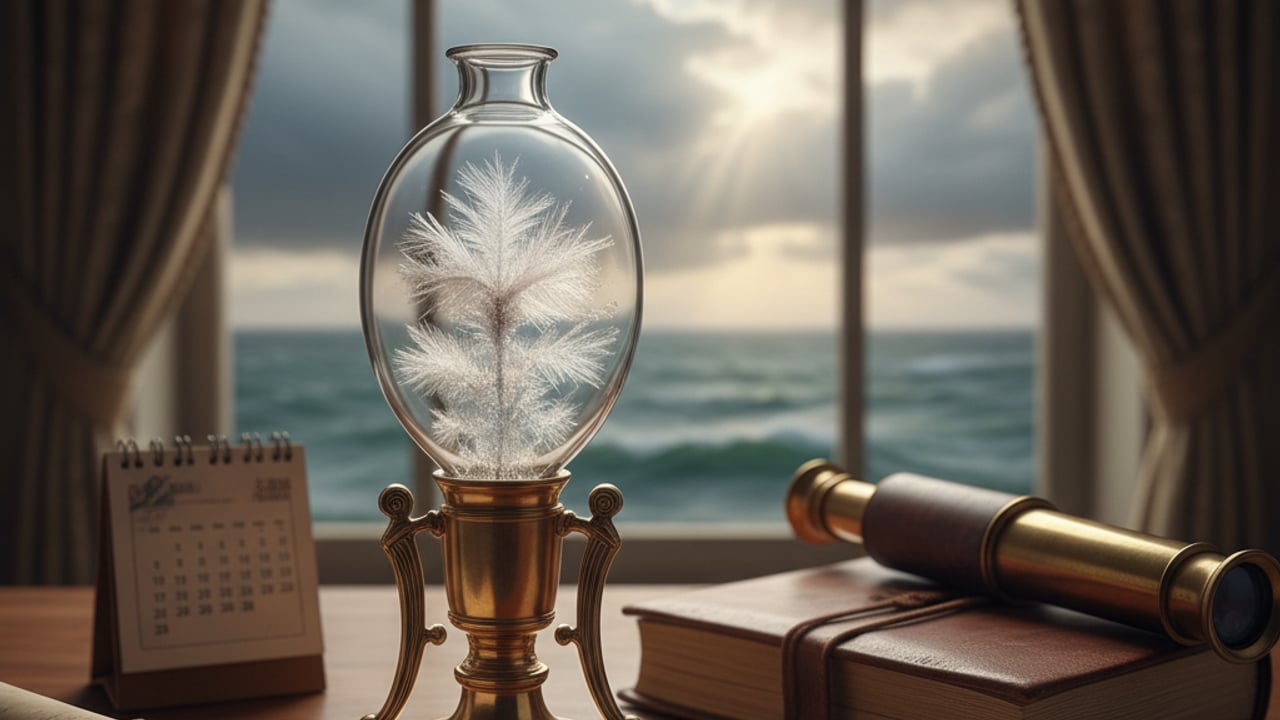
The storm glass predates Admiral Robert FitzRoy by decades, but he is the reason it became famous, using it aboard HMS Beagle during Charles Darwin’s famous 1831-1836 voyage and later championing it as part of Britain’s first scientific weather service. FitzRoy became the founding head of the UK Meteorological Office in 1854, and the catastrophic loss of the Royal Charter ship in a storm off Anglesey in 1859, which killed over 450 people, pushed him to develop the country’s first storm-warning system. FitzRoy published The Weather Book in 1863, one of the earliest serious attempts to turn weather observation into a predictive science, and the storm glass became closely associated with his name even though he never claimed it was infallible.
That historical pedigree is exactly why the object still fascinates collectors and gift-buyers today: it is a tangible link to the birth of modern meteorology, not a modern novelty dressed up as an antique.
How Does a Storm Glass Work? The Chemistry Behind the Crystals
A storm glass works through temperature-driven crystallisation of dissolved solids in the sealed liquid, not through any direct sensing of barometric pressure. Camphor and potassium nitrate dissolve more readily in warm liquid and precipitate out as visible crystal structures when the solution cools, which is why temperature swings, not pressure alone, are the main driver of what you see. This is a crucial distinction that most sellers gloss over: a real barometer measures air pressure with a mechanical or electronic sensor, while a storm glass is essentially responding to the ambient temperature of the room it sits in.

🛍️ Our pick
Storm Glass Weather Predictor
Un storm glass, aussi connu sous le nom de baromètre de Fitzroy, prédit les conditions météorologiques grâce aux cristallisations dans son liquide en fonction des changements de température et de pression.
34,99 £ · ★ 46 sold
⭐ Key takeaway
À retenir : Because a storm glass reacts primarily to temperature rather than pressure, its crystal patterns are influenced as much by central heating, sunlight and draughts as by any incoming weather front.
Does a Storm Glass Really Work?
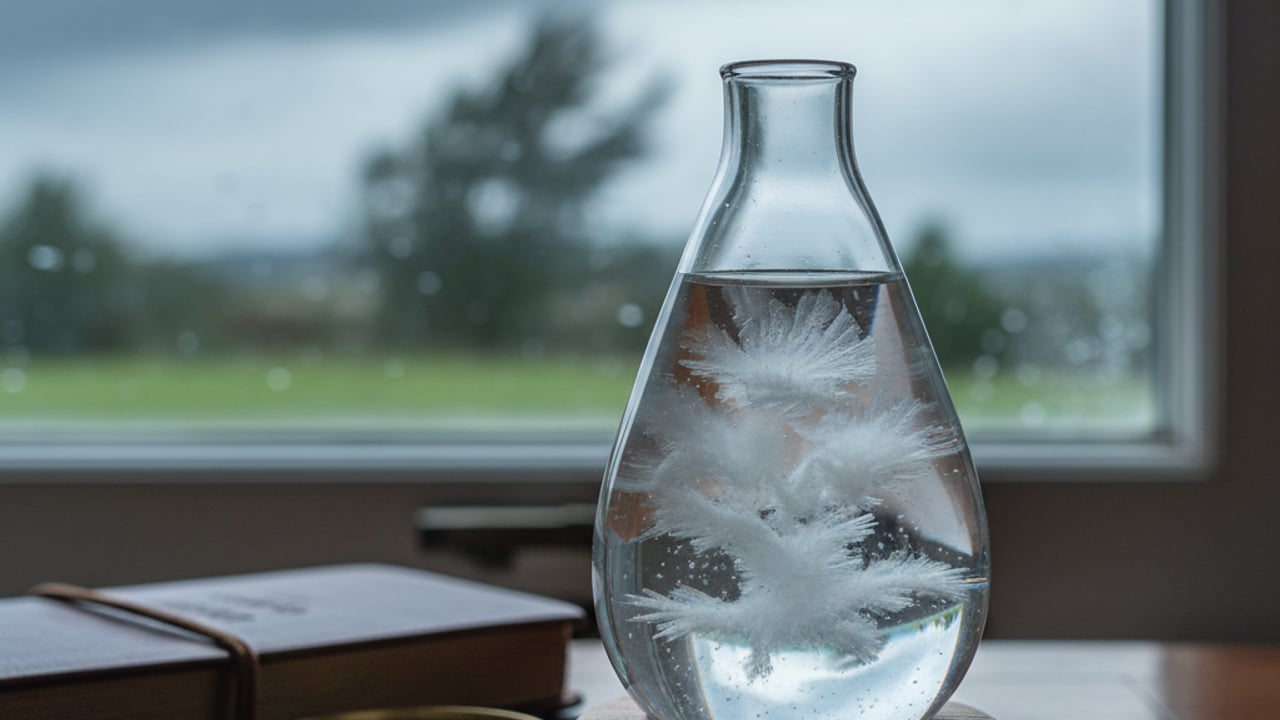
No, a storm glass does not reliably predict the weather in any scientifically validated sense, and there is no published, peer-reviewed research demonstrating a consistent correlation between its crystal formations and actual atmospheric conditions. Modern meteorology relies on aneroid and digital barometers that measure atmospheric pressure changes to within roughly 1 hectopascal, combined with satellite data, radar and computer modelling, none of which a sealed chemical tube can replicate. The Met Office and independent science communicators have long classified storm glasses as historical curiosities rather than functioning meteorological instruments, largely because the crystallisation process is driven by temperature and, some researchers suspect, by tiny electrical or vibrational disturbances that have nothing to do with incoming storms.
That said, dismissing it entirely misses the point for most buyers. Owning a storm glass is less about accurate forecasting and more about engaging, hands-on curiosity, the same appeal that makes a Tesla Coil Music device or a Magic Spinner so satisfying despite neither being strictly practical. Think of it as a piece of working science history you can watch change day to day, not a replacement for the Met Office app.
How Do You Read Your Storm Glass?
Reading a storm glass means observing the size, density and location of the crystal formations inside the sealed liquid and matching them to the loose interpretive scale developed by 19th-century sailors. There is no official, standardised chart, but the following patterns are the ones most consistently referenced in historical and modern sources:
- Clear liquid: traditionally associated with bright, clear weather.
- Small dots or stars floating in the liquid: said to indicate humid or foggy conditions.
- Fine, thread-like crystals near the top: often read as a sign that windy weather may be approaching.
- Large, flaky crystals throughout the liquid: linked in folklore to overcast skies or snow in colder months.
- Dense clouding with crystals near the bottom: the pattern most commonly associated, historically, with thunderstorms.
Because these correlations are anecdotal rather than measured, we recommend treating the readings as a fun ritual rather than a forecast you plan your day around.
Where Should a Storm Glass Be Placed?
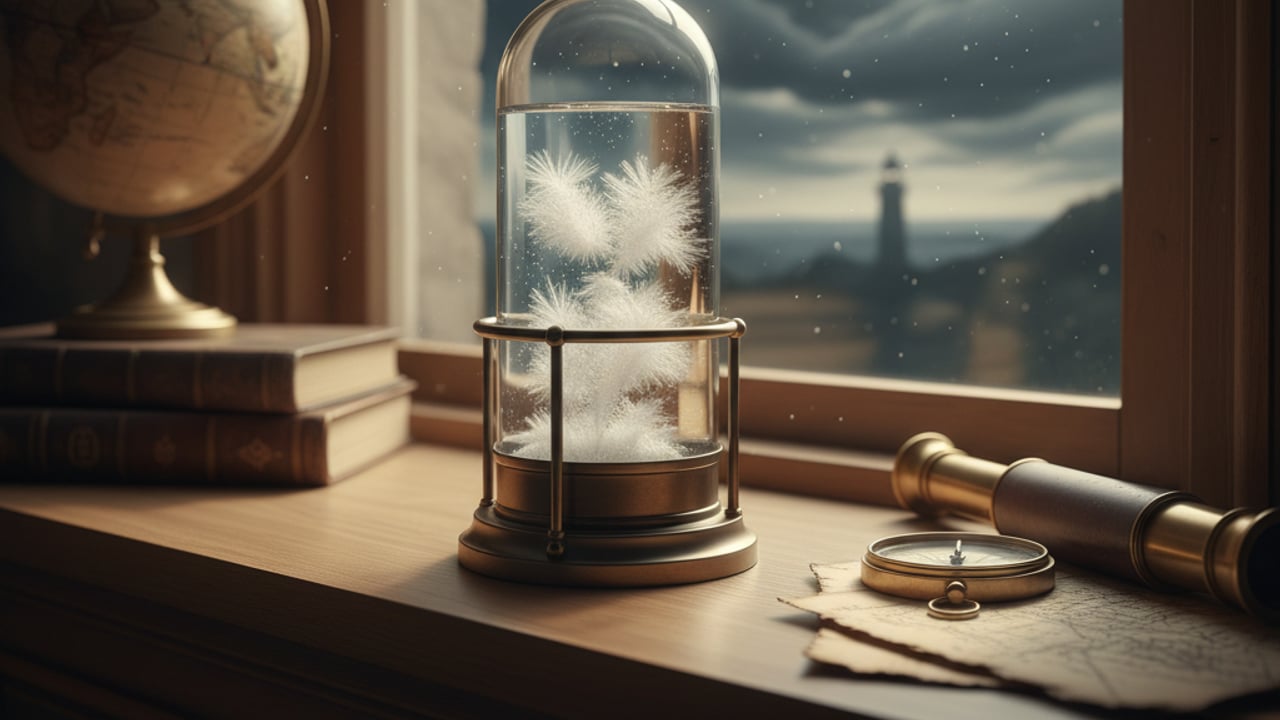
A storm glass should sit somewhere with stable ambient temperature, away from direct sunlight, radiators, air conditioning vents and draughty windows, so its crystal changes reflect general room conditions rather than artificial heat spikes. A study desk, a mantelpiece away from the fireplace, or a bookshelf in a room with consistent heating all work well. Avoid outdoor placement entirely, since UV exposure can degrade the solution over time and temperature extremes may cause the glass to crack.
💡 Did you know?
Le savais-tu ? Sailors in the age of sail kept storm glasses below deck rather than on open rigging, precisely because stable indoor temperature gave more consistent, comparable readings day to day.
How to Make a Storm Glass at Home?
A DIY storm glass can be made by dissolving camphor, potassium nitrate and ammonium chloride in a mix of distilled water and ethanol, then sealing the solution inside an airtight glass vessel, though achieving the reliable, photogenic crystal formations of a commercial version takes practice. Camphor is flammable and the mixture involves handling chemicals that require care and proper ventilation, so most hobbyists find it easier and safer to buy a professionally sealed unit rather than experiment with an open flask at home. If the appeal is the craft process itself rather than the finished object, a kit-based alternative like the DIY Stirling Engine Kit offers a similarly hands-on scientific build without the chemical handling risks.
Choosing the Right Storm Glass: A Buying Guide
The right storm glass depends on the balance you want between decorative statement and portability, since sizes commonly range from compact 14cm desk versions to elaborate 25cm+ display pieces. Comparable products on the UK market, such as those referencing Admiral FitzRoy’s original design, often list dimensions around 5.5 inches wide by 2.4 inches high for the crystal chamber alone, mounted on a heavier wooden or metal base for stability. Prices for a genuine glass-and-chemical storm glass typically range from around £20 for a simple tube to £60 or more for hand-blown, artistically shaped versions.
| Style | Best for | Typical height |
|---|---|---|
| Simple tube on wooden base | Desk or shelf, budget gift | 14-18cm |
| Ornate blown-glass sculpture | Statement decor piece | 20-30cm |
| Barometer-style mounted version | Traditional, nautical look | 15-20cm |
Browse our full Storm Glass collection to compare shapes and finishes, or explore the wider Cool Gadgets range if you are gift-hunting for a science lover who already owns one.
Caring for Your Storm Glass
Caring for a storm glass mainly means protecting it from temperature shock and physical impact, since the sealed unit itself requires no cleaning, refilling or maintenance under normal use. Wipe the exterior glass gently with a soft, dry cloth and avoid sudden moves between a cold car boot and a warm living room, which can stress the seal over time. Never attempt to open or refill a commercial storm glass, as the seal is factory-set and tampering with it will void any warranty and risk exposure to the chemical solution inside.
Our Verdict
Having handled dozens of these over the years, I can say plainly that a storm glass earns its place in a home for curiosity and craftsmanship, not forecasting accuracy. I would never recommend one to someone hoping to replace their weather app, but as a genuinely engaging conversation piece with real 19th-century pedigree, it consistently outperforms most decorative science gadgets I have tested, including flashier LED-lit alternatives that offer no real chemistry at all.
Mini-FAQ
Sources
- Met Office (UK national weather service, founded by Robert FitzRoy in 1854)
- Robert FitzRoy, “The Weather Book: A Manual of Practical Meteorology”, 1863
- Wikipedia, “Storm glass” entry, historical and chemical composition references