
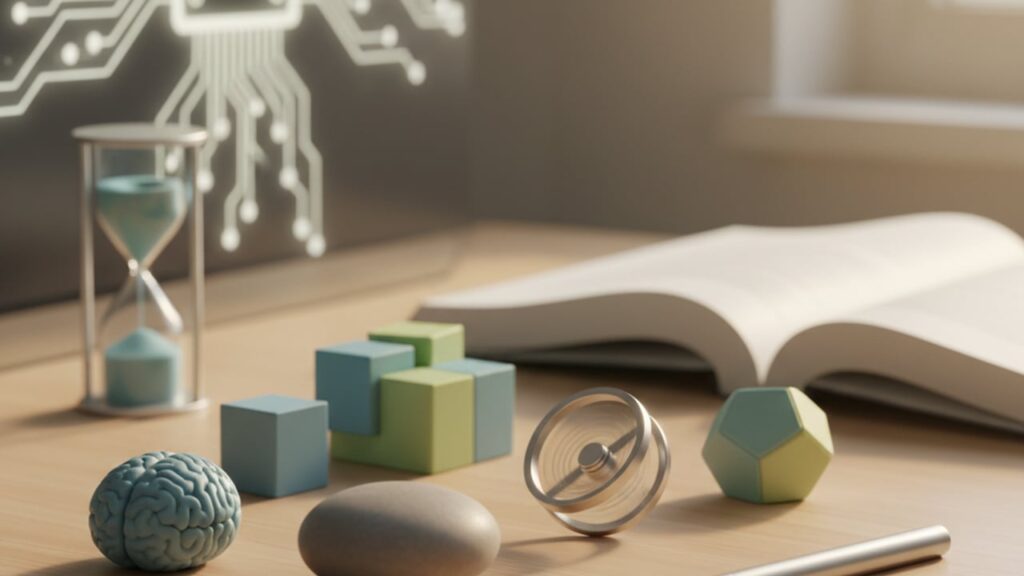
The essentials:
- Anti stress toys work by giving restless hands a repetitive, low-effort task, which occupational therapists and psychologists link to reduced fidgeting anxiety and improved focus during long meetings or study sessions.
- The most stress-relieving toys combine tactile feedback (texture, resistance) with a satisfying mechanical action, such as spinning, clicking, or magnetic snapping.
- Choose quiet, desk-friendly options like the Magic Spinner for the office, and more visual, meditative pieces like a Pyramid Brain Teaser for home.
- Yes, stress toys genuinely help many people self-regulate, though they are a coping tool, not a treatment for anxiety disorders.
According to the Mental Health Foundation’s 2018 UK survey Stress: Are We Coping?, 74% of British adults have felt so stressed at some point that they became overwhelmed or unable to cope. That single statistic explains why anti stress toys have quietly become one of the best-selling categories of desk accessories in Britain, from open-plan offices in London to university libraries in Edinburgh. As a former science communicator, I have spent years watching visitors in museums instinctively reach for anything spinnable, squeezable or magnetic the moment their hands are idle. There is real physics and psychology behind that instinct, and this guide unpacks it properly, without the wellness fluff.
📋 Table of contents
- What Are Anti-Stress Toys and Why Do They Work?
- What Is the Most Stress-Relieving Toy?
- Best Types of Anti-Stress Toys for Every Situation
- How to Use Anti-Stress Toys for Maximum Benefit
- Do Stress Toys Really Work?
- Our Verdict: Dr Sterling’s Top Science-Backed Picks
- Are Anti-Stress Toys Suitable for Children?
- Mini FAQ
What Are Anti-Stress Toys and Why Do They Work?
Anti stress toys are small handheld objects designed to occupy nervous energy through repetitive tactile or kinetic movement, which helps redirect restlessness away from the mind and into the hands. Occupational therapists have used similar tactile tools for decades with children who have sensory processing needs, and the principle transfers neatly to stressed adults: giving fidgety fingers a job to do frees up mental bandwidth for the actual task at hand, whether that’s a difficult phone call or a tricky spreadsheet.
The mechanism is partly about proprioception, the body’s sense of movement and position, and partly about simple distraction. A repetitive, predictable motion such as clicking a pen or rotating a spinner gives the nervous system a low-stakes pattern to focus on, which can dampen the racing thoughts that come with acute stress. This is why fidget spinners, worry stones and stress balls have existed in some form for centuries, long before the 2017 fidget spinner craze made headlines.
💡 Did you know?
Did you know? The modern fidget spinner traces back to a 1993 invention by Florida chemist Catherine Hettinger, who patented the design in 1997 as a way to occupy children’s hands. The patent lapsed in 2005, years before the toy became a global phenomenon.
What Is the Most Stress-Relieving Toy?
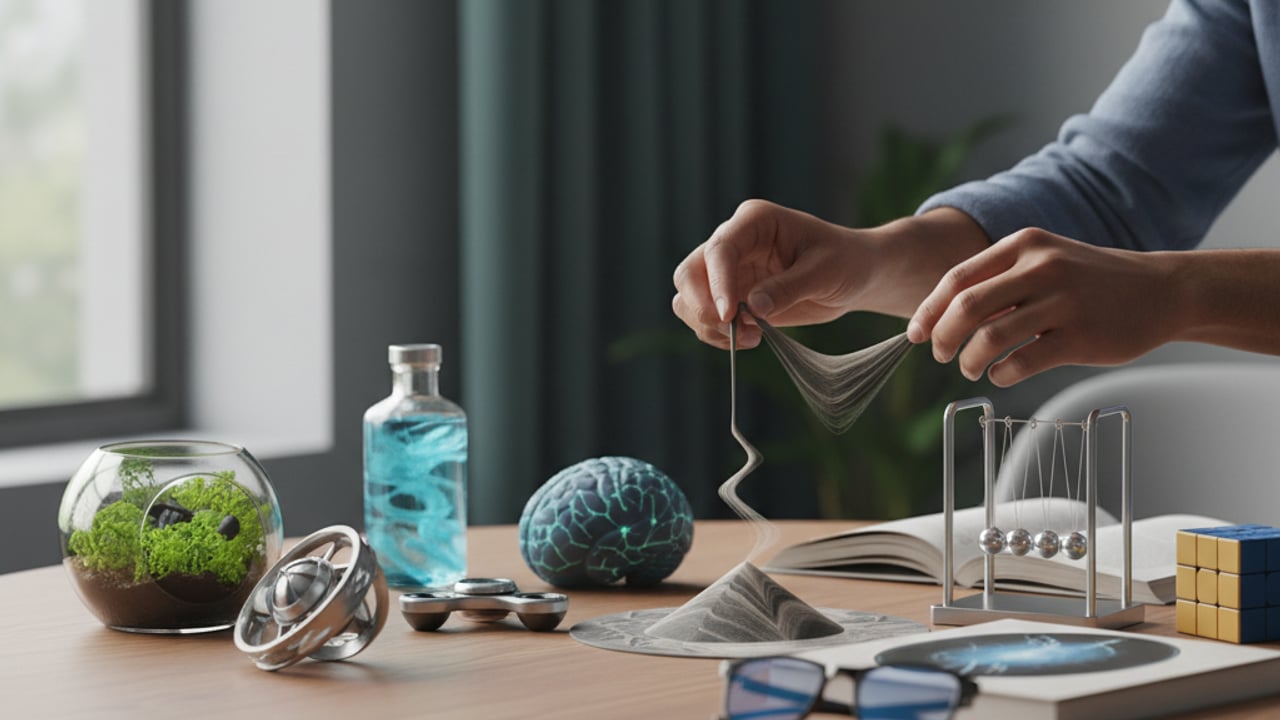
There is no single universally ‘best’ stress toy, because the ideal object depends on whether you need something silent for the office, something visual for a coffee table, or something satisfying to squeeze during a stressful commute. That said, magnetic desk toys and kinetic sculptures consistently rank as the most soothing for adults because they combine gentle resistance with a hypnotic, almost meditative visual rhythm. A set of Rainbow Magnetic Balls or a Tensegrity Lego sculpture both deliver that same slow, absorbing quality that a classic stress ball simply cannot match once the novelty wears off.
Best Types of Anti-Stress Toys for Every Situation
Different environments call for different tools, and matching the toy to the context makes a real difference to how often you actually use it.
🛍️ Our pick
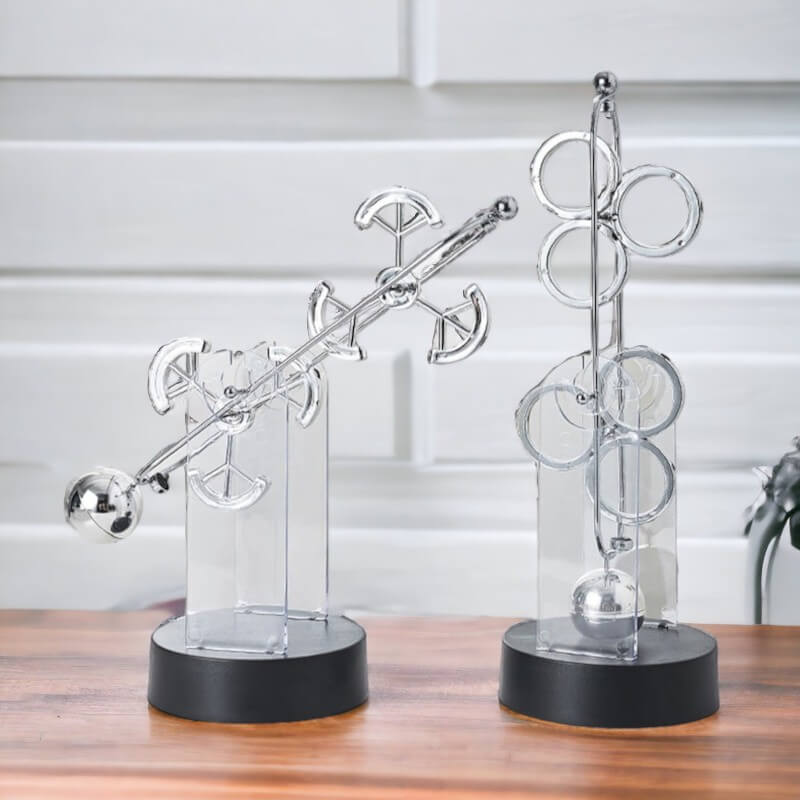
Perpetual Motion Kinetic Art Science Toy
Les sculptures cinétiques comme ce jouet scientifique procurent une relaxation visuelle grâce à leurs mouvements perpétuels apaisants.
32,99 £
| Situation | Best type of toy | Why it works |
|---|---|---|
| Office desk, open plan | Silent spinners, brain teasers | No clicking noise, discreet, doubles as decor |
| Home study or reading nook | Kinetic sculptures, magnetic solar systems | Visually calming, encourages micro breaks from screens |
| Commute or travel | Pocket-sized puzzles, squeeze toys | Compact, durable, easy to use one-handed |
| Meetings and calls | Magnetic balls, tensegrity pieces | Silent, tactile, keeps hands busy without distraction |
⭐ Key takeaway
To retain: a stress toy that makes noise is a liability in an office, so always check the product description for ‘silent’ or ‘quiet operation’ before buying for a shared workspace.
How to Use Anti-Stress Toys for Maximum Benefit
The way you use a stress toy matters as much as which one you choose. Simply owning a fidget spinner on your desk does nothing; the benefit comes from active, brief engagement at the right moment. Try using your toy in short bursts of 60 to 90 seconds right before a stressful task, such as opening a difficult email, rather than fidgeting constantly throughout the day, which can become its own distraction. Pairing the physical action with a few slow breaths amplifies the calming effect, since you are essentially combining tactile grounding with basic breathing regulation, a technique borrowed from mindfulness practice.
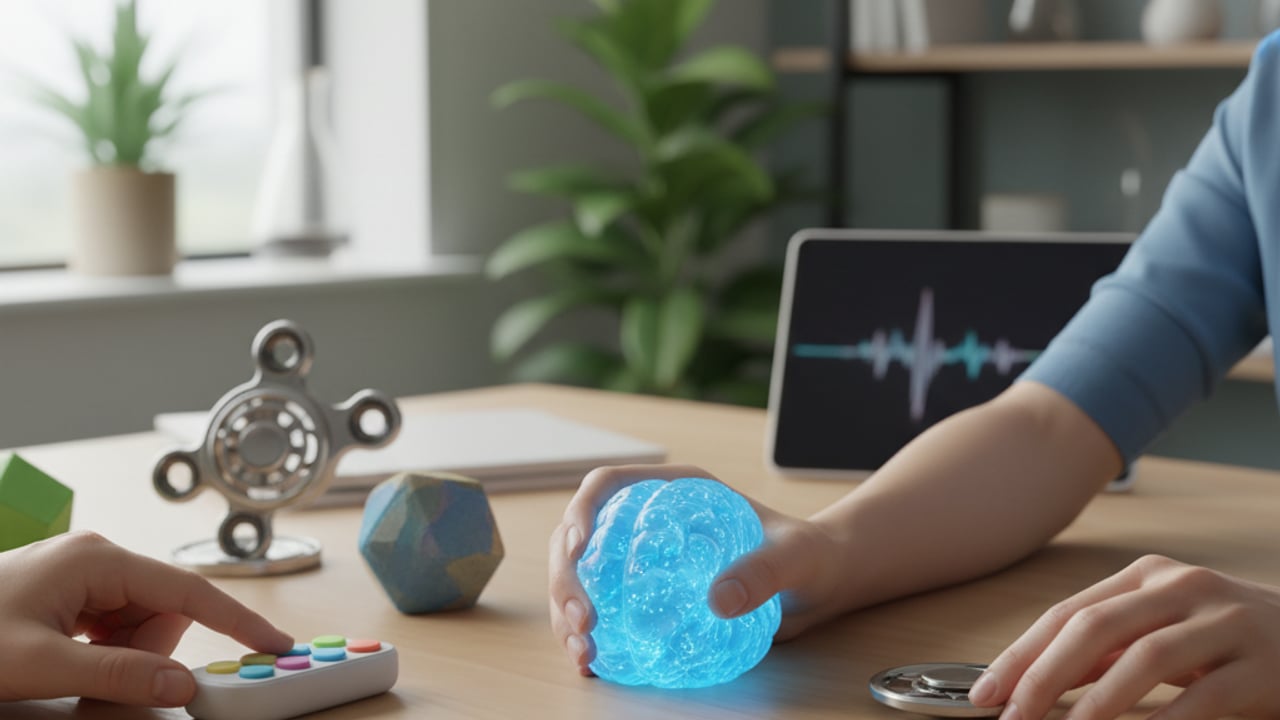
Keeping two or three different toys in rotation, one visual, one tactile and one mechanical, prevents the habituation effect where a single object stops feeling satisfying after a few weeks. This is exactly why museum gift shops and science stores stock such a wide variety: novelty itself is part of what keeps the calming effect working.
💡 Did you know?
Anecdote: Tensegrity structures, the floating-looking sculptures that seem to defy gravity, were pioneered by American artist Kenneth Snelson in 1948, with the term ‘tensegrity’ later coined by Buckminster Fuller. The same principle of tension and compression that fascinated 1940s sculptors now sits quietly on thousands of British desks as a stress-relief object.
Do Stress Toys Really Work?
Yes, for the specific goal of self-regulating restless energy and improving focus during repetitive or stressful tasks, stress toys have genuine practical value, though they are not a clinical treatment for anxiety disorders. Their effectiveness is well documented in occupational therapy practice, where tactile and sensory tools are routinely used to help both children and adults manage attention and sensory regulation. For everyday workplace stress, the evidence is largely experiential rather than clinical trial-based, but the consistency of reports from therapists, teachers and office workers alike suggests the effect is real, not placebo alone.
Where stress toys are not appropriate is as a substitute for proper mental health support. If stress or anxiety is significantly affecting daily life, a GP or qualified therapist remains the right first point of contact; a magnetic spinner is a coping tool, not a cure.
Our Verdict: Dr Sterling’s Top Science-Backed Picks
After years of testing desk gadgets both in museum shops and at my own cluttered writing desk, my honest verdict is that the best anti stress toys are the ones you would be happy to leave out on display even when you are not stressed at all. A cheap stress ball ends up in a drawer within a month. A well-made kinetic object stays on the desk for years because it doubles as a genuine conversation piece.

- Best for the office: the Magic Spinner, silent, compact and satisfying without drawing attention in meetings.
- Best for visual calm: the Pyramid Brain Teaser, which turns idle fidgeting into a genuine problem-solving break.
- Best for a hypnotic effect: Rainbow Magnetic Balls, endlessly reconfigurable and oddly soothing to reshape.
- Best conversation starter: a Tensegrity Lego sculpture, which looks like it should fall apart and never does.
For a wider browse, our Brain Teasers and Magnetic Balls collections cover most of the situations above, and our general Cool Gadgets range is worth a browse if you want something a little more unusual than a standard stress ball.
Are Anti-Stress Toys Suitable for Children?
Most fidget-style stress toys are suitable for children from around 6 years old, but always check the manufacturer’s recommended age range and supervise use with any toy containing small magnets or detachable pieces, which can pose a choking hazard for younger children. Magnetic ball sets in particular carry clear age warnings on UK packaging and should be kept away from children under the recommended age. For families with curious younger children, larger, non-detachable options such as a spinning top or a simple puzzle cube are generally a safer starting point.
Mini FAQ
Sources
- Mental Health Foundation, ‘Stress: Are We Coping?’ survey report, 2018
- United States Patent and Trademark Office, Patent US5591062A, Catherine Hettinger, filed 1993
- Royal College of Occupational Therapists, guidance on sensory and tactile tools for self-regulation