
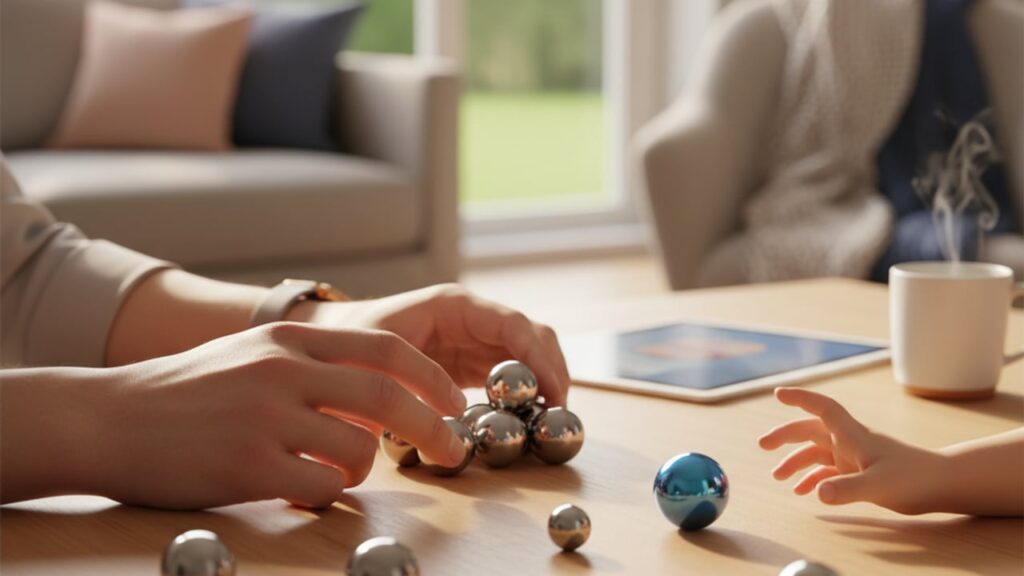
The essentials:
- Small, high-powered neodymium magnetic balls are genuinely dangerous if swallowed, especially by children under 14, because two or more magnets can attract through tissue and cause internal injuries.
- The US Consumer Product Safety Commission (CPSC) and UK bodies including RoSPA have issued repeated warnings since 2012, with recalls and a formal US regulation (16 CFR Part 1240) now limiting magnet strength in toys.
- Safe magnetic ball sets exist, but they should carry a clear age rating (14+ in most cases), meet ASTM F963 or EN71-1 flux limits, and be stored well away from young children.
- Adults buying magnetic balls as desk toys or décor, such as Rainbow Magnetic Balls, face no medical risk themselves but still need sensible storage habits in a household with kids.
As a former museum science communicator, I have spent a fair few afternoons explaining magnetism to seven-year-olds with a horseshoe magnet and a box of paperclips. Harmless fun. Tiny neodymium spheres are a different story entirely, and the headlines of the past decade prove it. This guide separates the genuine medical risk from the overblown panic, and tells you exactly how to enjoy magnetic balls safely in 2026, whether as a child’s brain teaser or an adult’s fidget piece on the office desk.
📋 Table of contents
Are magnetic balls actually dangerous?
Yes, when swallowed, high-powered magnetic balls can cause serious internal injury because two separate magnets attract each other through the walls of the intestine, pinching and sometimes perforating the tissue trapped between them. This is not a theoretical risk invented by tabloid journalism. The CPSC has documented thousands of emergency room visits linked to high-powered magnet ingestion in the United States, and UK media, including reporting by the Manchester Evening News and York Press, have covered near-fatal cases involving toddlers and teenagers alike.
The danger scales with magnet count and strength. A single swallowed magnet usually passes through the digestive system without incident, much like a coin. The real hazard appears when a child swallows two or more magnets, often at separate times without anyone noticing, because the magnets can then clamp together across loops of intestine.
⭐ Key takeaway
If you ever suspect a child has swallowed more than one magnet, treat it as a medical emergency and go straight to A&E or call NHS 111 rather than waiting for symptoms to appear. Early intestinal damage is not always painful at first.
How do magnetic balls actually work?
Magnetic balls are small neodymium magnets, an alloy of neodymium, iron and boron discovered independently in 1982 by General Motors and Sumitomo Special Metals, prized for producing the strongest permanent magnetic field of any commercially available material. Each sphere is magnetised through its diameter, meaning it has a north and south pole on opposite sides of the ball rather than a uniform field, which is exactly why the balls snap together end to end and can be shaped into chains, cubes or geometric lattices.
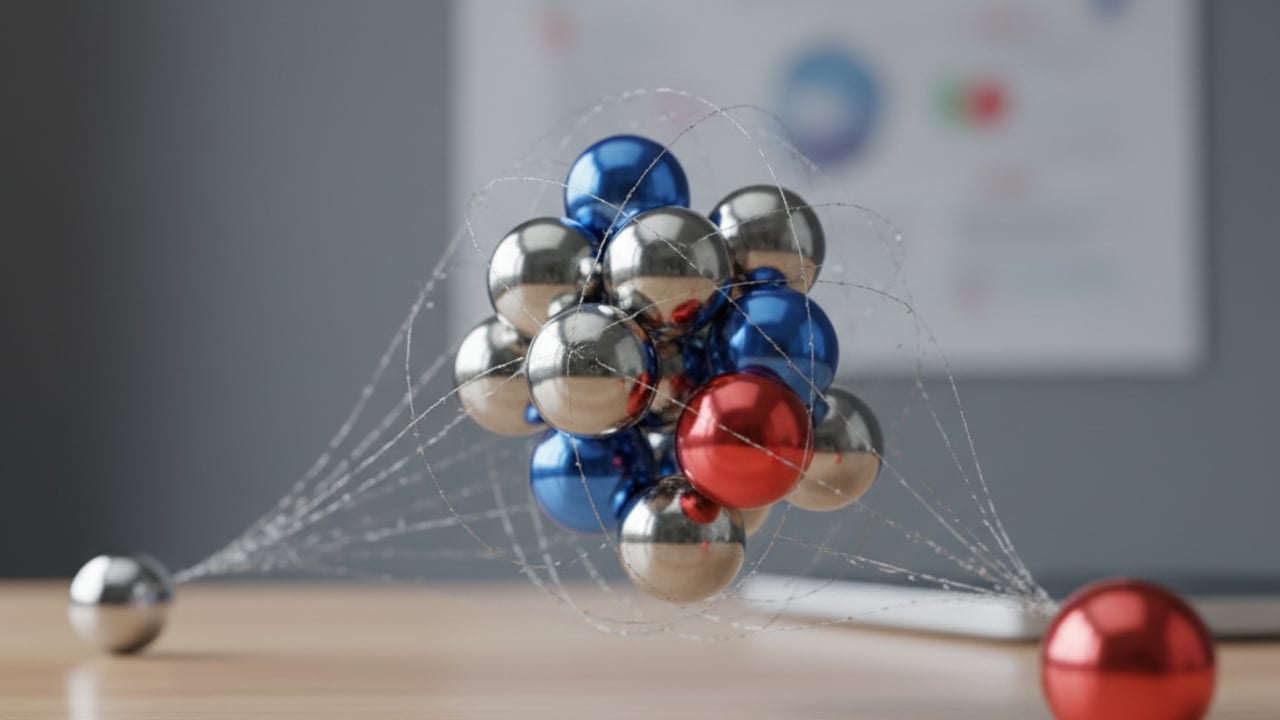
This is the same physics that underpins the lévitation magnétique effect you will see in our Magnetic Solar System, where carefully balanced magnetic repulsion keeps planets apparently floating without contact. Neodymium’s field strength, often five to ten times that of a standard ferrite fridge magnet of similar size, is precisely what makes these toys so satisfying to play with, and precisely what makes accidental ingestion so much riskier than swallowing an old-fashioned button magnet.
💡 Did you know?
Did you know the English physicist William Gilbert published ‘De Magnete’ in 1600, the first systematic scientific study of magnetism, nearly four centuries before anyone had worked out how to compress that same force into a 5mm sphere?
Are neodymium magnets safe to use at all?
For adults handling them as intended, neodymium magnets are safe, but they demand respect because strong sets can pinch skin, shatter if they snap together too forcefully, and interfere with pacemakers, credit card strips and electronics. Keep them away from laptops, hard drives and medical implants, and never let two large sets slam together at speed, since neodymium is brittle and can chip or splinter.
🛍️ Our pick
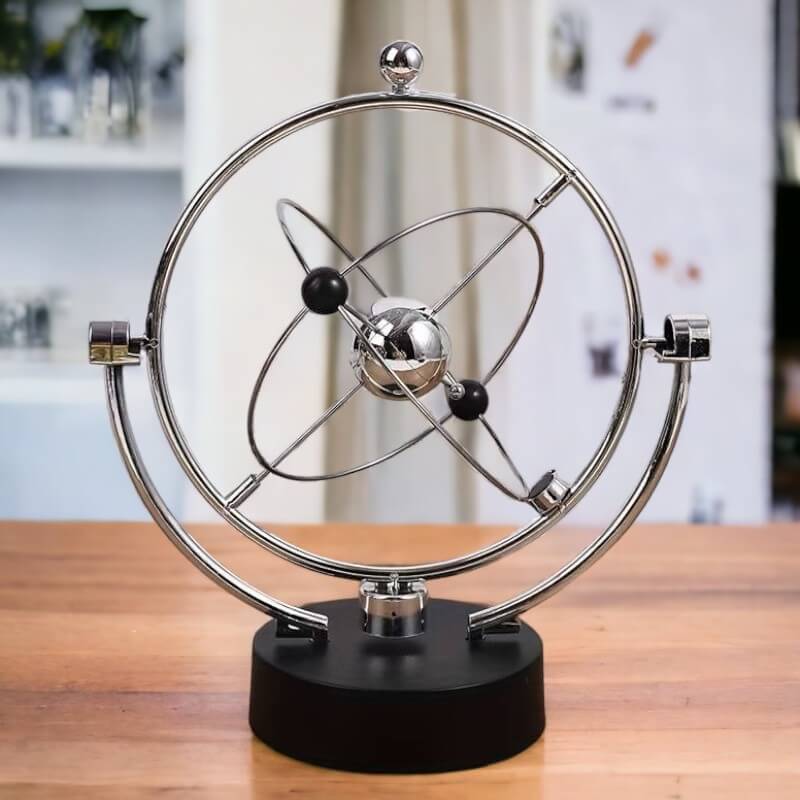
Newton’s Cradle Desk Toy
This classic executive toy demonstrates physics safely with swinging spheres, unlike magnetic balls posing serious ingestion risks.
24,99 £ · ★ 61 sold
Used sensibly, they are the basis of some genuinely elegant adult desk toys. Our Magnetic Balls category and the Rainbow Magnetic Balls set in particular are designed and marketed for teenagers and adults who want a tactile, sculptable fidget piece, not a children’s toy for the under-14 bracket.
What age is safe for magnetic ball toys?
Both the US ASTM F963 toy safety standard and the European EN71-1 standard set a flux index limit of 50 kG²·mm² for any small magnetic component accessible to children under 14, and sets exceeding that limit must carry an explicit age warning. In practice, this means most loose, high-strength magnetic ball sets are rated 14+ and are not classified as children’s toys at all, regardless of how colourful the packaging looks.
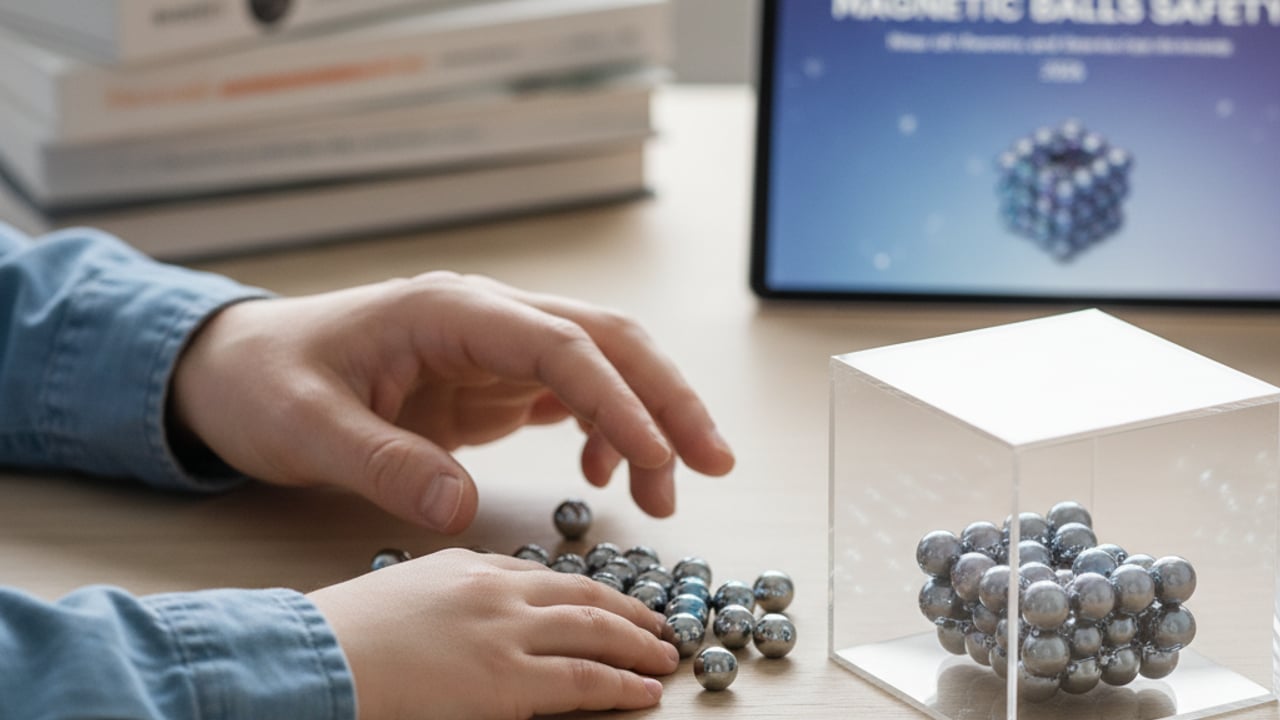
- Under 14: avoid loose, small neodymium ball sets entirely; choose fixed, non-detachable magnetic toys instead.
- 14 and over, with supervision: acceptable for building, STEM experiments and fidget use, stored away from younger siblings.
- Adults: no ingestion risk for the user, but storage matters if children visit the home.
If you are shopping for a genuinely child-appropriate brain teaser, our Pyramid Brain Teaser offers the puzzle-solving satisfaction of magnetic sets without any loose small magnets to worry about.
⭐ Key takeaway
Before buying any magnet-based toy, check the packaging for a CE or UKCA mark alongside an explicit age rating, and be wary of unbranded sets sold loose online with no stated flux index or standard compliance at all.
What are good, safer magnetic ball options for different buyers?
| Buyer | Good choice | Why it works |
|---|---|---|
| Child under 14 | Fixed magnetic construction toys, non-detachable pieces | No loose small magnets to swallow |
| Teen or adult desk user | Rainbow Magnetic Balls | Designed for 14+, sculptable, striking colour gradient |
| Office or living room décor | Cool Gadgets range | Curated for aesthetics and conversation value, not children’s play |
| Tactile engineering fans | Tensegrity Lego | Explores balance and tension without magnet ingestion risk |
What symptoms suggest a child has swallowed magnets?
Abdominal pain, vomiting, fever and loss of appetite in the hours or days after suspected swallowing are the classic warning signs, though early stages can be deceptively mild or symptom-free. This article is not a substitute for medical advice, but the consistent message from NHS guidance and CPSC case reports is simple: if ingestion is suspected, seek emergency assessment immediately rather than waiting to see if symptoms develop.
Our verdict
Having handled a fair few magnetic sets over the years, I would not keep loose neodymium balls in a house with toddlers, full stop, no matter how tidy the storage box. For teenagers and adults, though, a well-made set is one of the most satisfying desk objects you can own, genuinely sculptural, oddly meditative to fiddle with during a phone call, and a reliable conversation starter at any dinner party. The physics is real, the risk is real, and so is the appeal, provided you buy from a retailer that states the standard, the age rating and the flux index clearly rather than burying that information in small print.
Mini FAQ
Sources
- US Consumer Product Safety Commission (CPSC), magnet safety warnings and 16 CFR Part 1240 regulation
- ASTM International, ASTM F963 Standard Consumer Safety Specification for Toy Safety
- European Committee for Standardization, EN71-1 Safety of Toys standard
- NHS and RoSPA public guidance on magnet ingestion risks