
The essential:
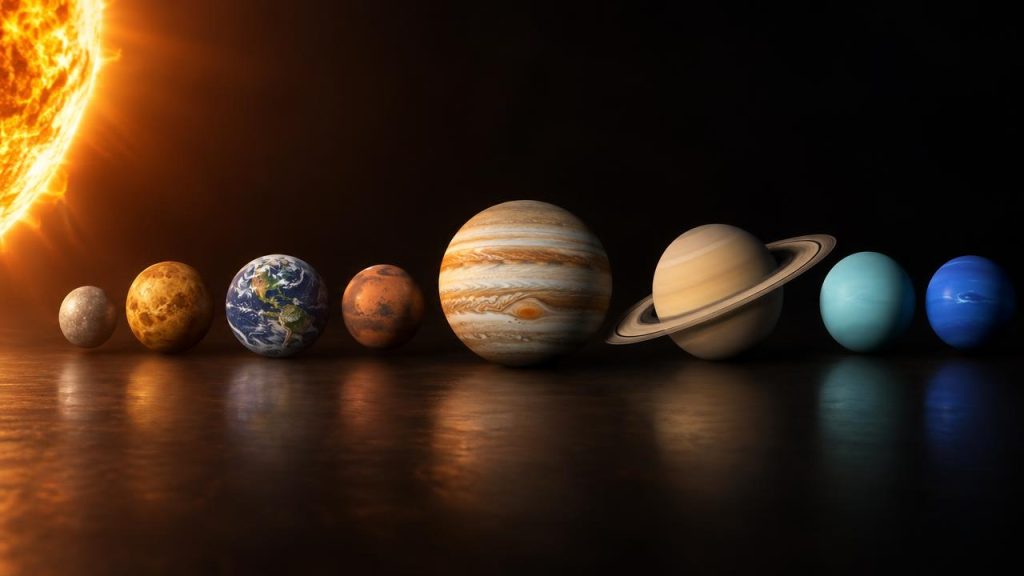
- The order of planets from the Sun is Mercury, Venus, Earth, Mars, Jupiter, Saturn, Uranus and Neptune.
- Neptune orbits about 30 times farther from the Sun than Earth, at roughly 4,515 million km.
- Jupiter is the largest planet at 142,984 km across, about 11 times the diameter of Earth, and Mercury the smallest at 4,879 km.
- Pluto was reclassified as a dwarf planet by the International Astronomical Union on 24 August 2006.
The order of planets from the Sun is Mercury, Venus, Earth, Mars, Jupiter, Saturn, Uranus and Neptune. Eight names, and yet most of us wobble somewhere around Uranus and Neptune, or still want to tack Pluto on the end out of loyalty to our school textbooks.
As a former museum science communicator, I have seen the same thing hundreds of times: people learn the list, forget it, then finally remember it for good the day they see the planets laid out to scale. So this guide gives you the sequence, a mnemonic that sticks, the real sizes and distances from NASA data, the reasons the order is what it is, and a scale model you can pace out in a park.
📋 Table of contents
- What is the order of planets from the Sun?
- What is the best planet mnemonic?
- Planets in order from the Sun: sizes and distances
- What is the size of the planets from smallest to largest?
- Why is the solar system in this order?
- Why is Pluto no longer in the order of planets?
- How to build a scale model of the solar system order
- Our take: from learning the order of planets to finding them in the sky
- FAQ
What is the order of planets from the Sun?
From the Sun outwards: Mercury, Venus, Earth, Mars, Jupiter, Saturn, Uranus, Neptune. The first four are small rocky worlds; the last four are giants made largely of gas and ices. The solar system splits neatly into two halves, separated by the asteroid belt between Mars and Jupiter.
- The inner, rocky planets: Mercury, Venus, Earth and Mars. They have solid surfaces, metal cores and few or no moons.
- The gas giants: Jupiter and Saturn, made mostly of hydrogen and helium, with no solid surface to stand on.
- The ice giants: Uranus and Neptune, smaller than Jupiter and Saturn and rich in water, ammonia and methane ices beneath their hydrogen-helium atmospheres.
Beyond Neptune lies the Kuiper belt, a vast ring of icy bodies that includes Pluto and other dwarf planets. Much farther out, comets drift in a distant cloud of icy debris.
One quirk worth knowing: the planets are listed by their average distance from the Sun, because every orbit is slightly elliptical. The order itself never changes, since the orbits of the eight planets do not cross. When people ask which planet is “next to” Earth, Venus wins on closest approach, but averaged over time Mercury is actually the nearest planet to Earth, and to every other planet too, as a 2019 analysis in Physics Today showed.
💡 Did you know?
Mercury, not Venus, is the closest planet to Earth on average. Because it hugs the Sun, it is never very far from us, whereas Venus spends long stretches on the far side of the Sun.
What is the best planet mnemonic?
The classic is “My Very Educated Mother Just Served Us Nachos”, where each first letter matches a planet in order: Mercury, Venus, Earth, Mars, Jupiter, Saturn, Uranus, Neptune. A mnemonic works by giving your memory a story instead of a list. The sentence only has to keep the first letters in the right order: M, V, E, M, J, S, U, N. A few popular versions:
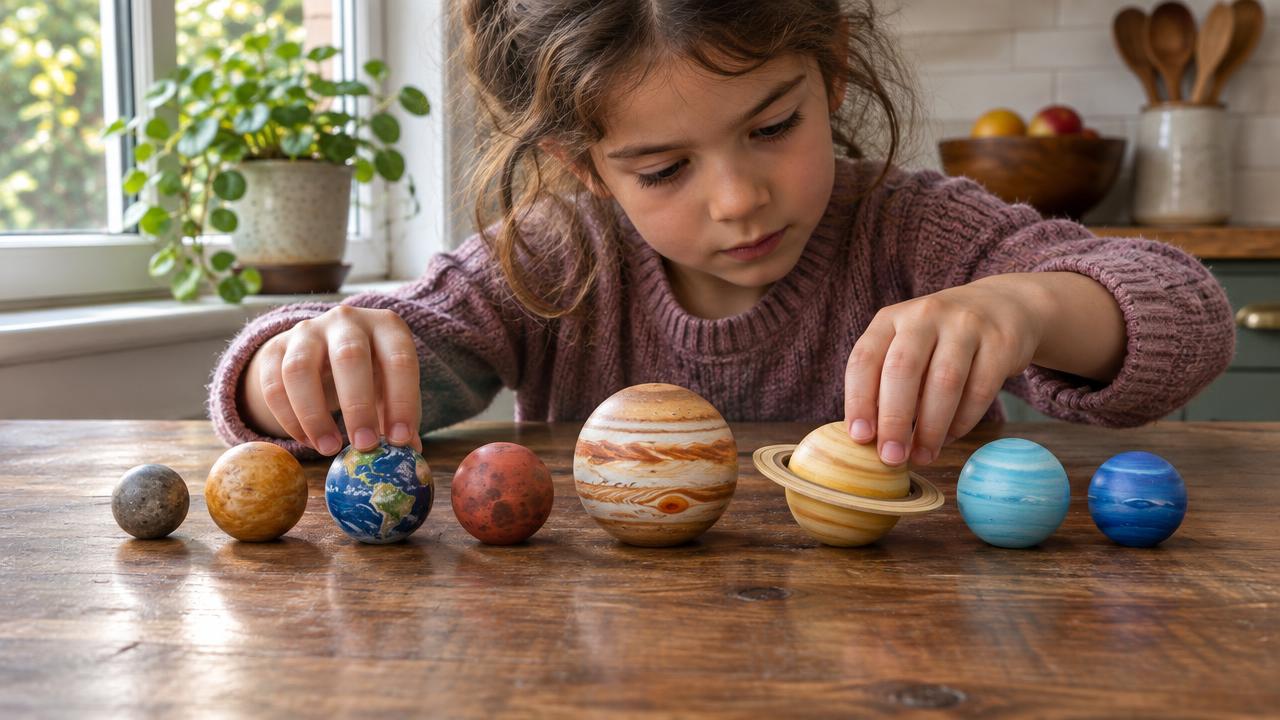
- My Very Educated Mother Just Served Us Nachos: an eight-planet update of older versions that ended with a ninth word for Pluto.
- My Very Easy Method Just Speeds Up Naming: handy because it describes itself.
- Many Very Elderly Men Jog Slowly Up North: one for anyone who prefers a walking image to a kitchen one.
The two Ms are the usual trap. Remember that the small, scorched one (Mercury) comes first and the red one (Mars) comes after Earth. A second trap is Uranus and Neptune: the order runs against the alphabet, U before N, so treat that pair as the exception worth learning on purpose.
In family workshops, the best mnemonic is always the one children invent themselves. Ask them to write a silly sentence about their pet, teacher or favourite food using those eight letters, then stick it next to a solar system poster in their bedroom. Seeing the sequence every day does the rest.
⭐ Key takeaway
Learn the letters M V E M J S U N, then hang any sentence you like on them. Your own silly version will stick far better than one you read once.
Planets in order from the Sun: sizes and distances
Distances range from 57.9 million km for Mercury to 4,515 million km for Neptune, and diameters from 4,879 km for Mercury to 142,984 km for Jupiter, according to NASA’s planetary fact sheet. Astronomers often express distances in astronomical units (AU), where 1 AU is Earth’s average distance from the Sun, about 149.6 million km. Seen that way, the pattern jumps out: the rocky planets are packed within about 1.5 AU, then the gaps suddenly widen. Jupiter sits at about 5.2 AU, Saturn at about 9.6, Uranus at about 19.2 and Neptune at about 30.2.
The figures below come from NASA’s planetary fact sheet. The diameter is the equatorial diameter, and the distance is the average distance from the Sun.
A few patterns are worth noticing:
- Earth is the largest of the rocky planets, with Venus a near twin at 95% of its diameter.
- Jupiter alone is wider than the four rocky planets laid side by side several times over.
- Uranus and Neptune are almost the same size, about four times wider than Earth.
- Light from the Sun takes about 8 minutes to reach Earth, but around 4 hours to reach Neptune.
| Planet | Diameter (km) | Average distance from Sun (million km) | Year length (Earth days) |
|---|---|---|---|
| Mercury | 4,879 | 57.9 | 88 |
| Venus | 12,104 | 108.2 | 224.7 |
| Earth | 12,756 | 149.6 | 365.2 |
| Mars | 6,792 | 228.0 | 687 |
| Jupiter | 142,984 | 778.5 | 4,331 |
| Saturn | 120,536 | 1,432.0 | 10,747 |
| Uranus | 51,118 | 2,867.0 | 30,589 |
| Neptune | 49,528 | 4,515.0 | 59,800 |
What is the size of the planets from smallest to largest?
From smallest to largest: Mercury, Mars, Venus, Earth, Neptune, Uranus, Saturn and Jupiter. Jupiter is about 11 times wider than Earth, and the Sun about 109 times. Size order and distance order are two different lists, which is where many quizzes catch people out. Sorted by diameter:
- Mercury: 4,879 km, only about 38% of Earth’s width.
- Mars: 6,792 km, roughly half of Earth.
- Venus: 12,104 km.
- Earth: 12,756 km.
- Neptune: 49,528 km.
- Uranus: 51,118 km.
- Saturn: 120,536 km, not counting its rings.
- Jupiter: 142,984 km.
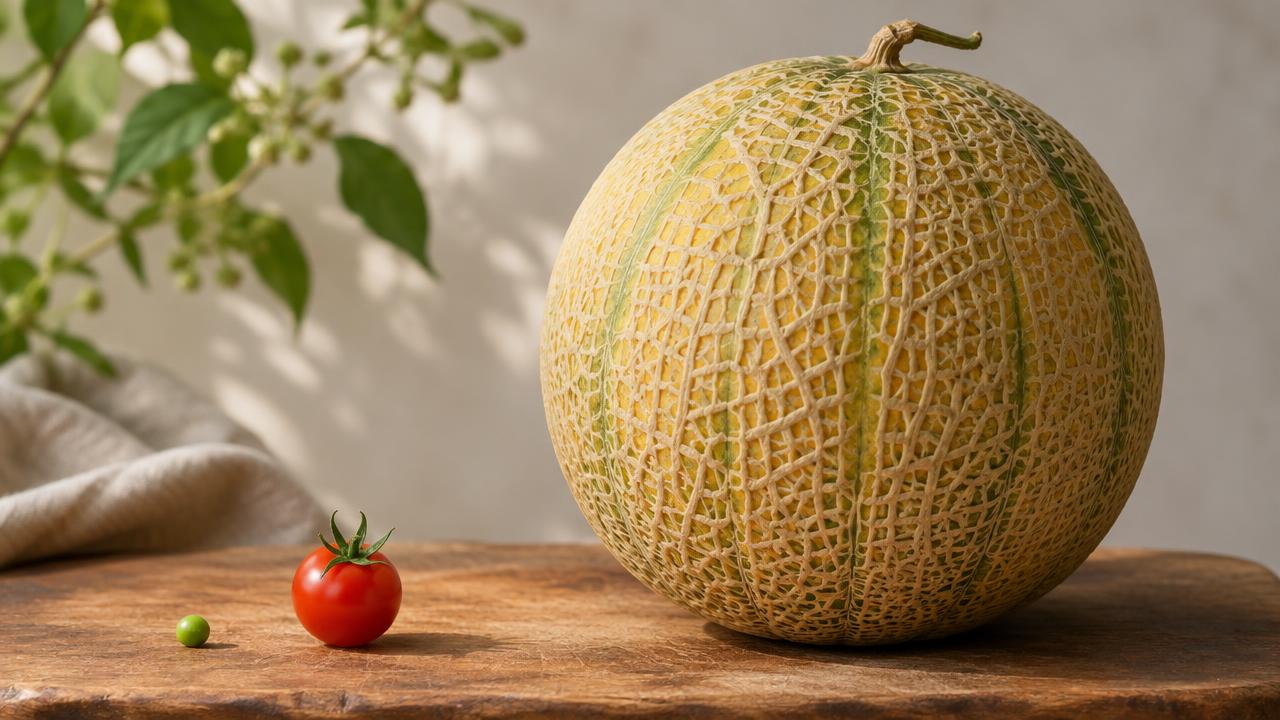
To picture this, imagine Earth as a cherry tomato. Jupiter becomes a large melon, Mars a garden pea, and the Sun a ball taller than an adult. The Sun’s diameter is roughly 109 times Earth’s and nearly 10 times Jupiter’s.
Neptune is slightly smaller than Uranus in diameter but has more mass, so it is denser. Saturn, meanwhile, has the lowest average density of any planet, lower than that of liquid water.
Sets that use a different gemstone for each world, such as these solar system gemstones, are a nice way to line the planets up on a shelf in order, though for practical reasons their sizes are not to scale.
Why is the solar system in this order?
The order reflects how the planets formed. Close to the young Sun it was too hot for ices to survive, so only rock and metal formed small planets. Beyond the frost line, ice was plentiful and giant planets could grow. About 4.6 billion years ago, the Sun formed at the centre of a spinning disc of gas and dust. Temperature decided what could condense where:
- Close to the Sun, only metals and rocky minerals could stay solid. There was not much of them, so the inner planets stayed small.
- Beyond the frost line, somewhere in what is now the asteroid belt, water and other compounds froze into ice. With far more solid material available, cores grew large enough to pull in huge amounts of hydrogen and helium gas, creating Jupiter and Saturn.
- Farther out, material was more spread out and growth was slower, which helps explain why Uranus and Neptune ended up as smaller ice giants.
Computer models suggest the giant planets did not stay put. Their orbits likely shifted early in the solar system’s history, scattering smaller bodies and sculpting the asteroid and Kuiper belts. The broad pattern, small rocky worlds inside and giants outside, still reflects that original temperature gradient.
Astronomers have since found thousands of planets around other stars, and many systems look nothing like ours, with giant planets orbiting very close to their stars. That wider picture is explored in our article on counting planets beyond our solar system.

🛍️ Our pick
Magnetic Solar System
Eight planets levitating around a sun, powered by a small solar panel: the planets in order, moving on your desk.
£22.49 · ★ 761 sold
Discover →Why is Pluto no longer in the order of planets?
On 24 August 2006, the International Astronomical Union defined a planet as a round body orbiting the Sun that has cleared its orbital neighbourhood. Pluto fails the third test, so it became a dwarf planet. Pluto was discovered in 1930 and counted as the ninth planet for more than 70 years. The trouble started when astronomers found more and more icy bodies in the Kuiper belt, some of them comparable to Pluto in size. Either the solar system had dozens of planets, or a clearer definition was needed.
At its General Assembly in Prague, the IAU voted on three criteria. A planet must:
- orbit the Sun;
- have enough mass for its own gravity to pull it into a nearly round shape;
- have cleared the neighbourhood around its orbit.
Pluto meets the first two but shares its zone with many other Kuiper belt objects, so it was reclassified as a dwarf planet, alongside Ceres in the asteroid belt and Eris beyond Neptune.
Pluto is no less interesting for it. The New Horizons flyby in 2015 revealed mountains of water ice and a vast heart-shaped plain of nitrogen ice. Many astronomers still argue about the definition, but for now the official order of planets stops at Neptune, which is why modern mnemonics end with an N.
How to build a scale model of the solar system order
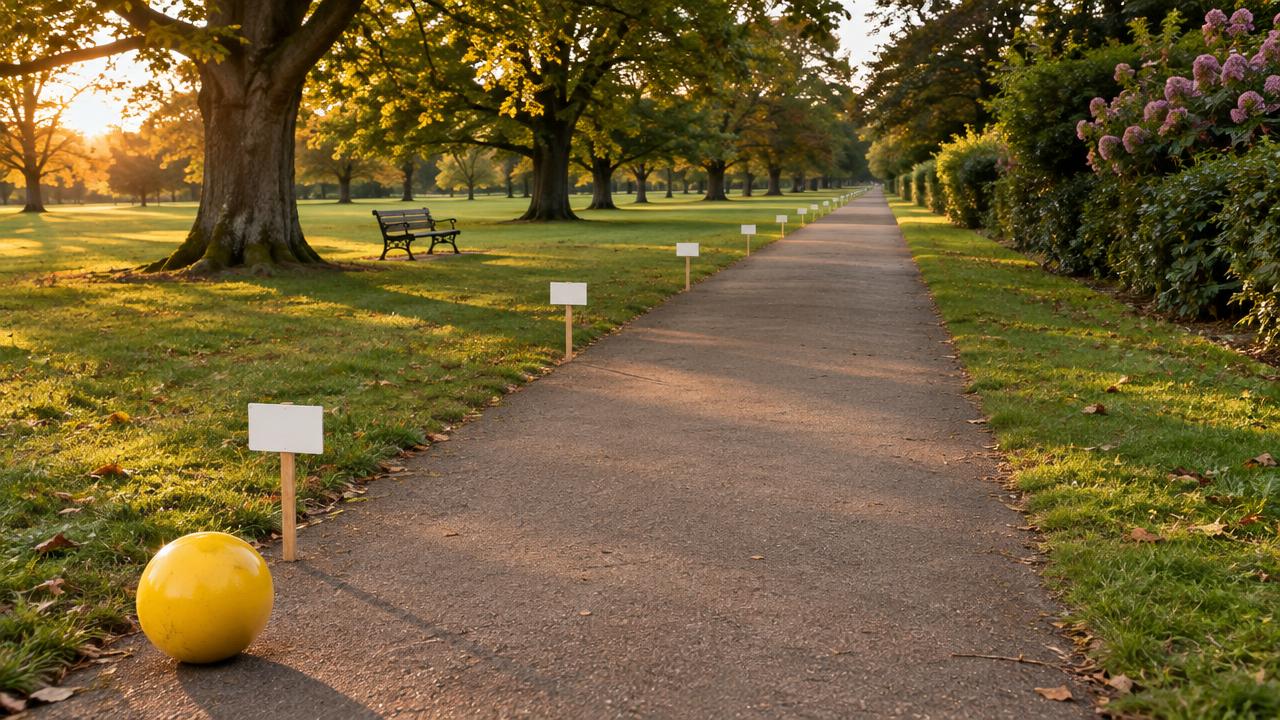
Use a 30 cm ball for the Sun. At that scale Earth is a 3 mm bead about 32 metres away, and Neptune sits nearly a kilometre from the Sun, so you need a long street or a park. Nothing teaches the solar system order like walking it. Scaling NASA’s figures to a 30 cm Sun gives these sizes and distances (rounded):
- Mercury: a 1 mm grain at 12.5 m.
- Venus: a 2.6 mm bead at 23 m.
- Earth: a 2.8 mm bead at 32 m.
- Mars: a 1.5 mm grain at 49 m.
- Jupiter: a 3 cm marble at 168 m.
- Saturn: a 2.6 cm marble at 309 m.
- Uranus: an 11 mm bead at 618 m.
- Neptune: an 11 mm bead at 974 m.
Stick each planet to a card, leave the Sun at a gate or tree, and pace out the distances; an adult stride is roughly 0.75 m. The inner planets are all over within 50 paces, then the walk to Neptune seems never to end. That emptiness is the real lesson.
Indoors, you cannot keep both sizes and distances to scale, which is why models and lamps compress the gaps. A solar-powered magnetic solar system keeps the planets in their correct order and shows them circling continuously, a great desk reminder of the sequence. Browse more ideas in our science posters and kids’ telescopes collections.
Our take: from learning the order of planets to finding them in the sky
Memorise the eight names with a mnemonic, then walk them out to scale once. After that, go outside: five planets, from Mercury to Saturn, are visible with the naked eye from the UK at the right time of year. A list on paper fades; an experience stays. Our recommended path for families and curious adults:
- Learn the sequence with a mnemonic you have made up yourself.
- Build the scale model once, ideally with children holding the planet cards.
- Spot the real thing: Venus and Jupiter are the brightest, Mars glows orange, Saturn is steady and creamy, and Mercury hugs the horizon around dusk or dawn. Unlike stars, planets rarely twinkle.
- Use a small telescope for Jupiter’s four largest moons and Saturn’s rings, both visible in modest instruments.
Night-sky skills build on each other. Once you know how to find the North Star, it becomes much easier to orient yourself and locate planets near the ecliptic. For a bedroom version, a Solar System Lamp or something from our planet lamp collection keeps the eight worlds in view at bedtime. Then test what you have learned with our solar system quiz. Once the order of planets is second nature, every clear evening becomes a chance to check it against the sky.
For a young astronomer, our space gifts range is full of ideas for stargazers of every age.

🛍️ Our pick
Solar System Lamp
A lamp shaped like the solar system to keep the order and relative sizes of the planets in view, day and night.
£28.99 · ★ 54 sold
Discover →FAQ
Sources
- NASA Goddard Space Flight Center, NSSDCA Planetary Fact Sheet
- International Astronomical Union, Resolution B5: Definition of a Planet in the Solar System (2006)
- Stockman, Monroe and Cordner, Venus is not Earth’s closest neighbor, Physics Today (2019)
- NASA Solar System Exploration, planet profiles
- Royal Museums Greenwich, Royal Observatory guides to the planets