


(5)
£41,49
(6)
£24,99


(8)
£61,99


(6)
£29,49


(6)
£81,99


What is a science gadget?
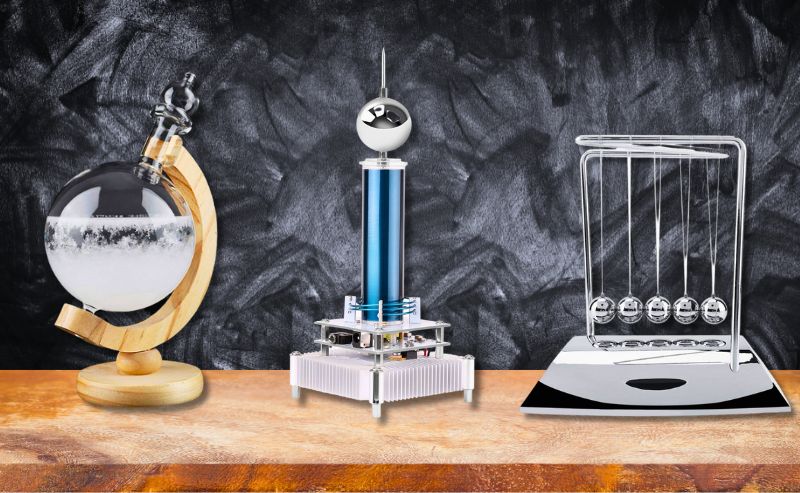
A science gadget is a desk object that puts a law of physics on display: a Newton's cradle swinging on conserved momentum, a gyroscope that refuses to fall, a storm glass growing crystals with the weather, a Stirling engine running on a flame, a Nixie clock glowing in neon, a Tesla coil throwing arcs. Instruments and demonstrations that look good on a shelf and explain themselves the moment someone asks.
173 modelsFrom £13.99Motion, weather, engines and clocksMost need no powerFree UK delivery over £45
Who is this collection for?
🪀
For a desk that needs something to fidget with
Newton's cradles, gyroscopes, spinners, Stirling engines: motion for the hands and the eyes between two tasks.
🎁
For the colleague, the engineer or the friend who has everything
Storm glasses, Nixie clocks, Galton boards, Tesla coils. Objects with a principle behind them and a place on a shelf.
🎓
For teachers and the endlessly curious
Instruments and demonstrations that make a law of physics visible in seconds, sturdy enough for a classroom.
How to choose a science gadget
Decide where it will live and what it should do there: move on a desk, react on a windowsill, glow in a study, or impress in a reception. Each family has its own page.
| Type | Best for | Runs on | Price |
|---|---|---|---|
| Motion: cradles, gyroscopes, spinners | Desks, fidgeting, ages 8+ | A push or a flick | £14 to £80 |
| Weather and heat: storm glass, thermometer, radiometer | Windowsills, shelves | Temperature and light | £20 to £150 |
| Engines and coils: Stirling, Tesla | Studies, demonstrations, teenagers+ | Flame or mains adapter | £54 to £337 |
| Clocks and collector's pieces: Nixie, Galton board, noble gas tubes | Statement desks, gifts | USB or mains | £87 to £702 |
Most gadgets need no power at all; the ones that plug in come with their adapter. Every product page gives the principle, the dimensions and the age it suits.
The science in two lines
Every object here was once a real instrument or a real experiment: the storm glass sailed with FitzRoy, the radiometer settled an argument between Victorian physicists, the Stirling engine was patented in 1816, the Nixie tube counted in 1950s laboratories. The gadget is the same device with the seriousness kept and the size reduced.
Our three bestsellers
(5)
£41,49
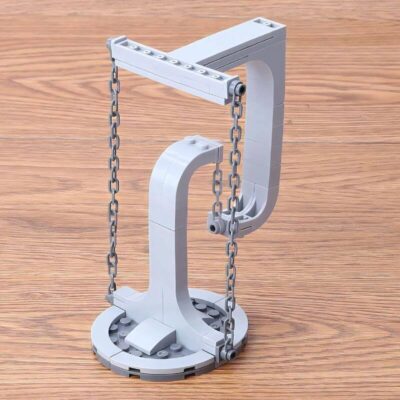
Science gadgets: your questions, answered
What is a science gadget?
A desk object that demonstrates a physical principle while looking good: a Newton's cradle, a gyroscope, a storm glass, a Stirling engine, a Nixie clock, a Tesla coil.
Which science gadget makes the best gift?
For a desk, a Newton's cradle or a gyroscope. For a windowsill, a storm glass or a radiometer. For someone who has everything, a Stirling engine, a Nixie clock or a Galton board.
Do they need batteries?
Most run on a push, heat or light: cradles, gyroscopes, storm glasses, radiometers, Stirling engines. Nixie clocks and Tesla coils plug in; the adapter is included.
Are they suitable for children?
Cradles, gyroscopes and spinners from 8. Stirling engines and Tesla coils are for teenagers and adults, with supervision for the flame and the arcs.
Can I use them in a classroom?
Yes, that is what many were built for: a radiometer, a cradle, a Stirling engine or a Galileo thermometer replaces a page of notes in a minute.
Free UK delivery over £45 and 30 days to return it. For gadgets that light a room rather than sit on a desk, see our scientific lamps; for the ones you build yourself, the science kits.