
The essential:
- Neodymium magnets are made of an alloy of neodymium, iron and boron (Nd2Fe14B), developed independently in Japan and the United States and announced in 1984.
- The number in a grade such as N52 is the maximum energy product in megagauss-oersteds, so N52 stores about 52 MGOe.
- By volume, sintered neodymium magnets store roughly 18 times more magnetic energy than ordinary ferrite fridge magnets.
- Standard N grades start losing strength above about 80 °C, and the UK product safety regulator warns that swallowing two or more small magnets can cause serious internal injury.
Neodymium magnets are the strongest permanent magnets you can buy, and a disc smaller than a penny can snap onto a steel surface hard enough to make you jump. They sit hidden inside your headphones, your phone, cordless drills and the motors of electric cars, yet most people only meet them face to face as desk toys and fridge fixings.
As a former museum science communicator, I love handing one to a visitor and watching them try to pull it off a steel plate. This guide explains what these magnets are made of, why they are so powerful, what the grades on the packet mean, why heat and knocks can ruin them, and the UK safety advice everyone with small magnets at home should know.
📋 Table of contents
- What are neodymium magnets?
- Why are neodymium magnets so strong?
- What does N52 mean on a magnet?
- Are rare earth magnets the same as neodymium magnets?
- What can damage the strength of a neodymium magnet?
- Are neodymium magnets safe at home? UK safety guidance
- Where are neodymium magnets used in everyday life?
- Our take: how to enjoy neodymium magnets safely and well
- FAQ
What are neodymium magnets?
Neodymium magnets are permanent magnets made from an alloy of neodymium, iron and boron, written Nd2Fe14B. They are the strongest type of permanent magnet commercially available and belong to the family known as rare earth magnets. Neodymium is element number 60, a soft silvery metal from the group of elements called the lanthanides, often lumped together as the rare earths. On its own it is not a useful magnet at room temperature. The trick is to combine it with iron, which brings plenty of magnetism, and a little boron, which helps lock the atoms into the right crystal structure.
The resulting compound, Nd2Fe14B, was discovered independently by two industrial teams: Sumitomo Special Metals in Japan, where the materials scientist Masato Sagawa led the work, and General Motors in the United States. Both published in 1984. Sagawa’s first sintered magnets reached a maximum energy product of about 35 MGOe, beating the previous record holder, samarium-cobalt, and today’s production magnets exceed 50 MGOe.
You will see neodymium magnets sold under several names:
- NdFeB or NIB, from the chemical symbols;
- rare earth magnets, a wider term that also covers samarium-cobalt;
- supermagnets, a popular nickname rather than a technical category.
Despite the name, the rare earths are not especially rare in the Earth’s crust. They earned the label because they are spread thinly and are notoriously hard to separate from one another.
Why are neodymium magnets so strong?
Their strength comes from the Nd2Fe14B crystal. Iron atoms supply a large magnetic moment, while the crystal strongly prefers to magnetise along one single axis, so billions of tiny atomic magnets stay locked in the same direction. Every atom with unpaired electrons behaves like a tiny bar magnet. In most materials these atomic magnets point in random directions and cancel out. In a permanent magnet, they line up and stay lined up, and two properties decide how well that works:
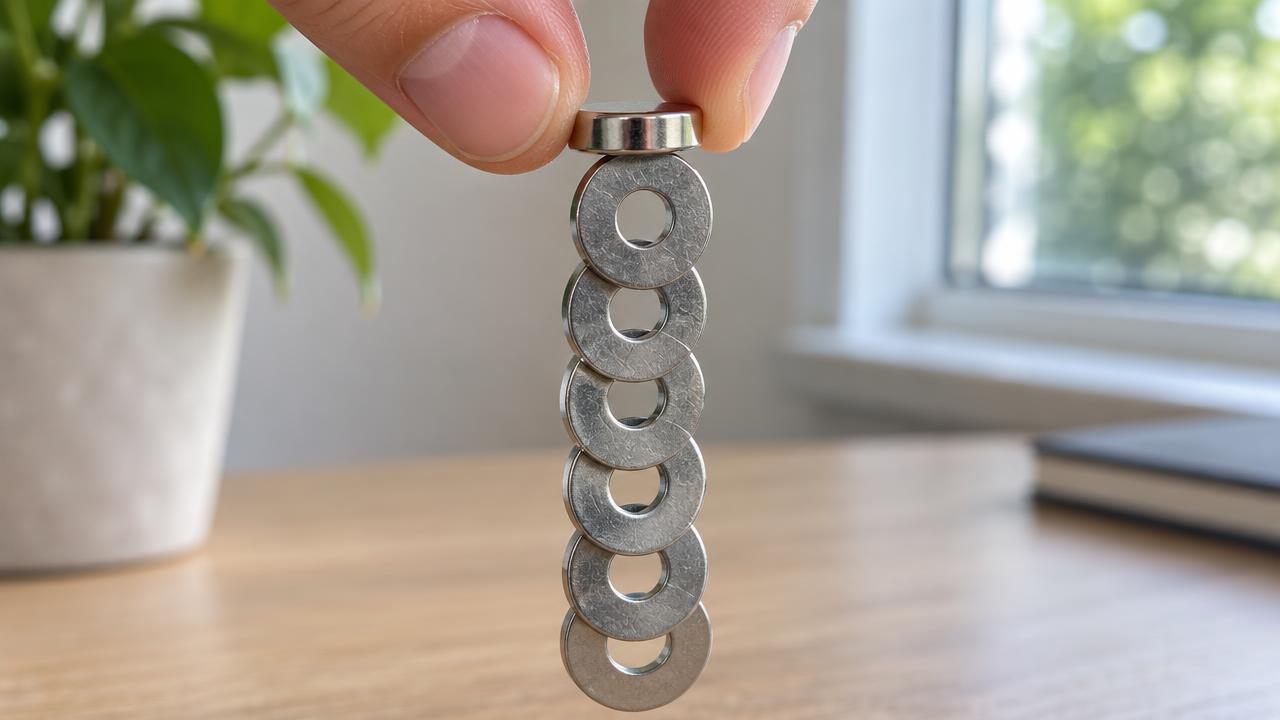
- Saturation magnetisation: how much magnetism the material can hold when every atomic magnet is aligned. Iron-rich Nd2Fe14B reaches about 1.6 tesla.
- Magnetocrystalline anisotropy: how stubbornly the crystal keeps its magnetism along one preferred axis. The tetragonal Nd2Fe14B crystal has an exceptionally strong preferred axis, which gives the magnet a high resistance to being demagnetised, known as coercivity.
Put simply, iron provides the muscle and neodymium provides the discipline. Combine both and you get a magnet that is very strong for its size and very hard to knock out of alignment.
The comparison with a classic ferrite fridge magnet is striking. By volume, sintered neodymium magnets store roughly 18 times more magnetic energy than ordinary ferrite. That is why a neodymium disc a few millimetres across can do the job of a ferrite block many times its size, and why engineers use them wherever space and weight matter, from earbuds to wind turbine generators.
⭐ Key takeaway
Neodymium magnets are strong for two reasons at once: a lot of magnetism packed into each crystal, and a crystal that refuses to let that magnetism point anywhere except along one axis.
What does N52 mean on a magnet?
The number after the N is the maximum energy product in megagauss-oersteds (MGOe). An N52 magnet stores about 52 MGOe, the highest common grade, while N35 sits at the entry level. Letters after the number indicate heat resistance. Magnet grades look cryptic, but they follow a simple logic. The maximum energy product, written BHmax, measures how much magnetic energy a material can store per unit volume. The higher the number, the more pull you get from the same size of magnet.
Suffix letters tell you how much heat a grade can take before it starts to weaken. Standard N grades are rated to about 80 °C; M, H, SH, UH and EH grades tolerate progressively higher temperatures, usually thanks to small additions of heavier rare earths such as dysprosium. The trade-off is that the most heat-resistant grades tend to have slightly lower peak strength and cost more.
A practical point: grade is not the same as pull force. A large N35 block will easily out-pull a tiny N52 disc. Grade describes the material, while pull force depends on size, shape, coating thickness and the steel it sticks to.
| Grade | Max energy product (MGOe) | Remanence (tesla) | Typical use |
|---|---|---|---|
| N35 | 33 to 36 | 1.18 to 1.22 | General craft and household magnets |
| N42 | 40 to 43 | 1.28 to 1.32 | A common balance of strength and price |
| N52 | 49 to 53 | 1.43 to 1.48 | Maximum strength in the smallest size |
| Ferrite (for comparison) | about 1 to 5 | about 0.2 to 0.4 | Fridge magnets, loudspeakers |
Are rare earth magnets the same as neodymium magnets?
Not exactly. Rare earth magnets is the family name for magnets made with rare earth elements. Neodymium magnets are the strongest and most common member, while samarium-cobalt magnets are the older, more heat-resistant cousin. Two families of rare earth magnets dominate the market:
- Neodymium (NdFeB): the strongest at room temperature and far cheaper than samarium-cobalt, which is why they turned up everywhere from the late 1980s onwards.
- Samarium-cobalt (SmCo): developed earlier, slightly weaker, but much more stable at high temperatures and naturally resistant to corrosion. They are chosen for aerospace parts, sensors and motors that run hot.
Neodymium magnets themselves come in two forms. Sintered magnets are made by pressing fine alloy powder in a magnetic field and baking it into a dense solid; these are the high-strength discs, blocks and spheres you can buy. Bonded magnets mix the powder with a polymer and mould it into complex shapes, at the cost of much lower strength.
Neodymium magnets are part of a long story in physics. Lodestones, naturally magnetised pieces of magnetite, were the only permanent magnets for centuries; steel magnets, then alnico and ferrite, followed. Each step packed more magnetism into less material, and NdFeB is the current champion. You can see the same physics at play in a magnetic solar system model or test your knowledge with our magnetism quiz.
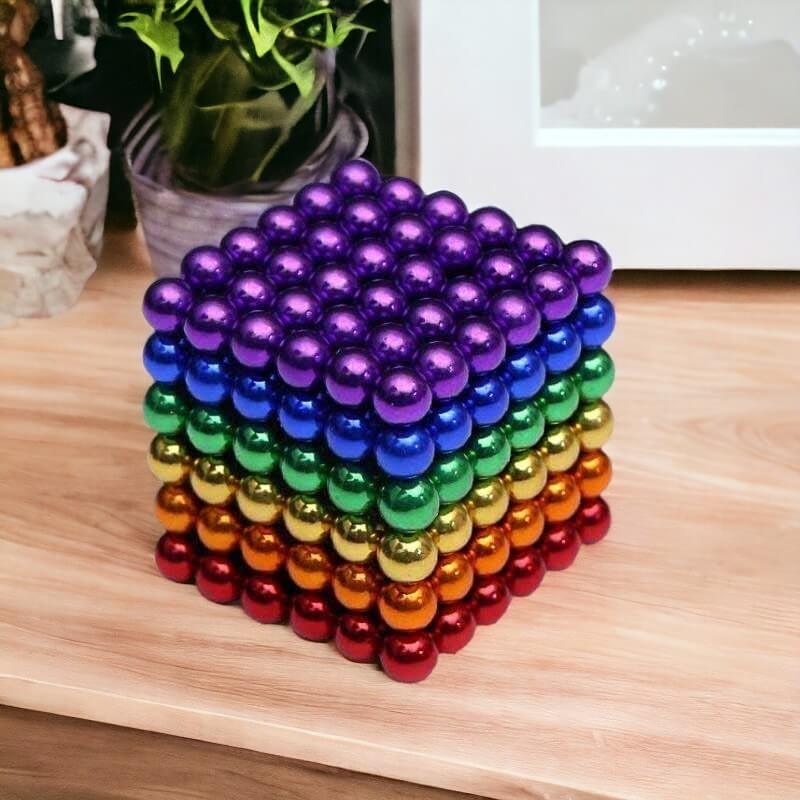
🛍️ Our pick
Rainbow Magnetic Balls
Small neodymium magnetic spheres in rainbow colours to build shapes, chains and patterns: a hands-on demo of magnetic fields. Not for children.
From £22.49 · ★ 454 sold
Discover →What can damage the strength of a neodymium magnet?
Heat, corrosion and impact are the main enemies. Standard grades begin to weaken above about 80 °C, lose their magnetism entirely near 310 °C, rust quickly without a coating, and chip or shatter if they snap together. Left alone at room temperature, a neodymium magnet loses only a tiny fraction of its strength over many years. In practice, three things shorten its life:
- Heat: above its maximum working temperature (about 80 °C for standard N grades) the magnet starts to lose strength permanently. At the Curie temperature, around 310 °C for standard grades, it becomes non-magnetic. Keep them out of ovens, away from soldering irons and off sunny car dashboards.
- Corrosion: the iron-rich alloy rusts readily in damp air. That is why almost all neodymium magnets are plated, usually with a nickel, copper and nickel triple layer, sometimes with zinc, epoxy or gold. Once the plating chips, corrosion can spread underneath.
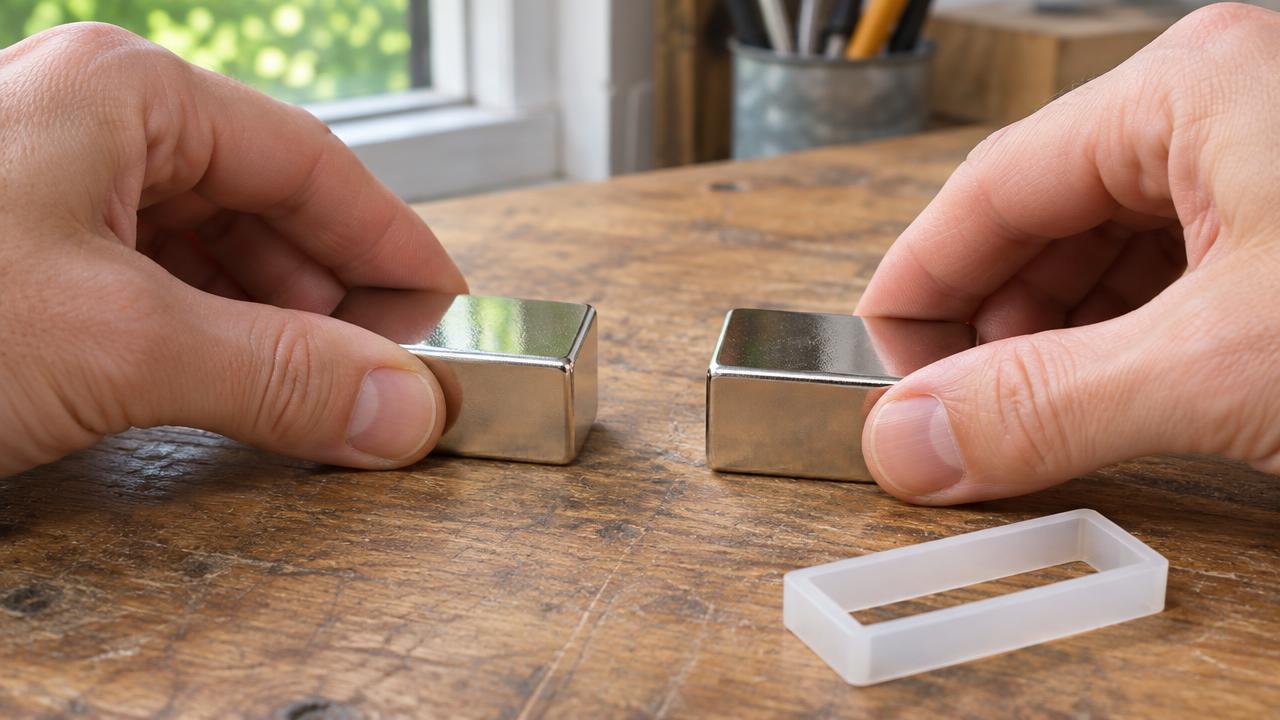
- Impact: sintered NdFeB is hard but brittle, more like a ceramic than a steel. When two strong magnets leap together, they can chip, crack or send sharp fragments flying.
Store them in pairs with a plastic spacer, slide them apart rather than prising, and keep them well away from credit cards, older hard drives and mechanical watches, which can be affected by strong fields.
💡 Did you know?
Drop a strong neodymium magnet down a copper pipe and it drifts down in slow motion. The moving magnet induces swirling electric currents in the copper, and those currents create a magnetic field that opposes the fall.
Are neodymium magnets safe at home? UK safety guidance
They are safe for adults used sensibly, but they are not toys for young children. The Office for Product Safety and Standards warns that swallowing two or more small, high-powered magnets can cause serious or fatal internal injuries. The UK’s Office for Product Safety and Standards (OPSS) issued a product safety alert on small, high-powered magnetic products in May 2021, after reports of serious injuries mainly among children and young people. The risk is specific: if two magnets, or a magnet and a piece of metal, are swallowed at different times, they can attract each other through the walls of the intestine, pinching and perforating the tissue. Removing them usually requires surgery.
The key advice from OPSS is straightforward:
- keep products containing small, powerful magnets away from children;
- count the pieces in a desk set and put them away after use;
- never use magnets as fake piercings or tongue studs, a trend that has caused injuries in teenagers;
- if you suspect a magnet has been swallowed, seek medical help immediately, even if there are no symptoms yet.
Toys sold in the UK must meet the EN 71 standard, which caps the strength of small accessible magnets with a flux index limit of 50 kG² mm². Strong desk sets are designed for adults and older users. Our article on magnet set safety for UK buyers goes into more detail. People with pacemakers or other implanted medical devices should also keep strong magnets away from their chest and follow the device maker’s guidance.
Where are neodymium magnets used in everyday life?
They power the small, efficient motors and speakers of modern life: electric vehicle drive motors, permanent-magnet wind turbines, headphones, phone vibration motors, cordless tools, hard disk drives and MRI scanners all rely on them. Because neodymium magnets deliver so much field from so little material, they made it possible to shrink and lighten a whole generation of devices:
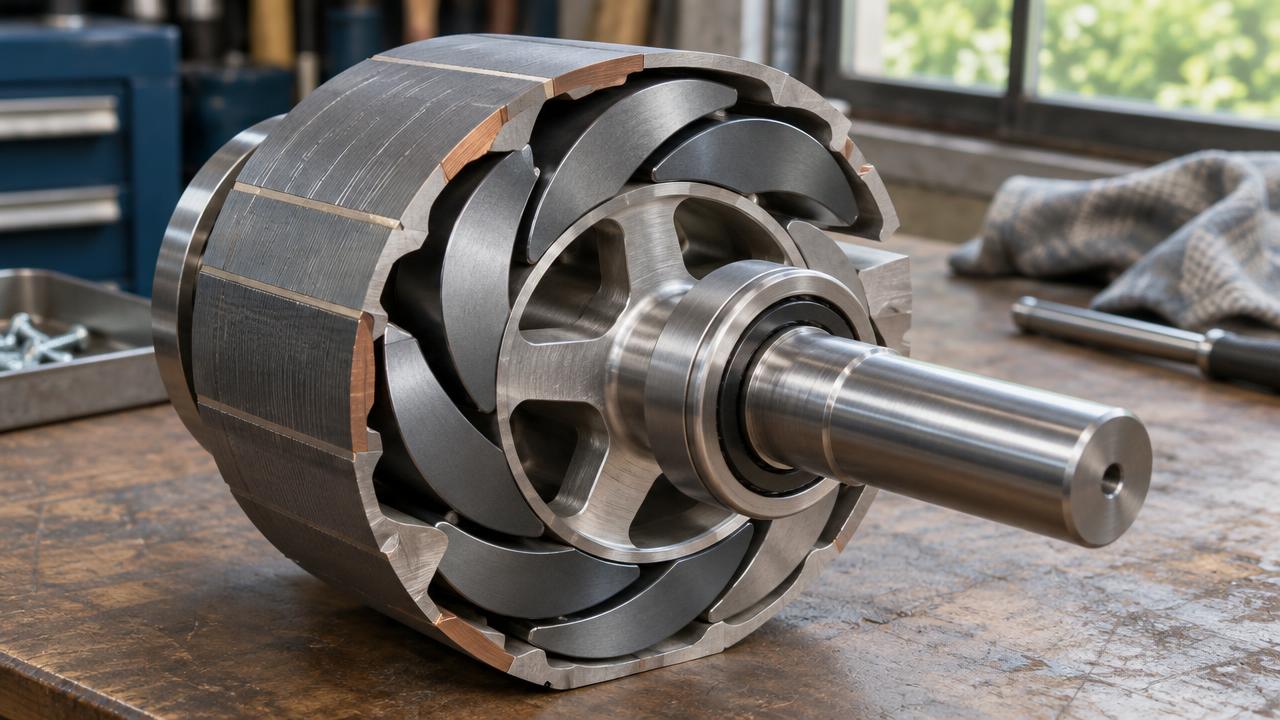
- Transport: drive motors in many electric and hybrid cars, e-bikes and electric scooters.
- Energy: permanent-magnet generators in some wind turbines, especially large offshore designs.
- Sound: earbuds, headphones and compact loudspeakers.
- Computing: the arm that positions the read head in a hard disk drive.
- Medicine: some MRI scanners and many laboratory instruments.
- Home and office: cabinet catches, knife strips, and clever designs like a magnetic perpetual calendar where the date tiles cling to a board.
This demand has made rare earth supply chains a strategic issue for many governments, and researchers are working on recycling magnets from old electronics and on designs that use less dysprosium. On a smaller scale, they also explain the appeal of tactile desk gadgets. Building shapes from a set of rainbow magnetic spheres lets you feel field lines with your fingertips. You will find more ideas in our cool gadgets and science gadgets collections, and a guide to types of clouds if your curiosity drifts skywards.
Our take: how to enjoy neodymium magnets safely and well
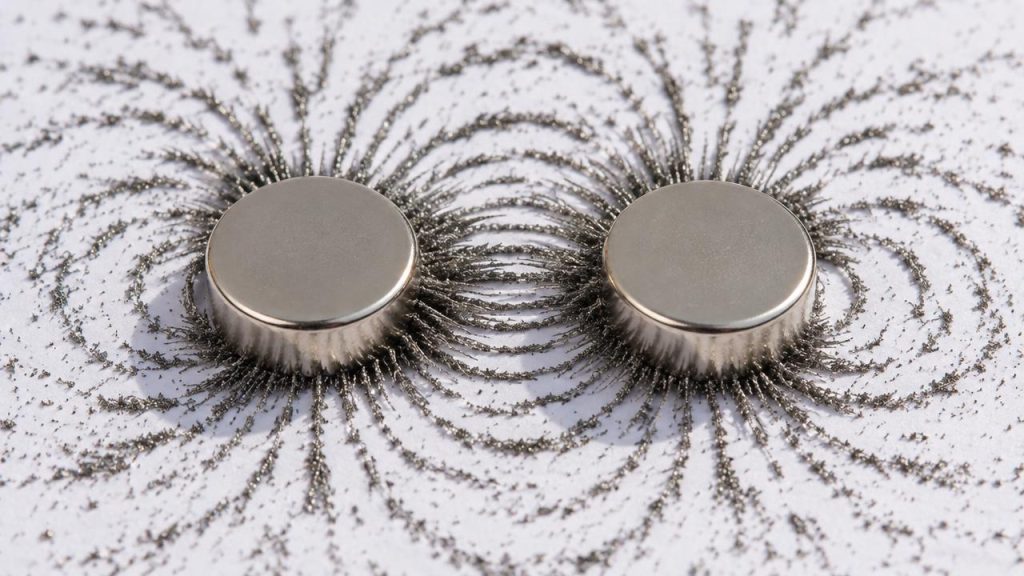
Treat neodymium magnets as precision tools rather than trinkets. Respect their strength, keep them away from heat and small children, and they will stay just as powerful for decades. In workshops, the most memorable demonstrations rarely need a big magnet. A small disc, a sheet of paper and some iron filings are enough to reveal the invisible field around it, and the copper pipe trick never fails to get a gasp. A few habits make the experience safer and more rewarding:
- Pick the right grade: for most household uses, N35 to N42 is plenty. N52 makes sense when you need maximum hold in minimum space.
- Handle with care: bring strong magnets together slowly and keep fingers out of the gap.
- Store sensibly: use spacers, a closed box and a spot well out of reach of young children and pets.
- Count your pieces: with sets of small spheres or cubes, a quick count after each session is the simplest safety check.
For a fidget-friendly way to explore magnetism at your desk, the Magnetic Fidget Pen combines a working pen with snap-together magnetic parts. Browse more tactile ideas in our stress toys range. Used thoughtfully, neodymium magnets are one of the most direct ways to touch a piece of 20th-century materials science, and they never stop being surprising.
Magnets are behind several of our physics gifts, from magnetic desk toys to levitating objects.

🛍️ Our pick
Magnetic Fidget Pen
A pen made of magnetic segments you can pull apart and rebuild: neodymium magnets in a form you can use every day.
£28.99 · ★ 146 sold
Discover →FAQ
Sources
- Office for Product Safety and Standards, Product Safety Alert PSA1: Small, High-Powered Magnetic Products (2021)
- Office for Product Safety and Standards, Guidance on the risk assessment of small high-powered magnets
- The Japan Prize Foundation, 2012 laureate achievements: Masato Sagawa, development of Nd-Fe-B permanent magnets
- Sagawa M. et al., New material for permanent magnets on a base of Nd and Fe, Journal of Applied Physics (1984)
- BS EN 71-1, Safety of toys: mechanical and physical properties