
The essential:
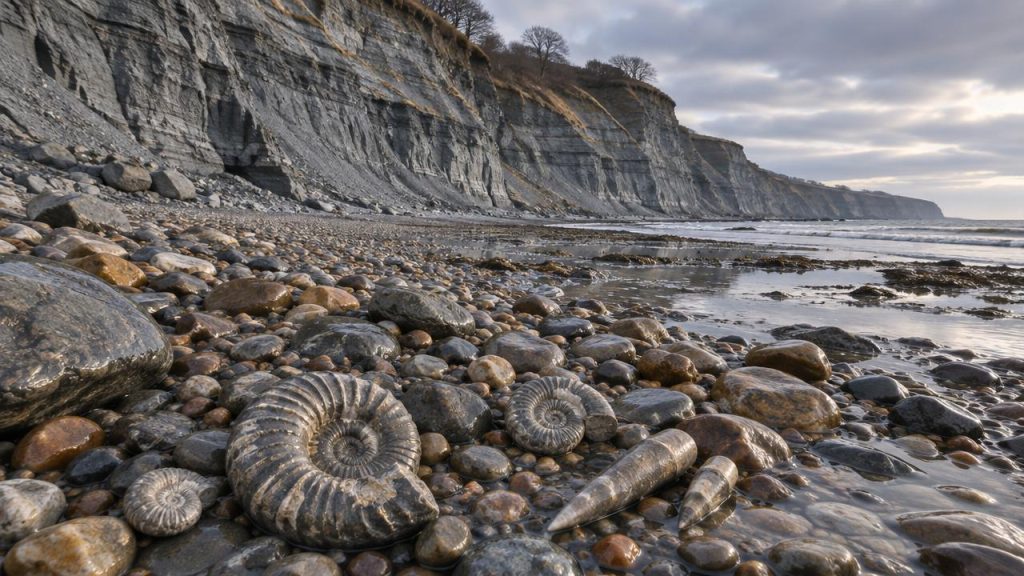
- The Jurassic Coast runs about 95 miles from Exmouth in Devon to Studland in Dorset and spans roughly 185 million years of Earth history.
- It became England’s first natural World Heritage Site in December 2001.
- Charmouth and Lyme Regis are the classic beaches for fossil hunting, with rocks around 190 to 185 million years old.
- The West Dorset Fossil Collecting Code, drafted in 1998, covers about 17 km of coast between Lyme Regis and Burton Bradstock.
Jurassic Coast fossils are among the most accessible in the world: on a good winter morning at Charmouth, you can pick up an ammonite that last saw daylight around 190 million years ago, simply lying in the shingle. No permit, no expedition, just a falling tide and sharp eyes.
This guide covers where to go, what you are most likely to find, how to read the rocks, and the rules that keep collecting safe and fair. It draws on the West Dorset Fossil Collecting Code and on the advice heritage centres give every visitor, because the cliffs that make the coast so rich are also the reason it needs respect.
📋 Table of contents
- Why is the Jurassic Coast so rich in fossils?
- Where are the best places to find Jurassic Coast fossils?
- What fossils can you find at Charmouth?
- How do you go fossil hunting in the UK safely?
- What does the West Dorset Fossil Collecting Code say?
- Who was Mary Anning and what did she find at Lyme Regis?
- How do you identify ammonite fossils and other Jurassic Coast fossils?
- Our take: how to make the most of Jurassic Coast fossils with children
- FAQ
Why is the Jurassic Coast so rich in fossils?
The coast exposes rocks from the Triassic, Jurassic and Cretaceous periods, roughly 185 million years of history. Soft cliffs erode constantly, so storms and tides keep releasing fresh fossils onto the beaches. The Jurassic Coast stretches about 95 miles from Orcombe Point near Exmouth to Old Harry Rocks near Studland. Because the rock layers tilt gently towards the east, walking the coast from west to east is a little like walking forward through time: Triassic red rocks in East Devon, Jurassic clays and limestones in West Dorset, Cretaceous chalk around Purbeck.
In the Early Jurassic, the area that is now West Dorset lay under a warm, shallow sea closer to the equator. Ammonites, belemnites, fish and marine reptiles died and sank into soft mud, which slowly hardened into the grey clays and limestones you see in the cliffs today.
- Soft rock: clays and marls erode quickly, so the cliffs are constantly renewed.
- Storms: winter waves strip the base of the cliffs and sort fossils into the shingle.
- Status: the coast was inscribed as a World Heritage Site in December 2001, England’s first natural site to receive that status.
If you want to understand the rocks themselves before your trip, our guide to rocks and minerals explains how sedimentary layers form and how to tell them apart.
⭐ Key takeaway
Key takeaway: erosion is what makes the Jurassic Coast such a good fossil site. The same erosion makes the cliffs dangerous, so the best fossils are found on the beach, not dug out of the rock face.
Where are the best places to find Jurassic Coast fossils?
Charmouth and Lyme Regis in West Dorset are the classic starting points. Both sit on Early Jurassic clays packed with ammonites and belemnites, and both have heritage centres or museums to help you identify finds. Each beach has its own character, and the best one depends on what you want to find and who is with you.
Charmouth is the most family-friendly fossil beach. The Charmouth Heritage Coast Centre sits right by the shore, runs guided walks and identifies finds. Finds tend to be concentrated within the first kilometre or so of the main beach access.
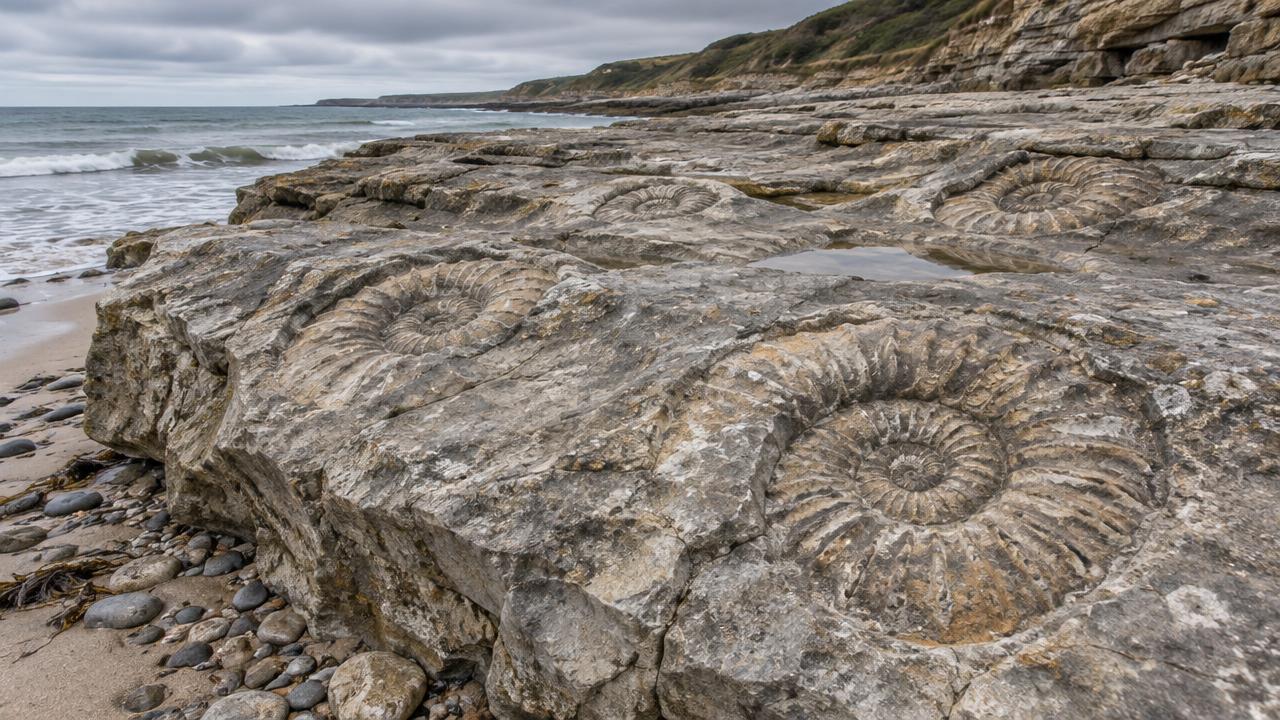
Lyme Regis is the town of Mary Anning. Monmouth Beach, west of the harbour, holds the famous ammonite pavement, a limestone ledge studded with large ammonites, some 50 cm to 1 metre across. These are protected and must be photographed, not removed. East of the town, the beach towards Charmouth below Black Ven yields pyritised ammonites.
Further east, Kimmeridge exposes Late Jurassic Kimmeridge Clay, and the village’s Etches Collection museum, opened in 2016, displays over 2,000 fossils from it. The fossil forest near Lulworth Cove preserves the remains of an ancient woodland, best viewed rather than collected.
| Location | Rock age (approx.) | Typical finds | Best for |
|---|---|---|---|
| Charmouth | Early Jurassic, about 190 to 185 million years | Pyrite ammonites, belemnites, crinoid fragments | Families and first-timers |
| Lyme Regis, east beach | Early Jurassic (Blue Lias and Black Ven) | Ammonites, belemnites, occasional reptile bone | Keen collectors on a falling tide |
| Monmouth Beach, Lyme Regis | Early Jurassic (Blue Lias) | Ammonite pavement (look only) | Photography and seeing giants in place |
| Kimmeridge | Late Jurassic (Kimmeridge Clay) | Ammonite impressions, shells; museum displays | Combining a beach visit with the Etches Collection |
| Lulworth Cove area | Late Jurassic | Fossil forest tree remains (look only) | Understanding ancient landscapes |
What fossils can you find at Charmouth?
Charmouth fossils are mostly small ammonites preserved in shiny pyrite, bullet-shaped belemnites and star-shaped crinoid segments. Fish scales and marine reptile bones turn up occasionally, especially after winter storms. Most visitors leave Charmouth with at least a belemnite, and with patience, an ammonite. Here is what to look for:
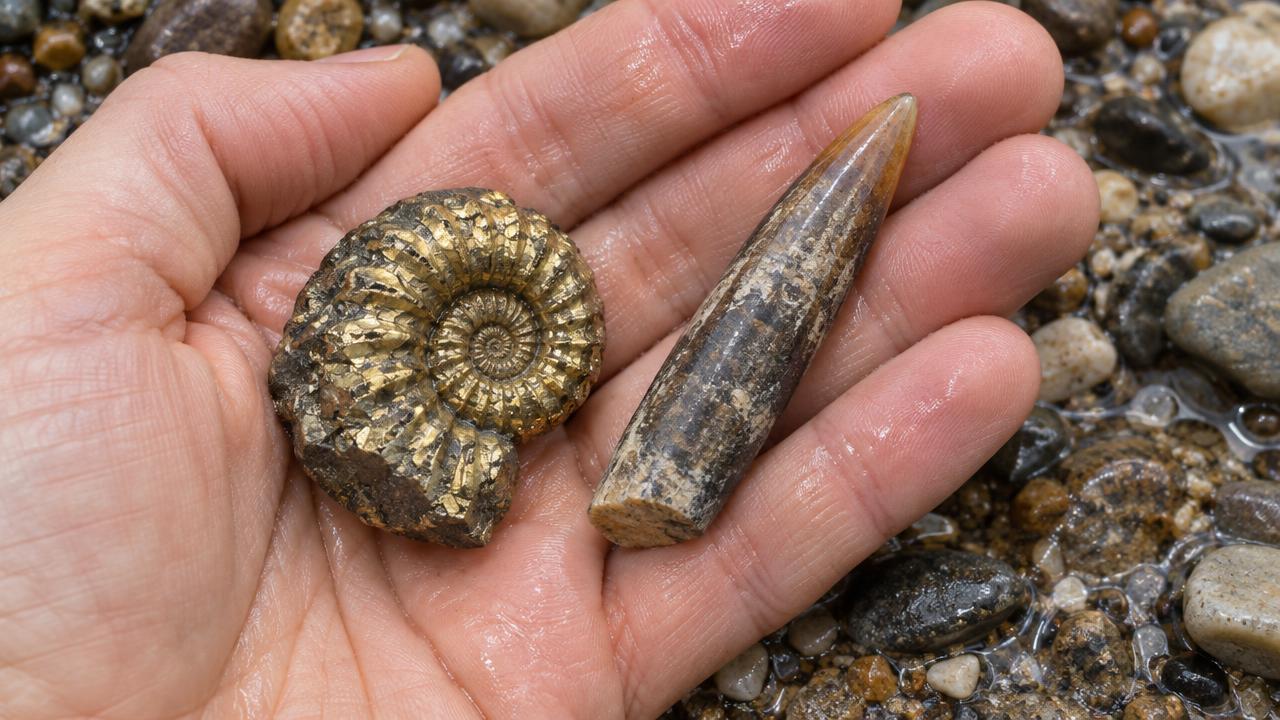
- Pyrite ammonites: small, coiled and metallic gold or brass in colour. They are often only 1 to 3 cm across and easiest to spot in fine, wet gravel.
- Belemnites: the hard internal guards of squid-like animals, shaped like a bullet or a pencil tip and amber to grey in colour. They are the most common find.
- Crinoids: sea lilies; you will usually find small star-shaped or round segments of their stems.
- Bones and fish: ichthyosaur vertebrae look like thick discs. They are rarer but turn up every year.
Charmouth also has a famous place in palaeontology. Bones collected below Black Ven by James Harrison in the 1850s became Scelidosaurus, named by Richard Owen in 1859 and now recognised as one of the first near-complete dinosaur skeletons ever identified. It is held at the Natural History Museum in London.
For young enthusiasts who want to keep digging at home, our nature and dig kits recreate the excavation experience safely on the kitchen table.
💡 Did you know?
Did you know? Charmouth’s pyrite ammonites are shiny because the original shell was replaced by iron sulphide, the mineral nicknamed fool’s gold. Keep them dry at home, because damp air can make pyrite slowly decay into a crumbly white powder.
How do you go fossil hunting in the UK safely?
Check tide times and go on a falling tide, stay well away from the cliff base, never climb or dig into cliffs, and avoid mudflows. Search the loose material on the beach, where fossils naturally collect. The clay cliffs of West Dorset are unstable and move every year. Rock falls and mudslides can happen without warning, particularly after heavy rain or a dry spell followed by wet weather. Safe fossil hunting in the UK comes down to a few habits:
- Tides: look up tide times before you set off and start as the tide goes out. Always know your route back, because some stretches can cut you off.
- Cliffs: keep your distance from the cliff base and never climb. Fresh falls may look tempting but are unstable for days.
- Mud: wet clay slumps can be deep and sticky; do not walk across them.
- Kit: sturdy boots with grip, layers, a waterproof, a small bag and a magnifying lens. Leave the hammer at home.
- Company: tell someone where you are going, carry a phone and supervise children closely.
A guided walk from the Charmouth Heritage Coast Centre or a Lyme Regis fossil walk is the best introduction: you learn which material is worth turning over and which ground to avoid.
At home, a magnifier or a simple microscope reveals the fine ribs and sutures of small ammonites; our mini microscope guide explains which magnifications help most.
🛍️ Our pick
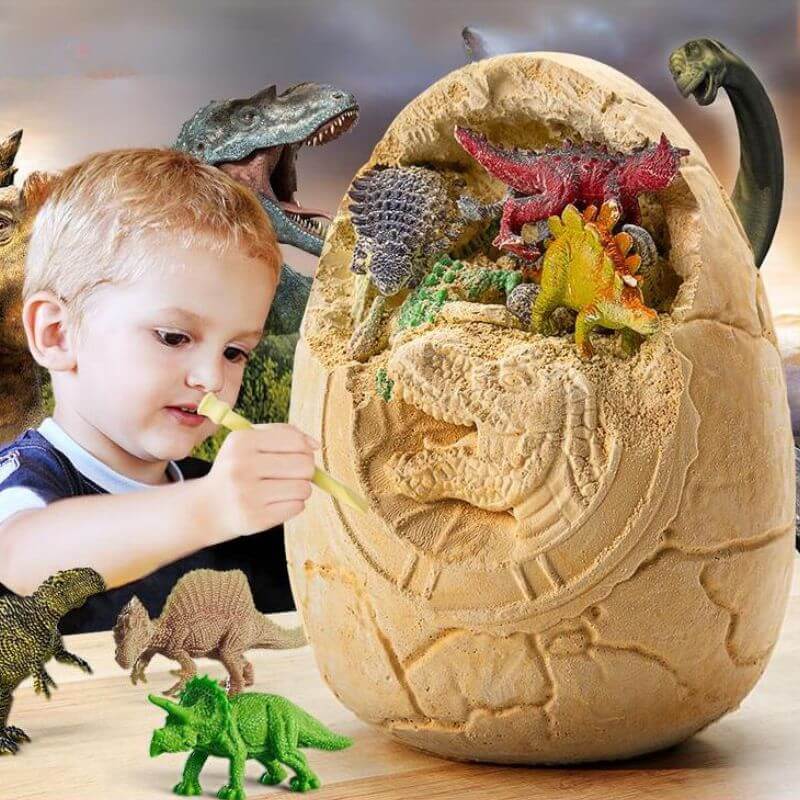
Dinosaur Egg Dig Kit
Dig into a dinosaur egg with brush and chisel to uncover a hidden model: a fun warm-up before a real fossil hunt.
£33.49 Discover →
What does the West Dorset Fossil Collecting Code say?
The code, drafted in 1998, lets you keep common fossils found loose on the beach. You should not dig into the cliffs without permission, and finds of key scientific importance must be recorded at the Charmouth Heritage Coast Centre. The code was drawn up by landowners, scientists, collectors and conservation bodies to balance two facts: fossils on this coast are destroyed by the sea if nobody collects them, and the most important specimens deserve to reach science. It covers about 17 km of coast between Lyme Regis and Burton Bradstock.
- Collect from the beach: loose material on the foreshore is where you should look. Digging in situ into the cliffs is not permitted without permission.
- Record important finds: specimens of key scientific importance, known as category one finds, must be recorded at the Charmouth Heritage Coast Centre before the collector keeps them.
- Offer before selling: anyone wishing to sell an important specimen should first offer it to an accredited UK museum.
- Keep the common ones: small or common fossils, such as most belemnites and pyrite ammonites, can be taken home.
Similar codes now exist elsewhere on the coast, including East Devon. The principle is the same everywhere: take what the sea would destroy, leave the cliffs alone and share anything exceptional.
Who was Mary Anning and what did she find at Lyme Regis?
Mary Anning (1799 to 1847) was a Lyme Regis collector whose finds reshaped early palaeontology, including the ichthyosaur skeleton she dug out from 1812, the first complete plesiosaur in 1823 and Britain’s first pterosaur in 1828. Anning grew up selling fossils to visitors to help her family survive. In 1811 her brother Joseph found a strange skull in the cliffs; Mary, then 12, uncovered the rest of the skeleton from 1812. The animal was later named Ichthyosaurus, the fish lizard.
- December 1823: the first complete plesiosaur skeleton, a long-necked marine reptile that puzzled the scientists of the day.
- December 1828: the pterosaur later known as Dimorphodon, a flying reptile.
- Smaller finds: fossil fish, and cephalopods with their ink sacs still preserved.
She did all this while being excluded from scientific societies; the Geological Society of London did not admit women as Fellows until 1908. Many of her specimens are now at the Natural History Museum in London, and Lyme Regis Museum stands on the site of her family home.
For a fun recap before your trip, try our dinosaur quiz, and remember that ichthyosaurs and plesiosaurs were marine reptiles, not dinosaurs.
How do you identify ammonite fossils and other Jurassic Coast fossils?
Ammonites are coiled shells with ribs and wavy suture lines, belemnites are smooth bullet-shaped guards, and crinoid pieces look like small stars or discs. A hand lens and good light make identification much easier. Once home, wash finds gently in fresh water and let them dry slowly. Then look closely:
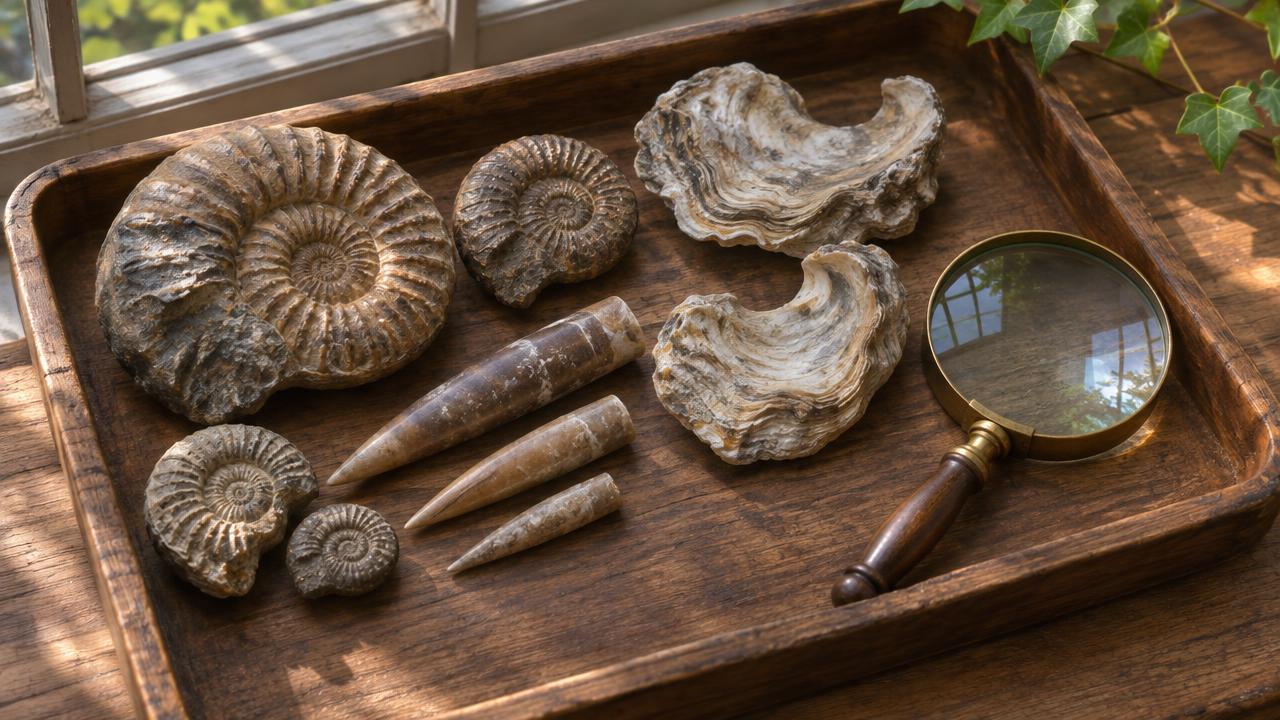
- Ammonite fossils: a flat spiral with ribs. The intricate, frilly lines on a broken or polished surface are sutures, where internal walls met the shell, and their pattern helps identify species.
- Belemnites: snap one cleanly and you will see radiating crystals of calcite from the centre outwards.
- Gryphaea: curved oyster shells, nicknamed devil’s toenails, common in the Lias.
- Bone: spongy internal texture, often darker and heavier than surrounding rock.
Label each find with the date and beach. That small habit is what turns a pile of stones into a collection, and it is exactly what curators ask for if a find turns out to be important. To test your geological knowledge further, our volcanoes and geology quiz is a good warm-up, and our crystals and stones range pairs well with a growing fossil shelf.
Our take: how to make the most of Jurassic Coast fossils with children
Go in winter or after a storm, on a falling tide, with low expectations and a magnifying lens. Children find more than adults because they look closely at small gravel, which is exactly where most fossils hide. From years of explaining fossils to young visitors, one thing stands out: the find itself matters less than the moment of recognition. A child who spots a belemnite and realises it was part of a living animal in a tropical sea has learned more about deep time than any textbook could teach.
- Set a small goal: one belemnite each is a good first target.
- Bring the trip home: a Dinosaur Egg Dig Kit keeps the excavation going on a rainy afternoon, and building a Dinosaur Skeleton Model Kit helps children understand how palaeontologists reassemble bones.
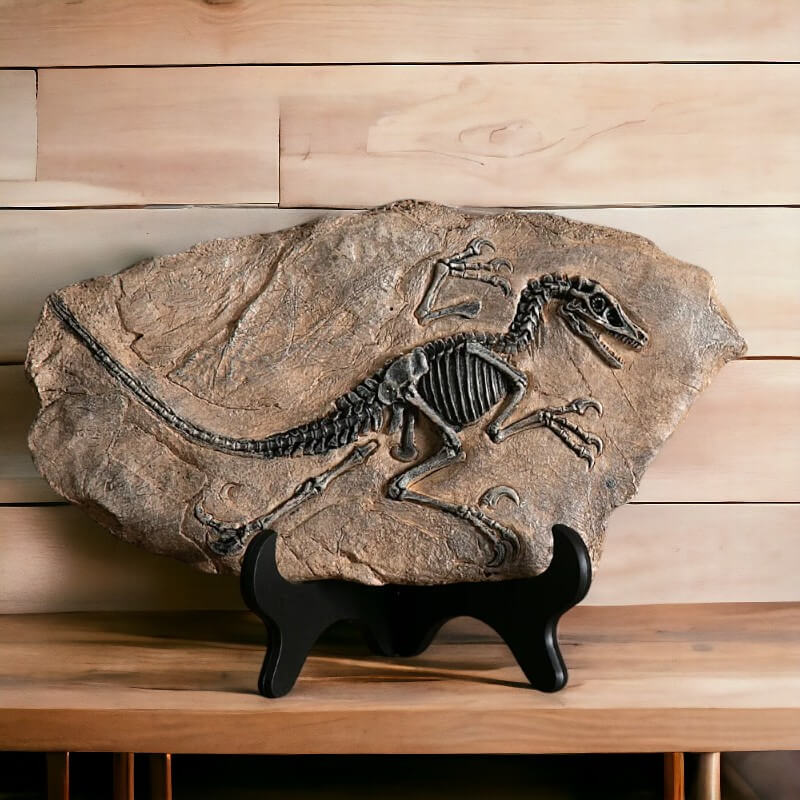
- Make a display: a labelled shelf of real finds next to a cast such as our Dinosaur Fossil Replica Plaque shows the difference between a genuine specimen and a reproduction.
Above all, keep it safe and unhurried. The coast will still be releasing fossils long after your visit, and there is always another tide.
If a fossil hunter in your life deserves a present, browse our geology gifts, from real specimens to dig kits.
🛍️ Our pick
Dinosaur Fossil Replica Plaque
A detailed resin replica of a dinosaur fossil on a plaque: a reminder of what the Jurassic Coast's cliffs still hold.
From £38.49 Discover →
FAQ
Sources
- Natural History Museum, London: Mary Anning and Scelidosaurus collections
- Charmouth Heritage Coast Centre: West Dorset Fossil Collecting Code
- UNESCO World Heritage Centre: Dorset and East Devon Coast
- University of Cambridge, David Norman’s 2020 studies of Scelidosaurus
- Lyme Regis Museum