
The essentials:
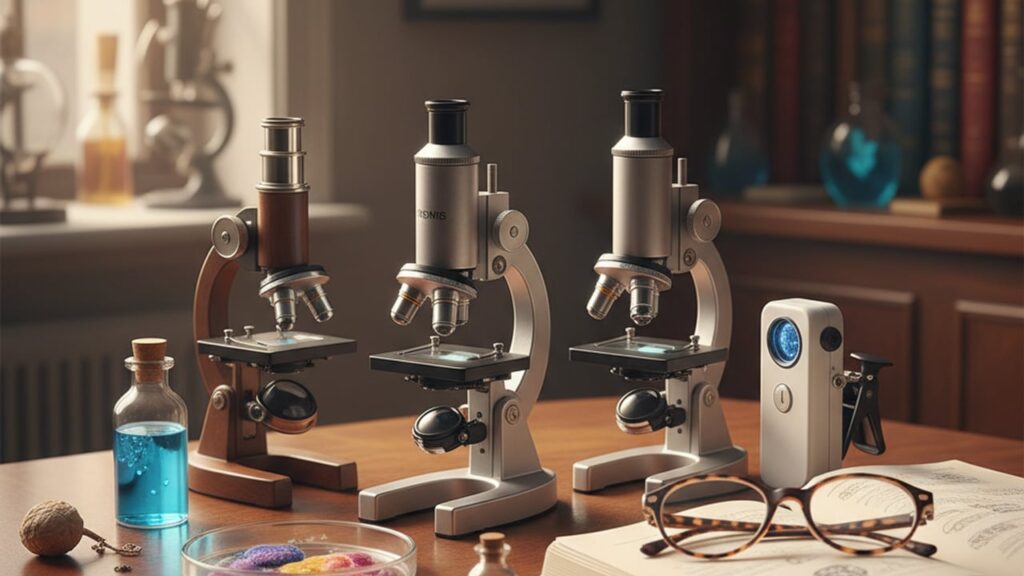
- A mini microscope is a pocket-sized optical or digital device, typically offering 20x to 60x optical magnification, sometimes boosted to 1000x through digital zoom.
- Expect to pay anywhere from £7 to £25 in the UK for a reliable pocket model, with premium digital versions reaching £30 to £50.
- For children aged 8 and above, a simple LED-lit optical model with a sturdy clip is the safest and most durable choice.
- Adults after a genuine optical experience (not just digital zoom) should prioritise glass lenses and a solid focus wheel over headline magnification numbers.
There is something wonderfully levelling about a mini microscope. Slip one into a coat pocket and suddenly a garden fence, a butterfly wing or a crystal of table salt becomes a small universe. As a former museum science communicator, I have watched grown adults go quiet with wonder over a single leaf vein magnified 30 times. A good mini microscope does not need to be expensive or complicated to deliver that spark of genuine discovery. This guide walks through what these devices can actually see, how much they cost in 2026, and which type suits a curious child versus a nature-loving adult.
📋 Table of contents
- What Is a Mini Microscope and Who Is It For?
- How Much Does a Mini Microscope Cost in 2026?
- What Can a 1000x Microscope Actually See?
- What Is the Best Mini Microscope for Children?
- What Is the Best Pocket Microscope for Adults?
- Pocket Microscope vs Handheld Digital Microscope: Key Differences
- How to Get the Best Results With a Mini Microscope
- Our Verdict
- Frequently Asked Questions
What Is a Mini Microscope and Who Is It For?
A mini microscope is a compact, handheld magnifying instrument, usually between 10cm and 15cm long, designed for casual close-up observation rather than laboratory analysis. Unlike a full compound microscope, which sits on a bench and requires prepared slides, a pocket model is built for grab-and-go exploration of leaves, insects, fabric, skin or minerals wherever you happen to be standing.
These gadgets appeal to three very different audiences: curious children on nature walks, adults who enjoy quiet close-up observation as a mindful hobby, and educators looking for a low-cost classroom tool. Most models fall into two families: purely optical devices with glass or acrylic lenses and a light source, and digital devices that project the image onto a small screen or a smartphone via USB or Bluetooth.
💡 Did you know?
Did you know the pocket microscope’s ancestor, the single-lens microscope built by Dutch draper Antonie van Leeuwenhoek in the 1670s, could magnify up to roughly 270 times using nothing more than a tiny hand-ground glass bead? He used it to become the first person to observe bacteria, which he charmingly called ‘animalcules’.
How Much Does a Mini Microscope Cost in 2026?
UK retail prices for mini microscopes currently range from around £7 for a basic acrylic-lens pocket model to £25-£50 for digital versions with an LCD screen and rechargeable battery. Price generally tracks build quality and magnification range rather than brand name.
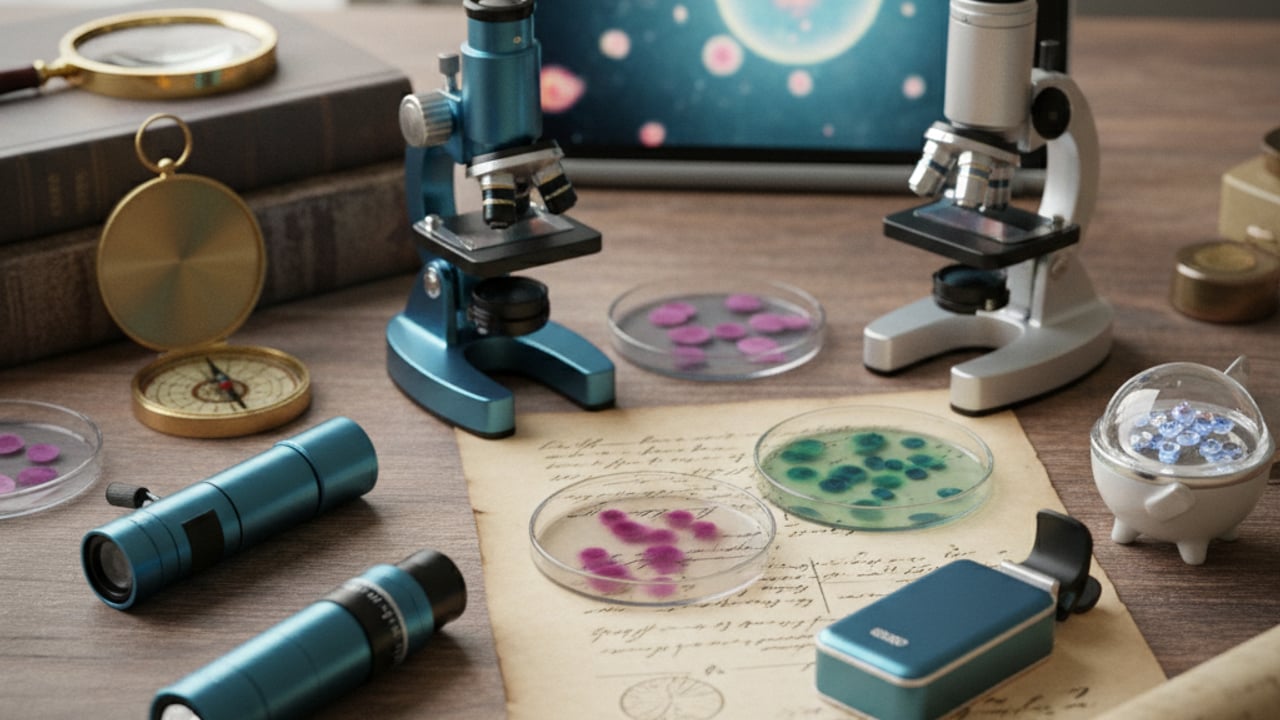
- Budget (£7-£12): simple optical models, fixed or single-step magnification (often 30x), plastic housing, ideal as stocking fillers or party favours.
- Mid-range (£15-£25): combination devices offering both microscope and telescope functions, metal clip, LED illumination, 8x to 30x range.
- Premium (£25-£50+): rechargeable digital microscopes with a 2-inch screen, image capture, and claimed magnification up to 1000x via digital zoom.
⭐ Key takeaway
The headline magnification number on the box rarely tells the whole story. A £10 optical model with clean, well-ground lenses can produce a sharper, more satisfying image than a £30 digital device with a low-resolution sensor stretched to an inflated zoom figure.
What Can a 1000x Microscope Actually See?
A device advertised as reaching 1000x magnification will typically show you the fine texture of pollen grains, individual fibres in fabric, the surface structure of a fingernail, or the compound eye of an insect in striking detail. It will not show you individual bacteria clearly or living cells with the crispness of a laboratory compound microscope, because true 1000x resolution depends on optical quality and sensor resolution, not just the zoom figure printed on the box.

🛍️ Our pick
Mini Portable Microscope
Ce mini microscope portable permet d’observer des détails invisibles à l’œil nu, idéal pour les explorations scientifiques en extérieur ou à la maison.
26,99 £ · ★ 20 sold
Most consumer pocket microscopes claiming 1000x are digital devices using electronic zoom, which enlarges the image but does not always add new resolvable detail beyond a certain point, a distinction well documented in basic optics and echoed by manufacturers themselves in their fine print. For genuinely useful close-up biology, most enthusiasts find 60x to 200x, on a device with real optical glass, gives clearer and more usable images than a device chasing an unrealistic 1000x headline number.
What Is the Best Mini Microscope for Children?
The best mini microscope for children combines a robust plastic or metal body, a simple twist-focus mechanism, built-in LED lighting, and a magnification range around 20x to 30x that is forgiving for small hands. Complicated dials and fragile glass optics tend to frustrate younger users and end up abandoned in a drawer within a week.

- Ages 5-7: a simple fixed-magnification magnifier or basic pocket model, always with adult supervision given the small parts and lenses.
- Ages 8-12: a combination pocket microscope/telescope with adjustable focus, ideal for school nature projects and garden exploration.
- Teens 13+: a digital microscope with screen or USB connection, allowing them to photograph and share what they find.
As with any small optical toy, manufacturers generally recommend supervision for children under 8 due to small parts, and it is worth checking the specific age guidance printed by the manufacturer on each product before gifting.
💡 Did you know?
Robert Hooke’s 1665 book ‘Micrographia’, filled with astonishing hand-drawn microscope observations of fleas and cork, became an instant bestseller in England and is credited with coining the word ‘cell’ in biology, a term that stuck for over 350 years.
What Is the Best Pocket Microscope for Adults?
Adults after a satisfying close-up hobby generally do better with an optical pocket microscope offering 30x to 60x magnification and genuine glass lenses, paired with a stable base or tripod mount for steady viewing of minerals, insects, fabric or skin. Unlike children, adults tend to value image clarity and build quality over a flashy screen.
If you already enjoy examining the natural world through other lenses, a pocket microscope pairs beautifully with a proper optics collection at home. Anyone who likes chasing light and colour might enjoy exploring dispersion with a triangular glass prism, which splits white light into a visible spectrum using the same refraction principles that shape a microscope’s lens. For a desk that celebrates observation and curiosity more broadly, browsing the cool gadgets collection often turns up complementary pieces, from kinetic sculptures to optical curiosities.
Pocket Microscope vs Handheld Digital Microscope: Key Differences
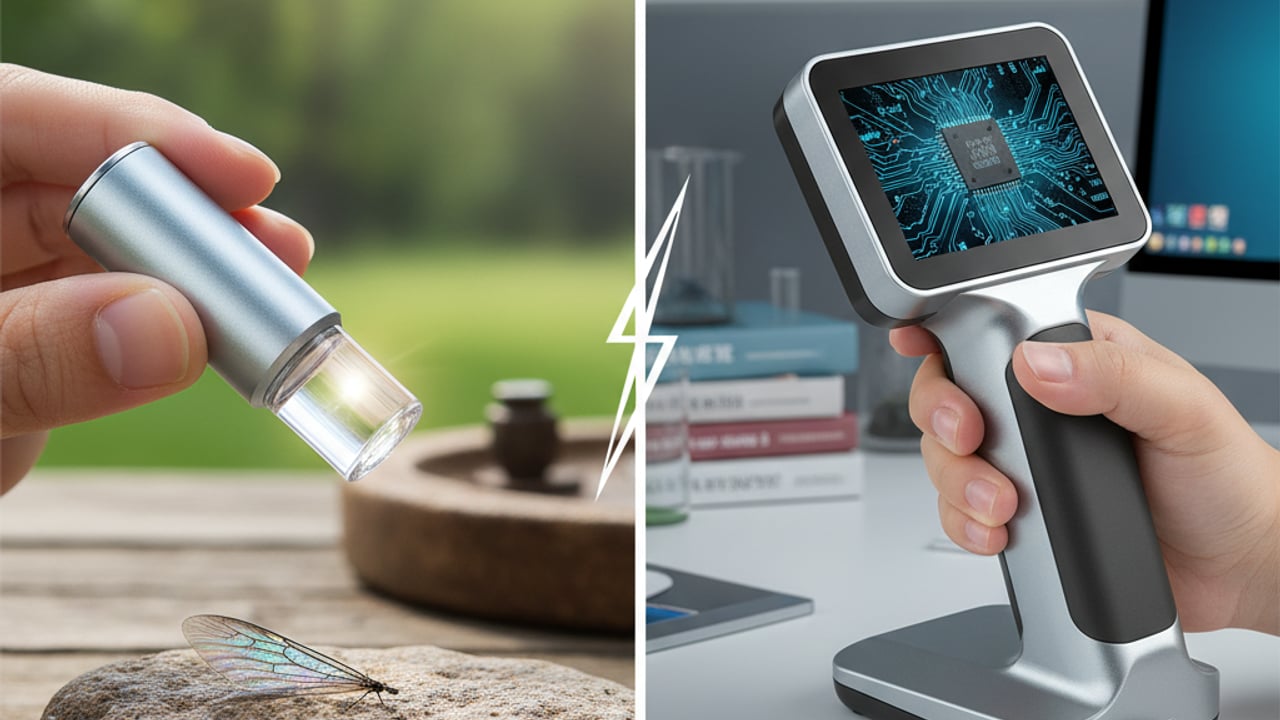
- Optical pocket microscope: uses glass or acrylic lenses only, no battery needed for viewing, typically 20x-60x, image seen directly through the eyepiece.
- Digital handheld microscope: uses a camera sensor and small screen or app, rechargeable battery required, magnification often stated up to 1000x via digital zoom, allows photo capture.
- Combination pocket devices: pair an 8x telescope with a 30x microscope in one small metal body, popular for outdoor nature walks where both distance and close-up viewing matter.
⭐ Key takeaway
Choose an optical model if you want a genuine, screen-free observation experience close to a real scientific instrument, and choose a digital model if sharing photos and capturing findings for a school project matters more than pure optical fidelity.
How to Get the Best Results With a Mini Microscope
Good lighting and a steady hand matter more than any spec on the box when using a pocket microscope. Natural daylight or a bright desk lamp behind the specimen dramatically improves clarity, since most pocket models rely on transmitted or reflected light rather than a dedicated laboratory bulb.
- Rest your elbow on a table or surface to reduce hand tremor while focusing.
- Use thin, flat specimens (a petal, a hair, a grain of salt) rather than thick or curved objects for the sharpest image.
- Clean the lens gently with a soft cloth, never a tissue, to avoid scratching the acrylic or glass surface.
Our Verdict
Having tested and gifted more pocket microscopes than I care to admit over the years, my honest verdict is this: buy for the lens quality, not the magnification number on the box. A modest 30x optical model with clean glass will delight a curious eight-year-old far more reliably than an overhyped ‘1000x’ digital gadget with a blurry screen. For adults building a desk of genuinely intriguing science objects, I would always pair a microscope with something that rewards patient observation in a different way, such as a periodic table with real element samples, which turns idle curiosity into a proper conversation piece.
Frequently Asked Questions
Whether it ends up in a curious child’s rucksack or on a design-conscious adult’s desk, a mini microscope earns its keep by turning the overlooked into the extraordinary, a leaf vein, a grain of sand, a strand of hair, each one suddenly worth a second look. For those who want to keep that sense of wonder going well beyond biology, the world of optics, magnetism and mechanical curiosities waiting in the wider brain teasers collection is a natural next stop.
Sources
- Royal Microscopical Society (RMS), founded 1839, the world’s oldest microscopical society
- Robert Hooke, ‘Micrographia’, published 1665, Royal Society archives
- Historical records on Antonie van Leeuwenhoek’s single-lens microscopes, 1670s, as documented by the Rijksmuseum Boerhaave, Leiden