
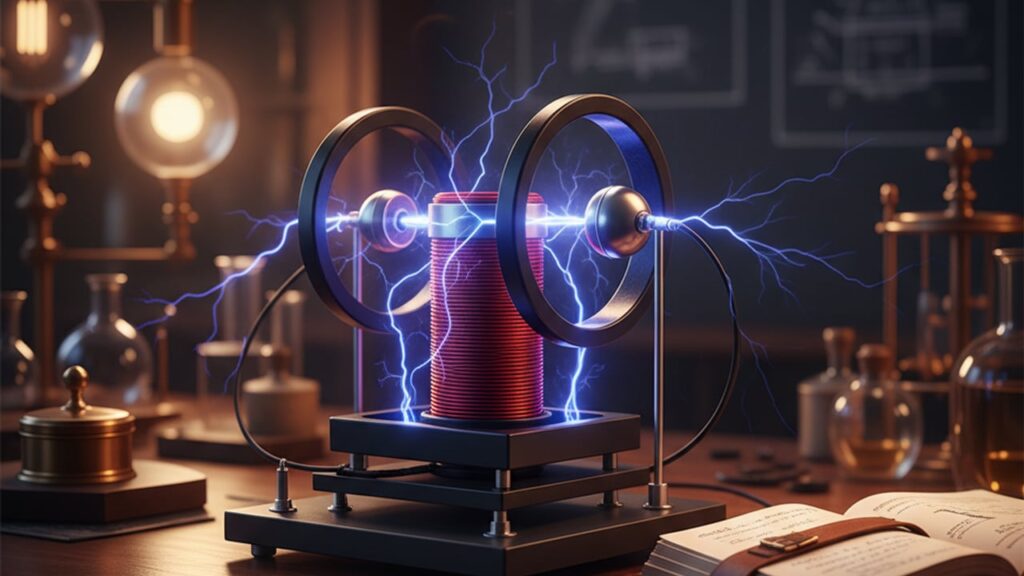
The essentials: A Tesla coil is a resonant transformer circuit that produces high-voltage, low-current, high-frequency alternating current, visible as dramatic arcing sparks. It was patented by Nikola Tesla in 1891 (US Patent 454,622) while researching wireless power transmission. Full-scale Tesla coils are rarely used for practical power delivery today, but smaller versions thrive in science […]
Category Archives: Objects of Science
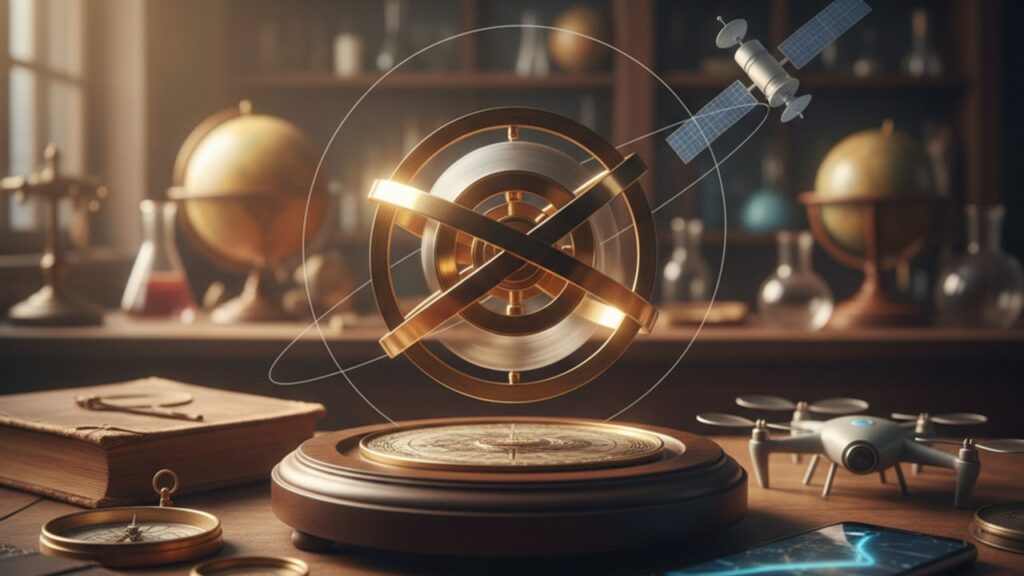
The essentials: A gyroscope is a spinning wheel or disc mounted so its axis can point in any direction, resisting changes to its orientation thanks to angular momentum. The word was coined in 1852 by French physicist Léon Foucault from the Greek for “turn” and “to see”. Modern gyroscopes hide inside smartphones, aircraft, ships, spacecraft […]
The essential: A Klein bottle is a mathematical surface with only one side, no boundary, and no distinction between inside and outside. It cannot exist without self-intersection in our three-dimensional world, which is why every glass version you’ll ever hold is a clever 3D approximation of a true 4D object. Named after German mathematician Felix […]
The essentials: The best gifts for a physicist combine a real scientific principle with genuine desk-worthy design, not just a novelty box. Our top picks range from £15 stocking fillers to £150 statement pieces, so there is something for every budget. A Tesla coil music speaker, a storm glass barometer and a Stirling engine kit […]
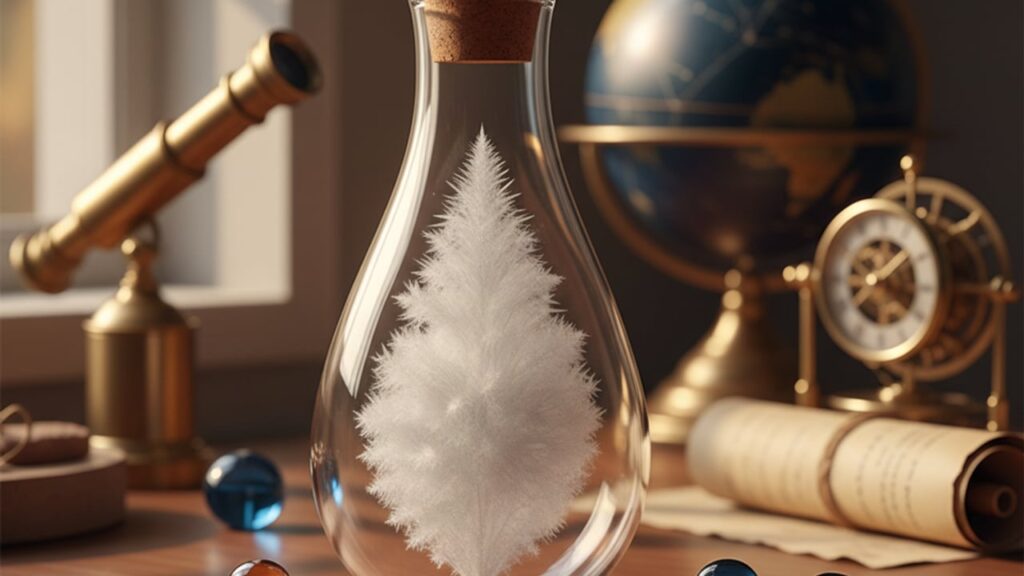
L’essentiel : A storm glass is a sealed glass vessel containing a camphor-based liquid that forms crystals as temperature changes, popularised by Admiral Robert FitzRoy in the 19th century. No peer-reviewed study has confirmed that crystal patterns reliably forecast weather; the Met Office and modern meteorology treat it as a historical curiosity rather than a […]

The essentials: Small high-powered magnetic balls are genuinely dangerous if swallowed, because two or more magnets can attract each other through the bowel wall and cause life-threatening internal injuries. UK regulators (OPSS) and the NHS have issued formal alerts, and the US CPSC reports thousands of magnet-ingestion incidents linked to loose ball magnets. These products […]
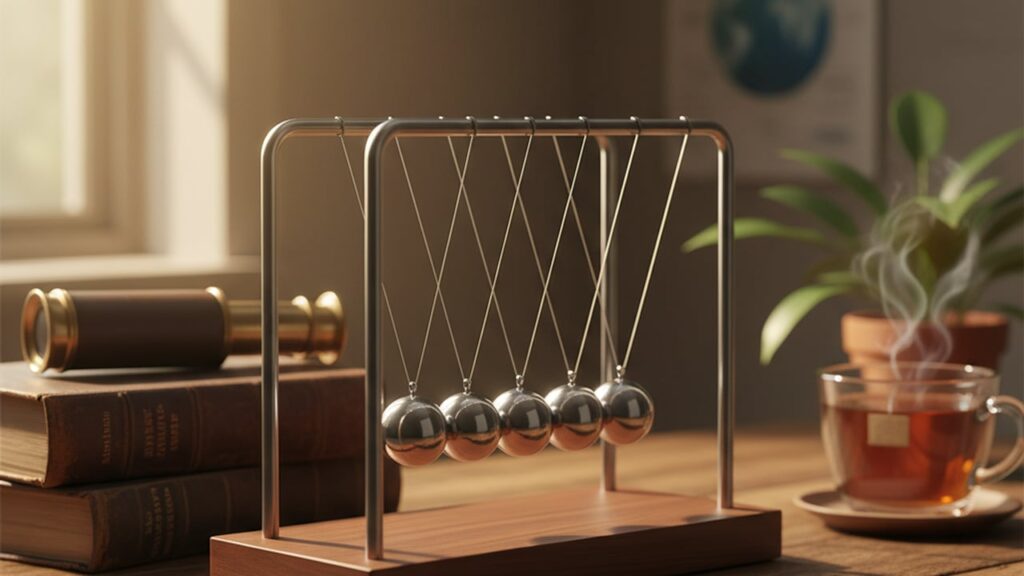
The essentials: A Newton’s Cradle demonstrates the conservation of momentum and energy through a chain of swinging steel balls, each collision passing motion almost unchanged to the far end. Despite the name, Sir Isaac Newton never built or owned one; the desktop toy was named in his honour by English actor Simon Prebble in 1967. […]
The essentials: The best stocking fillers for science lovers combine a genuine physical principle (light, magnetism, thermodynamics) with a design good enough to sit on a shelf year-round. Most quality science stocking fillers in the UK sit between £12 and £45, with smaller items like prisms or brain teasers under £20. For children, look for […]
The essentials: The best teacher gifts are practical, personal, or genuinely curious objects, not another mug or scented candle. Science-themed desk pieces work brilliantly because they double as conversation starters and classroom teaching aids. Budget £15 to £40 for a thoughtful individual gift, or pool contributions for something more substantial at end of term. Match […]
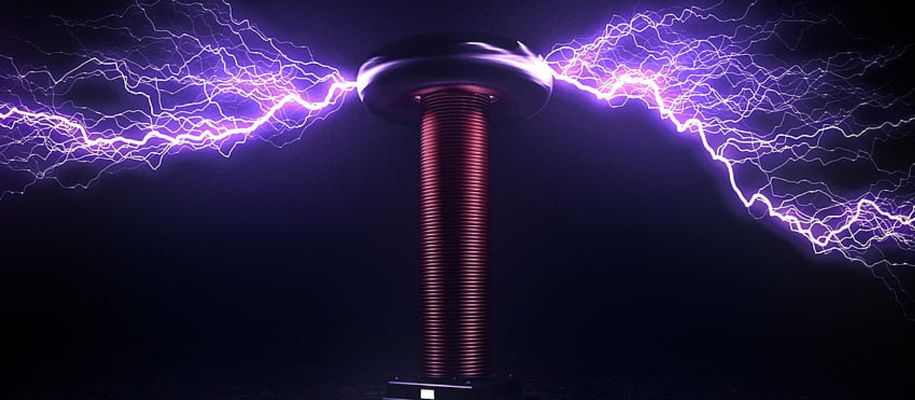
Who created the Tesla coil? Nikola Tesla, a Serbian-American inventor, is the mastermind behind the Tesla coil. This brilliant man, whose creative spirit far surpassed his time, created this engineering marvel at the end of the 19th century. The Tesla coil is one of his many inventions that have shaped the world as we know […]