
L’essentiel :
- «Science tableware» covers two things: dinnerware printed with scientific motifs (molecular structures, periodic tables) and genuine science-themed objects used as table centrepieces.
- UK heritage potteries like Portmeirion and the Stoke-on-Trent «Potteries» district produce botanical and pattern-led crockery, while niche sellers on Amazon and Etsy cover the molecular-print plates.
- For a truly conversational table, pair standard crockery with a genuine scientific object, such as a Storm Glass Weather Predictor or a Periodic Table With Real Elements Samples.
- Check material (bone china vs porcelain vs borosilicate glass), dishwasher safety, and whether the «scientific» design is decorative only or chemically accurate before buying.
If you’ve typed this question into Google, you’ve probably noticed something odd: most results show you dinner plates with pretty botanical prints, not actual science. Genuine science tableware, in the strict sense, is rare in the UK high street and mostly lives in the hands of independent makers, museum shops, and specialist gift retailers. As someone who has spent two decades moving between museum education and home decor curation, I can tell you the market splits cleanly into two camps, and knowing the difference will save you a disappointing unboxing.
📋 Table of contents
- What Exactly Is «Science Tableware»?
- Where Can I Find UK-Made Crockery With Scientific Patterns?
- What Are Some Good Quality Dinnerware Sets With a Scientific Twist?
- Beyond Plates: Genuine Science Objects for Your Table
- Our Verdict: Where Should You Actually Shop?
- What Are the Top Trends for Dinnerware in 2026?
- Frequently Asked Questions
What Exactly Is «Science Tableware»?
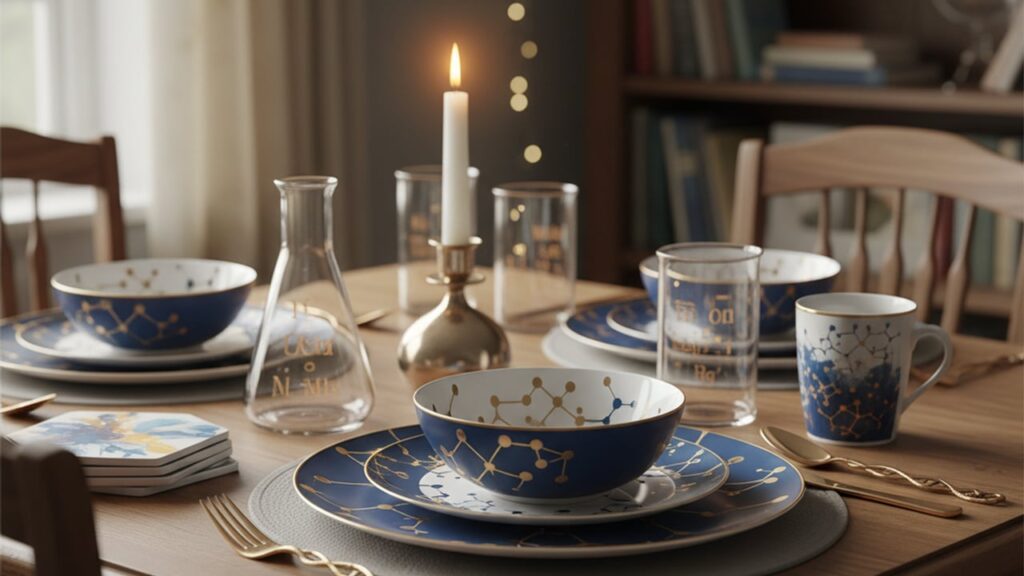
Science tableware refers to dining and serving pieces decorated with scientific imagery, or scientific objects designed to sit on a table as functional art. The first category includes plates and mugs printed with molecular diagrams, atomic structures, or periodic tables, often sold by independent ceramicists and marketplace sellers. The second, less obvious category, covers genuine scientific instruments and curiosities repurposed as centrepieces, such as barometers, mineral specimens, or kinetic desk toys.
The distinction matters because a plate with a chemistry print is purely decorative, while an object like a storm glass actually demonstrates a real physical phenomenon. Victorian naturalists and sea captains used storm glasses to observe crystal formation changes linked to temperature and pressure, long before modern barometric instruments became common. The design popularly associated with Admiral Robert FitzRoy in the 19th century remains debated among historians, since no single inventor’s patent survives, but the device itself is well documented in maritime history.
💡 Did you know?
Stoke-on-Trent earned the nickname «The Potteries» because six towns there, including Burslem and Hanley, concentrated almost the entire English ceramics industry from the 18th century onward, a legacy that still shapes where UK dinnerware is made today.
Where Can I Find UK-Made Crockery With Scientific Patterns?
UK-made crockery with scientific or botanical motifs comes mainly from heritage potteries based in Stoke-on-Trent and from independent studio ceramicists selling through Etsy and craft fairs. Portmeirion, founded in 1960 and still producing in Stoke-on-Trent, is the best-known name for illustrated botanical dinnerware, though its ranges lean more toward garden motifs than hard science. For true molecular or periodic table prints, smaller sellers on Amazon UK and eBay UK stock porcelain mugs and plates featuring atomic diagrams, usually printed rather than hand-decorated, at price points around £15 to £35 per piece.
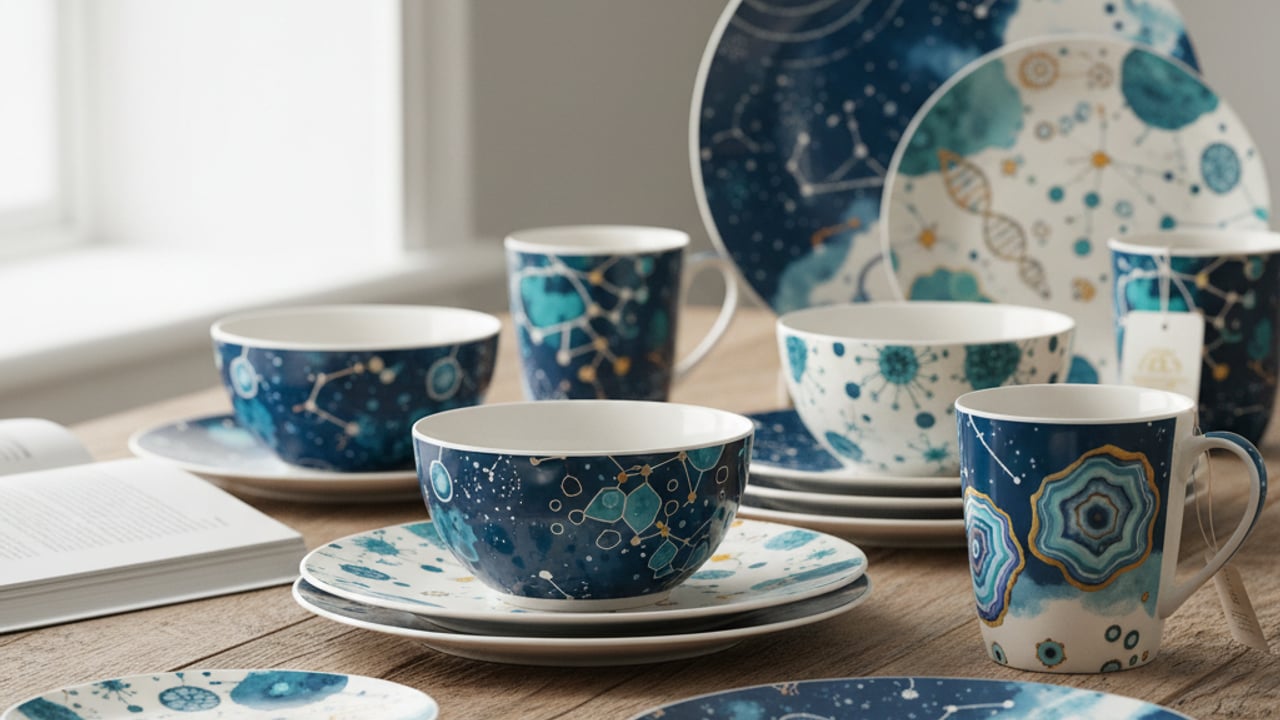
- Heritage potteries (Portmeirion, Emma Bridgewater) for botanical and pattern-driven designs, dishwasher and microwave safe in most ranges.
- Independent UK ceramicists on Etsy for custom molecular or astronomy prints, often hand-glazed in small batches.
- Museum shops (Natural History Museum, National Portrait Gallery shop) for licensed artist collaborations with a scientific or cultural edge.
- Marketplace specialists on Amazon and eBay for budget-friendly printed porcelain with chemistry themes.
⭐ Key takeaway
if chemical accuracy matters to you, check the product description for «IUPAC-accurate» or similar wording. Many decorative pieces simplify molecular structures for visual appeal rather than scientific precision.
What Are Some Good Quality Dinnerware Sets With a Scientific Twist?
Good quality scientific-themed dinnerware sets combine durable materials such as bone china or hard-paste porcelain with dishwasher-safe glazes and fade-resistant printing. Bone china, containing bone ash for added translucency and strength, remains the gold standard for British dinnerware and is used by most heritage brands. Avoid very cheap transfer-printed sets if you plan daily use, since the scientific motifs can fade within a year of regular washing.
🛍️ Our pick
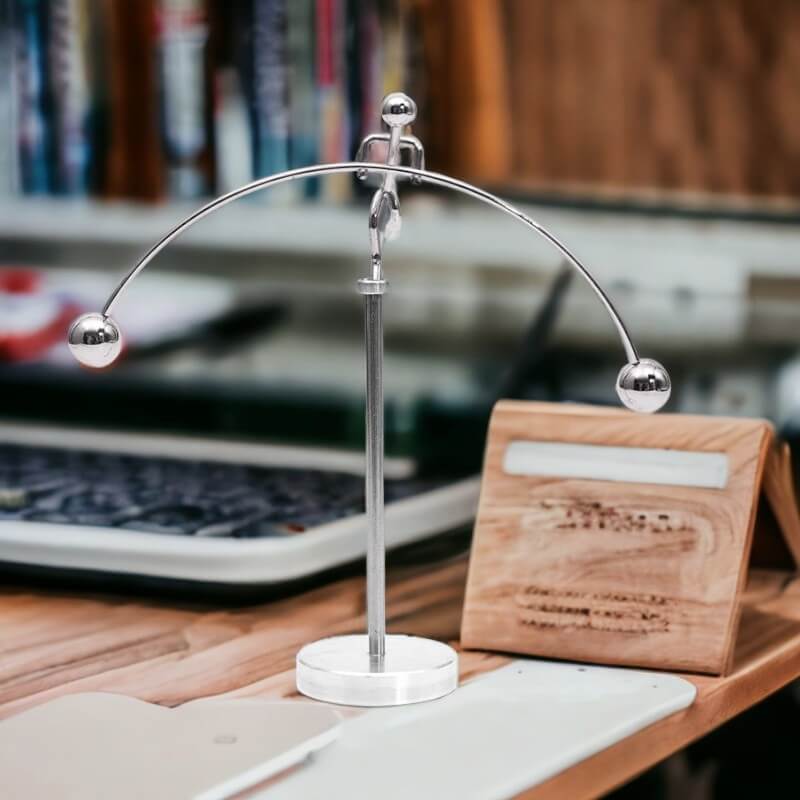
Kinetic Desk Toy The Balancer
This magnetic balance toy demonstrates physics principles beautifully on any desk, fitting the science enthusiast’s tableware theme.
18,99 £
A quick way to judge quality before buying online is to look at the glaze finish in product photos and read reviews specifically mentioning dishwasher use. Sets described as «decorative only» or «display piece» are a signal the manufacturer does not guarantee long-term washing durability.
| Material | Durability | Typical Price (set of 4) |
|---|---|---|
| Bone china | High, chip-resistant | £40-£90 |
| Porcelain | Medium-high | £25-£60 |
| Printed stoneware | Medium, print may fade | £15-£35 |
Beyond Plates: Genuine Science Objects for Your Table
For buyers after conversation value rather than printed patterns, genuine scientific instruments and curiosities make a far more memorable table centrepiece. A real science-themed object demonstrates an actual physical principle, which is exactly what sets it apart from a mug with a chemistry diagram on it. This is the space Science Gifts has specialised in since our founding: curating objects that double as decor and as conversation starters rooted in genuine physics, chemistry, or astronomy.
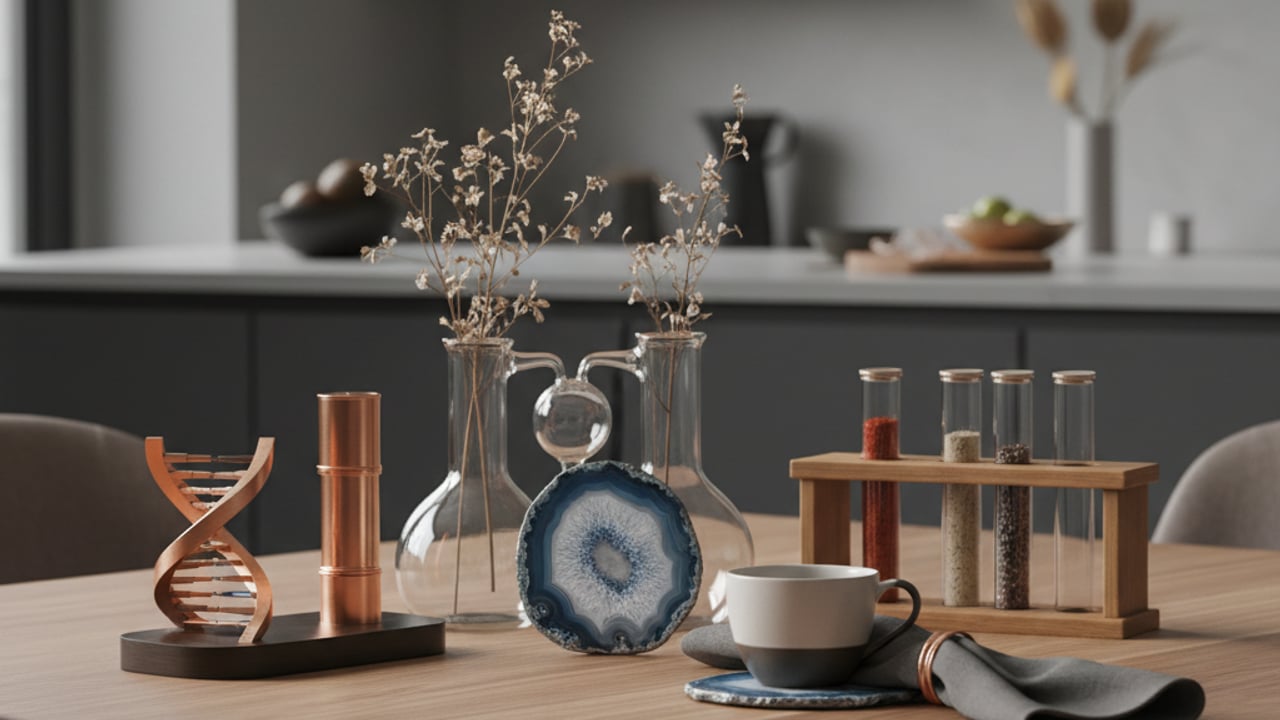
Consider a Periodic Table With Real Elements Samples, which displays actual specimens of elements rather than printed symbols, something no plate can replicate. Or a Crystal Storm Glass Barometer, whose crystal formations shift visibly with ambient conditions, turning a dinner table into a small weather-watching ritual. For desks and sideboards, the Magnetic Solar System and the Tesla Coil Music device both pair well with a science-themed dining or living space without competing for cupboard space with actual plates.
💡 Did you know?
The periodic table recognised by IUPAC currently includes 118 confirmed elements, the most recent four (nihonium, moscovium, tennessine, oganesson) formally named in 2016, making any element-sample display a genuinely up-to-date scientific object rather than a static print.
Our Verdict: Where Should You Actually Shop?
In my experience curating gifts for curious adults across the UK, the honest answer depends on your goal. If you want a full dinner service to use daily, go to a heritage pottery brand for durability and after-sales support. If you want a single standout piece that sparks conversation at a dinner party or sits proudly on a shelf, a genuine scientific object beats a printed plate every time, because it demonstrates something real rather than illustrating it. Our recommendation is to mix both: standard quality crockery for everyday use, plus one or two authentic scientific centrepieces for the moments guests actually look around the room.
⭐ Key takeaway
for gifting specifically, genuine scientific objects outperform printed tableware because they arrive with a built-in story, exactly the kind of «why does it do that» moment that makes a gift memorable rather than merely decorative.
What Are the Top Trends for Dinnerware in 2026?
The dominant UK dinnerware trends in 2026 lean toward hand-painted botanical illustration, muted earth-tone glazes, and small-batch studio pottery rather than mass-produced print runs. Scientific motifs remain a niche but growing category, driven largely by gift buyers rather than everyday homeware shoppers, which explains why specialist and independent sellers dominate this particular search rather than major homeware chains.
Frequently Asked Questions
Sources
- IUPAC (International Union of Pure and Applied Chemistry), periodic table element naming announcements
- Historic England, listing records for Stoke-on-Trent pottery industry heritage
- Royal Museums Greenwich, archival notes on Robert FitzRoy and 19th-century maritime weather instruments